Is a Loyalty Program Worth It? (Free ROI Calculator)
See if a loyalty program makes sense for your business. Industry data shows 4.8x average ROI. Use our free calculator to estimate your results.
Key Takeaway: A loyalty program is worth it for most small businesses with repeat customers. Industry data shows an average ROI of 4.8x, with top programs boosting revenue by 15-25% annually. For a typical cafe with 30 daily customers and a $12 average order, that translates to roughly $650+ in extra monthly profit.
FaveCard Team
Published February 13, 2026 · Updated February 18, 2026
Last updated: February 2026
A loyalty program is worth it for most small businesses. Industry research from Antavo’s Global Customer Loyalty Report shows loyalty programs deliver an average ROI of 4.8x, and 72% of U.S. businesses with loyalty programs see a positive return on investment.
Key Takeaway: If you have repeat customers — and most cafes, restaurants, and salons do — a loyalty program almost certainly pays for itself within the first few months.
But “most businesses” isn’t YOUR business. Below, we’ll walk through the real numbers so you can decide for yourself. And if you want a quick answer, try our free ROI calculator — plug in your numbers and see your estimated results in seconds.
The Real Cost of Not Having a Loyalty Program
Here’s a number that might surprise you: acquiring a new customer costs 5 to 25 times more than keeping an existing one, according to research cited by Harvard Business Review.
Think about that for a second. If you run a cafe and spend time and money on flyers, Instagram ads, or foot traffic — every new customer walking through the door cost you something. But the regulars? They already know you. They already like your coffee. You just need to give them a reason to come back more often.
And repeat customers don’t just come back — they spend more. According to Paytronix research, customers enrolled in loyalty programs spend 38% more per visit than walk-ins.
So the real question isn’t “is a loyalty program worth it?” It’s “can you afford NOT to have one?”
What the Research Actually Shows
Let’s look at the hard data. Not vague promises — real numbers from large-scale industry reports.
Revenue impact
According to Brandmovers’ ROI analysis and major industry reports:
- 4.8x average ROI on loyalty program investment (Antavo Global Customer Loyalty Report 2024)
- 15-25% annual revenue boost from top-performing loyalty programs (McKinsey)
- 18-30% increase in spend and frequency from loyalty program members (Paytronix)
Customer behavior changes
Once someone joins your loyalty program, their behavior shifts:
- 38% more spending per visit compared to walk-ins (Paytronix)
- 60-70% chance of selling to an existing customer, vs 5-20% for new prospects (Brandmovers)
- 67% more spending from loyal customers compared to new ones (Brandmovers)
The retention multiplier
Here’s the stat that matters most for small businesses: increasing customer retention by just 5% can boost profits by 25-95%, according to research cited by Invesp.
That’s not a typo. A small improvement in how often people come back creates a massive improvement in your bottom line.
How to Calculate YOUR Loyalty Program ROI
The industry averages are nice, but what matters is YOUR business. Here’s a simple way to think about it.
The basic math
A loyalty program increases how often your existing customers return. Industry benchmarks show a 20-25% increase in repeat visits on average.
Let’s say you’re a cafe with:
- 30 customers per day
- $12 average order
- 25% of customers are regulars
Without a loyalty program, your regulars generate about $2,700/month in repeat revenue (30 × $12 × 30 days × 25%).
With a 25% lift in repeat visits, you’d see roughly $675 extra per month. With FaveCard’s Free plan, that’s $675 in pure net gain — infinite ROI on a $0 platform cost.
Use our free calculator
Don’t want to do the math by hand? We built a free Loyalty Program ROI Calculator that does it for you.
Just move three sliders:
- Your average order value (how much a typical customer spends)
- Customers per day (your daily foot traffic)
- Current repeat rate (what percentage of customers come back)
The calculator shows your estimated extra revenue per month, per year, and your projected ROI — all based on industry benchmarks. It even adjusts the currency based on your location.
When a Loyalty Program is NOT Worth It
Honesty matters, so here are cases where a loyalty program might not make sense:
You don’t have repeat customers by nature. If you run a moving company or sell one-time products, a stamp card won’t help. Loyalty programs work for businesses where people come back regularly — cafes, restaurants, salons, barbershops, gyms.
You have fewer than 5 customers per day. With very low traffic, the math simply doesn’t work. Focus on getting more customers first, then add retention tools.
You’re not ready to promote it. A loyalty program only works if customers know about it. If you won’t put up a QR code, share it on social media, or mention it at checkout — save your money until you’re ready.
You want instant results. Loyalty programs compound over time. You’ll see initial results in 2-4 weeks, but the real payoff comes at month 3+ when your repeat customer base grows.
What Type of Loyalty Program Works Best?
Not all loyalty programs are created equal. Here’s what works in practice for small businesses:
Digital stamp cards (best for most small businesses)
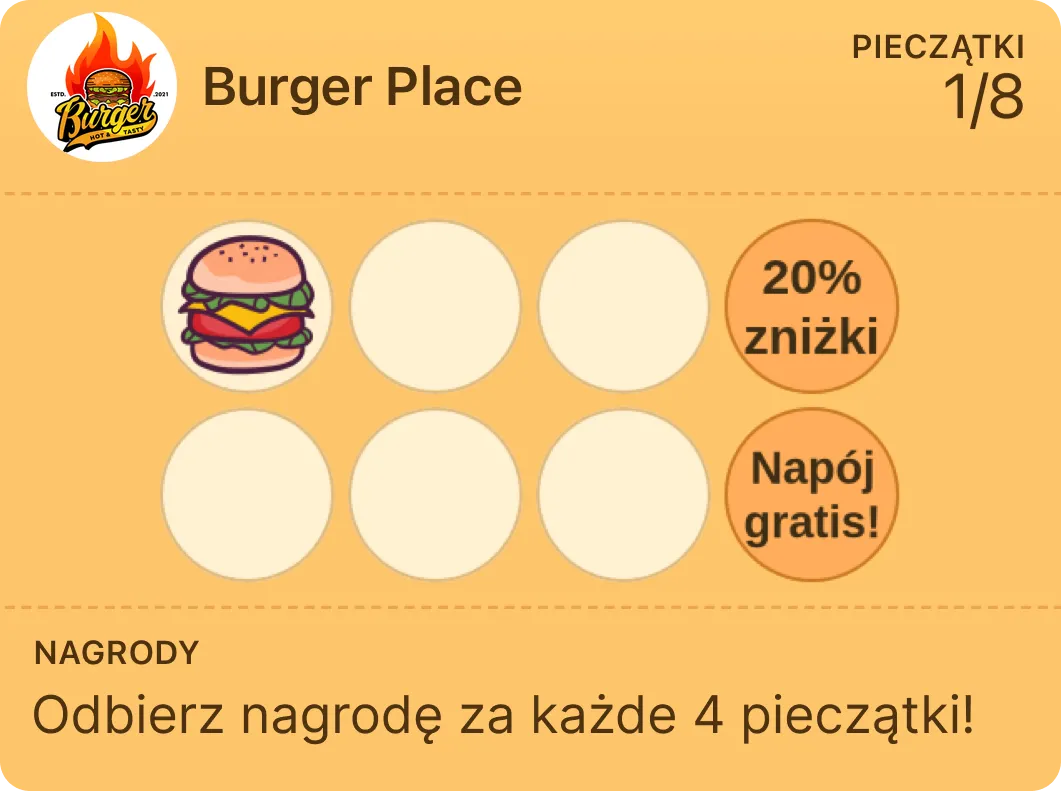
The simplest model: buy X, get Y free. A customer collects stamps and earns a reward after a set number of visits.
Why it works:
- Customers already understand it (like paper cards, but better)
- No app download needed — cards live in Apple or Google Wallet
- Easy to set up — you can create a digital loyalty card in 5 minutes
- Affordable — FaveCard has a Free plan ($0, no time limit), Pro at $19/month
Points-based programs
Customers earn points per dollar spent. Works well for businesses with varying order sizes (restaurants, retail).
Downside: More complex to explain and manage. Can confuse customers if not well designed.
Tiered programs
Bronze, Silver, Gold levels with increasing perks. Best for premium businesses (spas, high-end salons) where customers already spend a lot.
Downside: Requires a larger customer base to work. Overkill for a neighborhood cafe.
For most small businesses — cafes, restaurants, barbershops, salons — a digital stamp card is the sweet spot. Simple, affordable, and customers actually use it because it’s always on their phone. See our industry-specific loyalty guides for setup details by business type.
Getting Started: The 5-Minute Version
If the numbers look good for your business, here’s how to start:
-
Calculate your expected ROI — Make sure the math works for your specific situation
-
Choose a platform — Look for one that doesn’t require customers to download an app. Wallet-based solutions (Apple Wallet + Google Wallet) have the highest adoption because there’s zero friction. We’ve compared different strategies for getting repeat customers if you want to explore options.
-
Set up your card — Pick your branding, set the number of stamps, choose a reward your customers actually want (hint: a free item they already buy works best)
-
Promote it — Put a QR code at your register, share the link on your social media, and have your staff mention it to every customer
-
Track and adjust — Check your stats after 30 days. Are repeat visits up? If yes, you’re golden. If not, try a more compelling reward or promote it more actively.
Frequently Asked Questions
How much does a loyalty program cost for a small business?
FaveCard has a Free plan ($0, no time limit) with digital stamp cards, Apple & Google Wallet, and unlimited customers. Pro starts at $19/month for full branding control and customer data access. No per-scan or per-customer fees. Every new account starts with 30 days of Pro features.
How quickly will I see results from a loyalty program?
Most businesses notice increased repeat visits within 2-4 weeks. The real compounding effect kicks in at month 3+, when a critical mass of enrolled customers starts coming back regularly.
Do customers actually use digital loyalty cards?
Yes — especially wallet-based cards (Apple Wallet / Google Wallet). Since the card sits on their phone alongside payment cards, customers see it every time they pay. No app to download means no friction.
What's a good reward to offer in a loyalty program?
The best reward is a free version of what customers already buy. For a cafe: free coffee. For a salon: free blowout. For a restaurant: free appetizer. Keep it simple and desirable.
How do I calculate if a loyalty program is worth it for my business?
Use our free ROI calculator at favecard.co/en/tools/roi-calculator/. Enter your average order value, daily customer count, and current repeat rate. The calculator estimates extra monthly and yearly revenue based on industry data.