Punch Card Ideas: 15 Examples + Stamp Card Prompts
Punch card ideas with stamp counts, reward wording, and real examples for retail, cafes, salons, and restaurants. Free digital templates included.
Key Takeaway: The best punch card is one customers actually complete. Use 6-10 stamps, offer a reward worth 10-15% of total spend, and match the structure to your business type. Coffee shops need daily-habit cards (8 stamps for a free drink). Salons need rebooking cards (stamps for appointments made on time). Restaurants need spend-based cards (points per dollar for varied menus). Go digital so customers can't lose the card.
FaveCard Team
Published February 16, 2026 · Updated March 9, 2026
Last updated: February 2026
A punch card is a loyalty tool that rewards customers for repeat visits — typically “buy X, get one free.” The most effective punch cards use 6-10 stamps, offer a reward worth 10-15% of total customer spend, and work even better as digital cards in Apple or Google Wallet (so customers never lose them).
Key Takeaway: The best punch card is one customers actually complete. Match the structure to your business — coffee shops need daily-habit cards, salons need rebooking cards, restaurants need spend-based cards. Keep it under 10 stamps, make the reward worth coming back for, and go digital so the card is always on their phone.
What’s Inside
- Why Most Punch Cards Don’t Work
- Quick Reference: All 15 Ideas
- Classic Punch Card Structures (#1-5) — Buy-X-Free, Points, Visits, Tiered, Starter Boost
- Industry-Specific Ideas (#6-10) — Coffee, Restaurant, Barber, Salon, Family
- Creative Twists (#11-15) — Mystery, Double Stamp, Referral, Seasonal, Birthday
- Paper or Digital?
- How to Choose the Right Card
- Quick Wins Checklist
- FAQ
Why Most Punch Cards Don’t Work
Here’s what nobody tells you: the problem with most punch cards isn’t the idea. It’s the execution.
A 20-stamp card with a mediocre reward? Nobody finishes that. A confusing points system with three tiers of discounts? Staff can’t even explain it.
The punch cards below actually work because they follow three rules:
- Completable — 6-10 stamps, achievable in a realistic timeframe
- Worth it — the reward feels like a genuine thank-you, not a token gesture
- Matched to the business — a coffee shop card shouldn’t work like a salon card
Research backs this up. Circana data shows loyalty program members visit 22% more often. Paytronix research shows they spend 38% more per visit. And retaining existing customers costs 5-25x less than finding new ones (Harvard Business Review / Bain & Company).
Quick Reference: All 15 Ideas at a Glance
| # | Idea | Best For | Stamps/Points | Reward Type |
|---|---|---|---|---|
| 1 | Buy-X-Get-1-Free | Coffee shops, bakeries | 8-10 stamps | Free product |
| 2 | Points-Per-Dollar | Restaurants, cafes | 100-150 pts | $10-15 off |
| 3 | Visit Counter | Barbers, salons, spas | 8-10 visits | Free add-on service |
| 4 | Tiered Milestones | Any repeat business | 5 + 10 stamps | Small + big reward |
| 5 | Starter Boost | Any (new customers) | 8 stamps (2 pre-filled) | Free item |
| 6 | Coffee Run Card | Coffee shops | 8 stamps + rolling start | Free coffee |
| 7 | Weekday Lunch Card | Restaurants, delis | 5 weekday stamps | Free lunch |
| 8 | Barber’s Chair Card | Barbershops | 8 cuts | Free premium service |
| 9 | Salon Rebooking Card | Hair/nail salons | 6 rebook stamps | Free treatment |
| 10 | Family Card | Family restaurants | 8 family visits | Free kids’ meal |
| 11 | Mystery Reward | Any (engagement) | 10 stamps | Surprise reward |
| 12 | Double Stamp Day | Any (slow day fix) | Normal card | 2x stamps one day |
| 13 | Referral Bonus | Service businesses | Bonus stamp per referral | Faster completion |
| 14 | Seasonal Edition | Coffee shops, restaurants | 6 stamps in 8 weeks | Limited-time reward |
| 15 | Birthday Month | Restaurants, salons | Double stamps + bonus | Birthday freebie |
Classic Punch Card Structures
These five structures work for virtually any business. Start here if you’re new to loyalty programs.
1. The Buy-X-Get-1-Free Card
Best for: Coffee shops, bakeries, juice bars, ice cream shops | Effort: Low | Impact: High | Cost: Free-$20/month
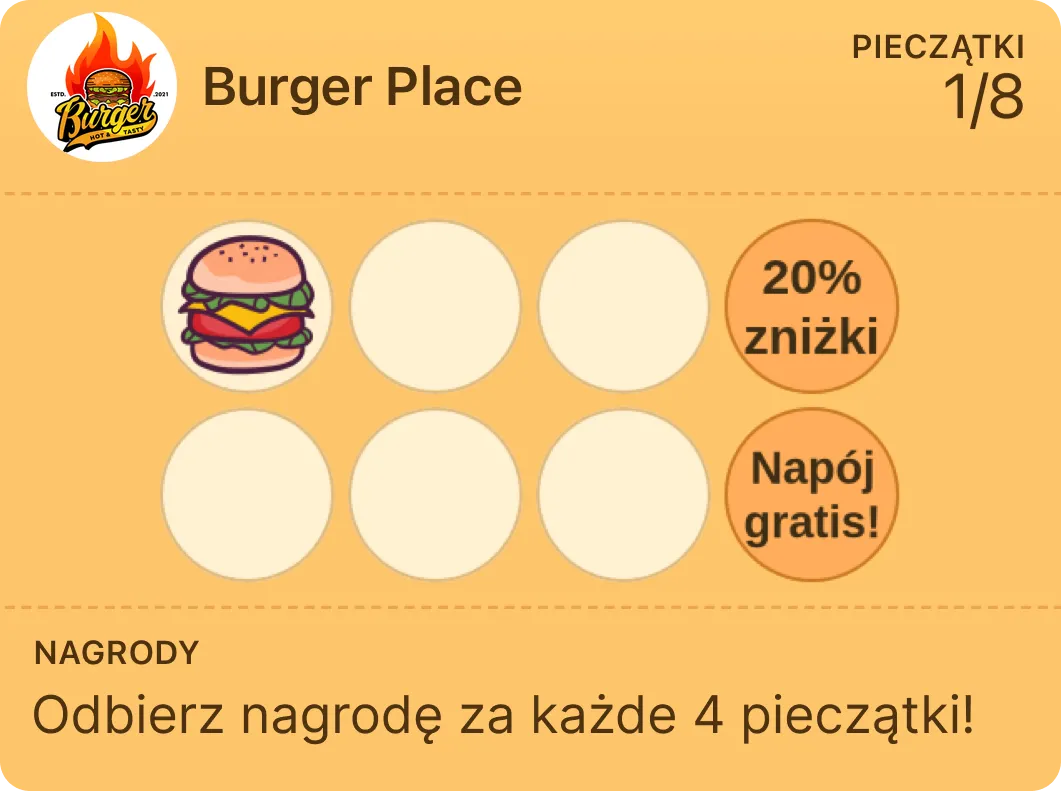
The classic for a reason. Customer buys 8 coffees (or sandwiches, or smoothies), gets the 9th free.
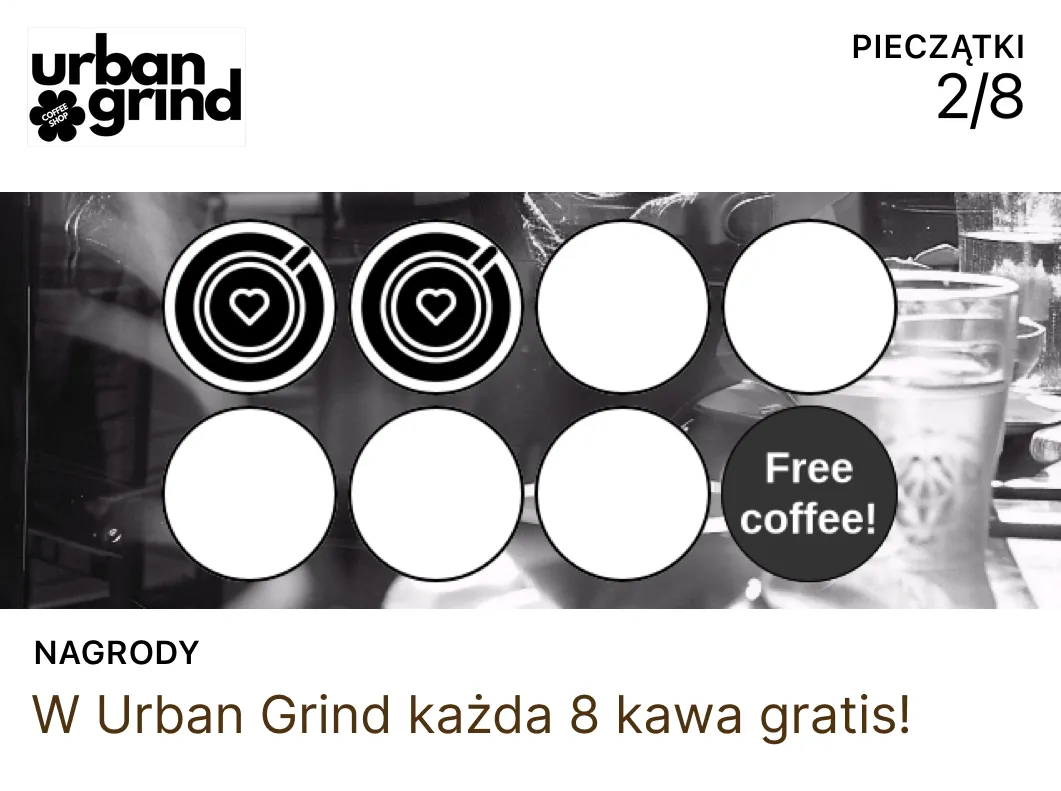
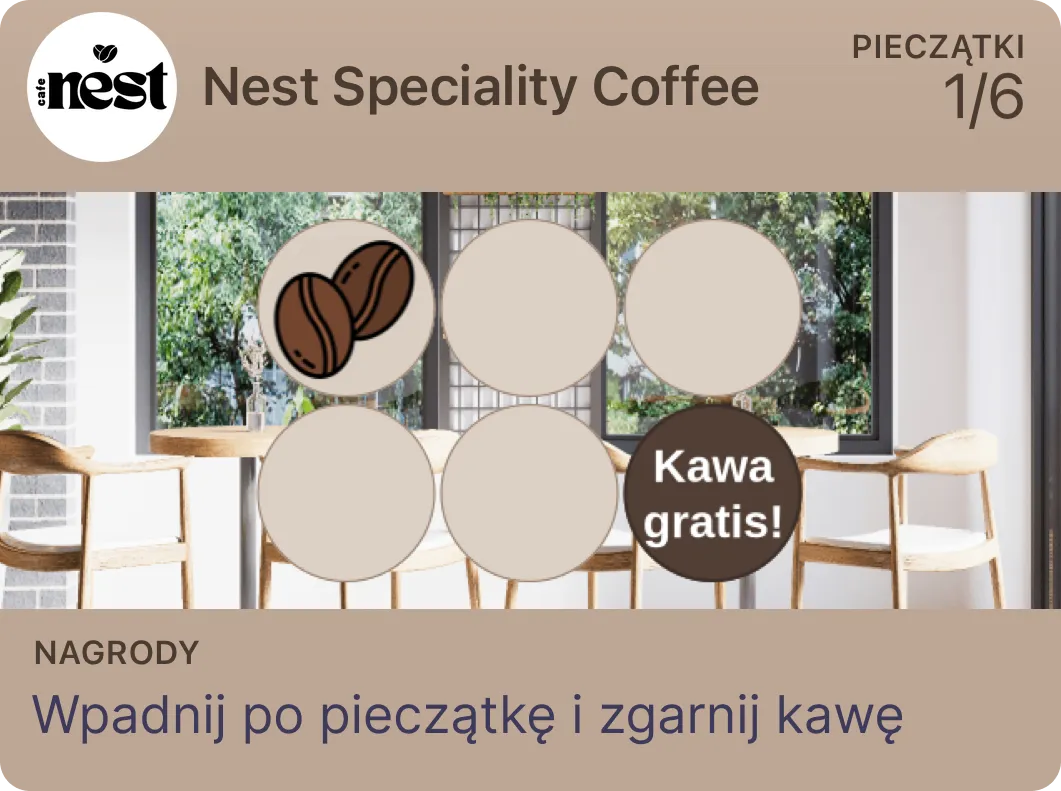
These examples are in Polish — FaveCard works globally in any language, so your card always matches your customers.
Why it works: Simple to explain, simple to track, and the math is easy for both staff and customers. Everyone understands “buy 8, get 1 free.”
The right stamp count depends on visit frequency:
- Daily purchases (coffee): 8 stamps — completable in about 2 weeks
- Weekly purchases (lunch spot): 6-8 stamps — completable in 2 months
- Monthly purchases: 4-6 stamps — keep the finish line visible
Cost to you: One free item per completed card. For a $4 coffee, that’s $4 per $32 total spend — roughly a 12.5% discount. Sustainable for most businesses.
If you run a coffee shop, we have a complete coffee shop loyalty programme guide with exact structures and promotion tips.
2. The Points-Per-Dollar Card
Best for: Restaurants, cafes with food + drinks, retail | Effort: Medium | Impact: High | Cost: $20-30/month
Instead of stamps per purchase, customers earn points based on what they spend. One point per dollar. At 100 points, they get $10 off.
Why it works: Fair for varied spending. A customer ordering a $15 lunch earns more than someone grabbing a $3 coffee — and that feels right.
Use points instead of stamps when:
- Your menu has a wide price range
- Average transaction varies a lot between customers
- You want to encourage higher-value orders
Pro tip: Round the numbers. “1 point per dollar, 100 points = $10 reward” is crystal clear. “2.5 points per dollar, 250 points = $12.50 off” makes people’s eyes glaze over. Simple math wins.
Real-world example: Domino’s Piece of the Pie Rewards uses a simple version of this — 10 points for every order over $5, redeemable at 20/40/60 points for increasingly valuable items (from bread bites to a free medium pizza). The tiered redemption keeps customers engaged at every level.
If you run a cafe that serves food and drinks, check our guide to coffee shop loyalty programmes — it explains why points often beat stamps for mixed menus.
3. The Visit Counter Card
Best for: Barbers, salons, spas, yoga studios | Effort: Low | Impact: High | Cost: Free-$20/month
One stamp per visit, regardless of what they buy. Visit 10 times, get a free add-on service.
Why it works: Service businesses usually have consistent pricing. A haircut costs roughly the same every time. So tracking visits makes more sense than tracking dollars — and it’s simpler for everyone.
Reward ideas by business type:
| Business | After 8-10 Visits | Reward |
|---|---|---|
| Barber | 8 cuts | Free hot towel shave or beard trim |
| Hair salon | 8 visits | Free deep conditioning treatment |
| Nail salon | 8 visits | Free nail art upgrade |
| Spa | 6 visits | Free 15-min add-on (scalp massage, aromatherapy) |
Pro tip: For barbers, 8 stamps matches the natural haircut cycle — roughly 4-6 months of regular visits. See our barbershop loyalty program guide for more detail on reward structures.
4. The Tiered Milestone Card
Best for: Any business that wants sustained engagement | Effort: Medium | Impact: High | Cost: $20-30/month
Instead of one big reward at the end, offer smaller rewards along the way.
Example structure:
- 4 stamps → free cookie (or small add-on)
- 8 stamps → free coffee (or main reward)
Why it works: Same psychology that makes video games addicting. Small wins along the way keep people motivated. Without milestones, there’s a dead zone between stamps 3 and 7 where customers quietly stop coming.
Real-world example: Starbucks Rewards just redesigned around this exact idea. Their 2026 program has three tiers — Green, Gold, and Reserve — where members earn more Stars per dollar as they move up (1 Star at Green, 1.2 at Gold, 1.7 at Reserve). Each tier unlocks new perks, keeping customers motivated to hit the next level. You don’t need Starbucks’ budget to apply the same principle — a simple midpoint reward on your punch card does the same thing.
When to use this:
- Your stamp count is 8+ (anything less doesn’t need a midpoint)
- Your free item is high-value (customers need motivation to get there)
- You sell both small and premium items (small win = cheap item, big win = premium)
5. The Starter Boost Card
Best for: New customer acquisition, any business | Effort: Low | Impact: High | Cost: Same as any card
Start every new customer with 1-2 stamps already on their card.
Why it works: A car wash loyalty study by Nunes & Dreze (Journal of Consumer Research, 2006) found that customers given a 10-stamp card with 2 stamps pre-filled completed their cards at a 34% rate — nearly double the 19% rate for customers given a blank 8-stamp card. Both groups needed 8 more stamps.
People are far more motivated to complete something they’ve already started. Psychologists call this the “endowed progress effect.”
How to do it:
- Hand out a card with “Welcome bonus: 2 stamps!” already filled
- Digital cards can auto-add a starter stamp when customers sign up
- Mention it: “You already have 2 stamps — only 6 more for a free coffee!”
Pro tip: This works especially well combined with idea #1 or #3. It turns a cold start into immediate momentum.
Industry-Specific Punch Card Ideas
These are built for specific business types. They work because they match the way customers actually use your business.
6. The Coffee Run Card
Best for: Coffee shops, tea houses | Effort: Low | Impact: High | Cost: Free-$20/month
8 stamps for a free coffee. But here’s the twist: when a customer completes their card, their next card starts with 1 stamp already filled.
Why it’s different from idea #1: The rolling head start creates an unbreakable chain. Customer finishes a card, immediately sees progress on the next one, and thinks “well, I’m already a stamp in…”
Ideal structure:
- 8 stamps → free drink of their choice
- New card starts with 1 stamp (the “rolling boost”)
- Consider double stamps on your slowest day
The numbers: A daily coffee customer completes a card every 2 weeks or so. That’s roughly 26 free coffees per year — maybe $100-130 in cost. But that same customer is spending $1,500+ per year with you. That’s less than a 9% loyalty cost.
For the full coffee shop setup — promotion strategies, mistakes to avoid, and how to measure results — see our coffee shop loyalty program guide.
7. The Weekday Lunch Card
Best for: Restaurants, delis, fast-casual spots | Effort: Low | Impact: Medium-High | Cost: Free-$20/month
5 weekday lunches → free meal (or 50% off).
Why it works: This targets the workday lunch crowd — people eating near their office 5 days a week. By limiting it to weekdays (say, 11am-2pm), you fill your lunch rush and build a daily habit without giving away dinners (which are higher-margin).
Smart variations:
- “Lunch Club” card valid only during lunch hours
- 5 lunches → free appetizer or dessert (lower cost than a full free meal)
- Combine with a specific lunch menu for easier tracking
Pro tip: If your restaurant is near offices, this is gold. Office workers are creatures of habit — once they eat with you Monday, they’ll default to you Tuesday through Friday.
For more restaurant loyalty strategies, see our restaurant loyalty program guide.
8. The Barber’s Chair Card
Best for: Barbershops | Effort: Low | Impact: High | Cost: Free-$20/month
8 haircuts → free premium service (hot towel shave, beard sculpting, or head massage).
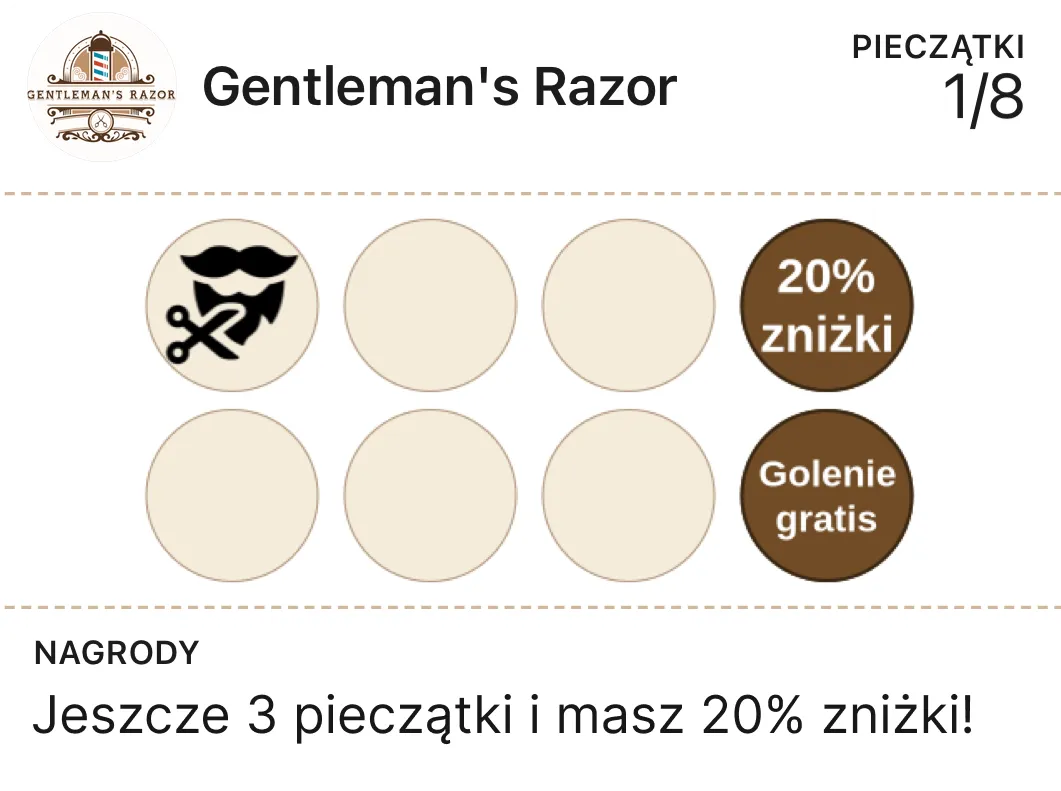
Why the reward matters: Don’t give away free haircuts. A free cut devalues your core service. Instead, make the reward something premium — something the customer might not normally buy but would love to try.
Why 8 stamps works for barbers:
- Average haircut cycle: 2-4 weeks
- 8 cuts = about 4-8 months to complete
- Reward costs you 15-30 minutes of time, not a full service fee
Bonus strategy: Add an extra stamp when clients rebook before leaving the chair. This uses the loyalty card to solve the biggest barbershop problem: clients who say “I’ll call” and then don’t.
See our barber marketing ideas guide for 14 more strategies beyond loyalty cards.
9. The Salon Rebooking Card
Best for: Hair salons, nail salons | Effort: Medium | Impact: High | Cost: $20-30/month
Here’s the idea: a stamp for rebooking within the recommended window (4-6 weeks for hair, 2-3 weeks for nails). 6 rebook stamps → free treatment.
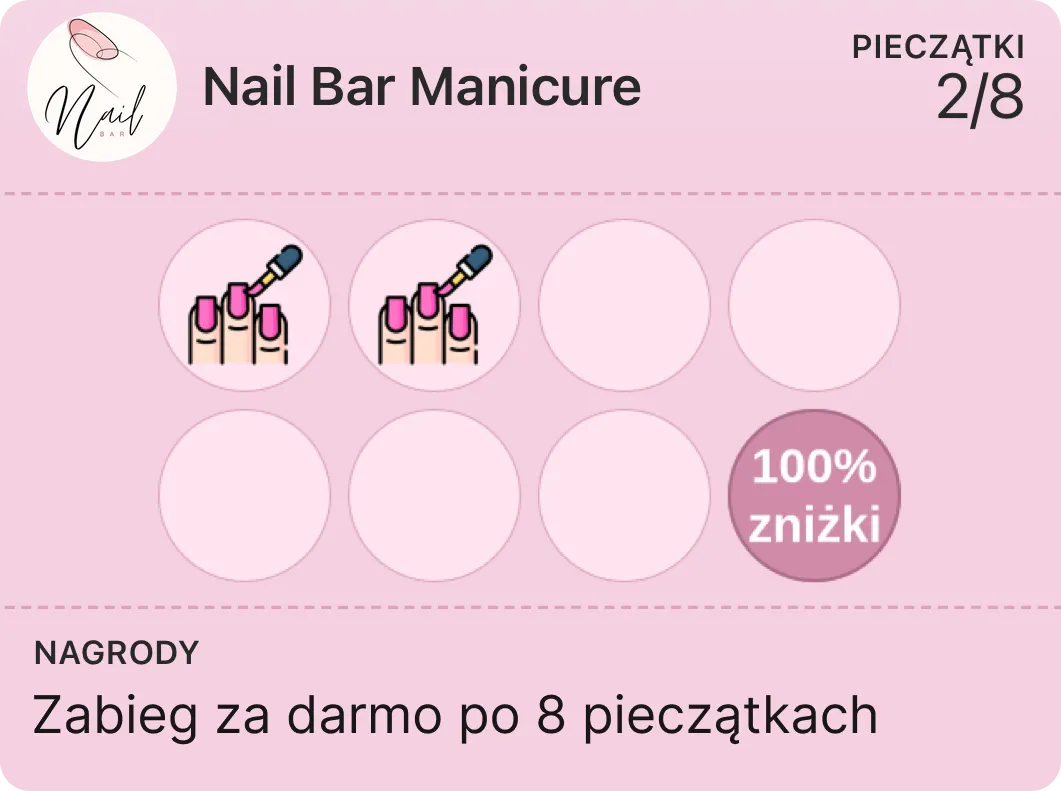
Why it’s different: Most salon punch cards reward spending. This one rewards rebooking on time. It directly solves the industry’s biggest problem: clients who wait too long between visits or quietly drift to another salon.
Structure for hair salons:
- Stamp earned when client rebooks within 6 weeks of last visit
- 6 stamps → free deep conditioning, blowout, or scalp treatment
- No stamp if they rebook late — that’s the incentive
Structure for nail salons:
- Stamp earned when client rebooks within 3 weeks
- 8 stamps → free nail art upgrade or gel extension
- Pairs with the natural nail salon visit cycle
For full rebooking strategies, check our salon loyalty program guide and hair salon loyalty guide.
10. The Family Card
Best for: Family restaurants, pizza places, kids’ activity centers | Effort: Low | Impact: Medium | Cost: Free-$20/month
One card per family (not per person). 8 family visits → free kids’ meal or family dessert.
Why it works: Families visit as a group. A family of 4 spending $60/visit is worth $480 over 8 visits. A free kids’ meal ($8-12) is a tiny cost for that kind of retention.
How to structure it:
- One card per family (linked to a phone number or digital card)
- Stamp per family visit (not per person)
- Reward the whole table: free dessert platter, free kids’ meals, or a discount on the next visit
Pro tip: Family customers are incredibly loyal once you’ve earned them. They’re also the hardest to win back if they switch — because the whole family has to agree on the change. Get them early.
Creative Punch Card Twists
These ideas add excitement and solve specific business problems. Mix them with the classic structures above.
11. The Mystery Reward Card
Best for: Any business that wants more engagement | Effort: Low | Impact: Medium-High | Cost: Same as any card
10 stamps → reveal a surprise reward. Could be a free coffee, a 30% discount, a free premium service, or something rare like a branded mug.
Why it works: Uncertainty makes rewards more exciting. It’s the same psychology behind mystery boxes and scratch cards. Variable rewards — where the outcome isn’t known in advance — drive stronger habit formation than fixed, predictable ones.
How to set it up:
- Customer completes 10 stamps
- Staff reveals the reward from a preset list (spin a wheel, draw from a bowl, or open a sealed envelope)
- Make the minimum reward still worthwhile — nobody wants to “win” a 5% discount
Pro tip: Include one premium surprise — something like “Your entire order is free today.” It costs you very little (it hits rarely) but creates stories customers tell their friends.
12. The Double Stamp Day
Best for: Any business with a slow weekday | Effort: Low | Impact: Medium | Cost: Free
Your existing punch card, but with a twist: one specific day of the week, every purchase earns 2 stamps instead of 1.
Why it works: Every business has a slow day. Tuesdays and Wednesdays are dead for most restaurants and cafes. Double Stamp Day gives customers a reason to shift their visit from a busy day (when you don’t need them) to a slow day (when you do).
How to pick your day:
- Check your sales data — which day has the lowest transaction count?
- That’s your Double Stamp Day
- Promote it in-store: “Tuesdays = 2x stamps!”
Pro tip: Don’t rotate the day. Consistency builds habit. Customers should know that Tuesday is double stamp day at your place, the same way they know happy hour.
13. The Referral Bonus Card
Best for: Service businesses, any business wanting word-of-mouth | Effort: Low | Impact: High | Cost: Free
Your regular punch card, but with a boost: when a customer refers a friend (and the friend makes a purchase), the referrer earns a bonus stamp.
Why it works: You’re combining two powerful tools — loyalty and referrals — into one system. The customer doesn’t need a separate referral program. They just earn their reward faster by telling friends about you.
How to track it:
- New customer mentions who referred them
- Referrer gets a bonus stamp on their card
- New customer gets a card with a Starter Boost (idea #5)
Why this beats a standalone referral program: Simpler. No separate codes, no separate tracking, no separate rewards. Just “send a friend, get a stamp.”
For more strategies on turning one-time visitors into regulars, see our guide to getting repeat customers.
14. The Seasonal Limited Edition Card
Best for: Coffee shops, restaurants, bakeries | Effort: Medium | Impact: Medium | Cost: Same as any card
A special punch card that runs for a limited time (6-8 weeks) with a unique reward tied to the season.
Examples:
- Summer: “6 iced drinks → free reusable tumbler” (June-July)
- Fall: “8 pumpkin spice drinks → free fall drink sampler” (Sep-Oct)
- Holiday: “10 December visits → exclusive New Year’s party invite”
Why it works: Urgency. Regular punch cards never expire, so customers say “I’ll finish it eventually.” A seasonal card has a deadline — “I need to go this week or I’ll miss it.” That urgency drives visits.
Pro tip: Limited edition cards also let you test new reward structures without long-term commitment. If a seasonal card works well, make it permanent. If it doesn’t, it quietly expires and you try something else.
15. The Birthday Month Card
Best for: Restaurants, salons, cafes | Effort: Medium | Impact: Medium | Cost: Low
During the customer’s birthday month, they earn double stamps AND get a birthday reward (free dessert, free add-on service, or free drink).
Why it works: Personal touches create emotional loyalty — the kind where customers stay even when a cheaper option shows up. A birthday reward says “we know you, we appreciate you.” That matters for local businesses where personal relationships are everything.
How to do it:
- Collect birth month when customer signs up (digital cards make this easy)
- Auto-apply double stamps during their birthday month
- Send a notification: “Happy birthday! Double stamps all month + a free [reward] waiting for you”
Pro tip: Don’t make the birthday reward contingent on spending. Just give it. The goodwill is worth more than the cost of one free coffee.
Bonus Tip: Bring Stamp Holders Back Between Visits
Your punch card gets customers collecting stamps — but what happens between visits? They forget. Life gets in the way. They try somewhere new.
With FaveCard Pro, you can send a message straight to every card holder’s phone. Not email. Not SMS. A message that pops up on their lock screen through the loyalty card they already have.
Examples by business type:
| Business | Message | When to Send |
|---|---|---|
| Coffee shop | ”Double stamps before noon today!” | Slow morning |
| Salon | ”2 stamps away from your free treatment — book this week!” | When close to reward |
| Barber | ”Slow Tuesday? Double stamps today only” | Dead weekday |
| Restaurant | ”New seasonal menu is here — come try it!” | Menu launch |
The best part: you don’t need their phone number or email. They already have your card in their wallet. One message reaches every card holder at once.
It turns your punch card from a passive tracking tool into an active way to bring people back — whenever you need them.
Paper or Digital? The 2026 Answer
You can run any of these 15 ideas on paper cards. But here’s why most businesses are switching to digital:
| Factor | Paper Punch Cards | Digital Punch Cards |
|---|---|---|
| Lost cards | 20-30% never complete | 0% — always on phone |
| Cost | $50-200/year printing | $0 (Free) – $19/mo (Pro) |
| Customer data | None | Full visit history |
| Reminders | None | Push notifications |
| Promotion | Hand out at counter only | Share via QR code, social media |
| Setup time | Order from printer, wait days | 5 minutes |
The biggest difference? Paper cards get lost. A lost card means a frustrated customer who may not bother starting over.
Digital cards live in Apple Wallet or Google Wallet — right next to credit cards and boarding passes. Customers can’t forget them because their phone is always with them.
For the full comparison, see our guide to paper vs. digital loyalty cards.
How to Choose the Right Punch Card
Not sure which idea fits your business? Here’s a quick decision guide:
If you sell the same thing every time (coffee, juice, haircuts): → Buy-X-Get-1-Free (#1) or Visit Counter (#3)
If customers buy different things at different prices (restaurant, cafe with food): → Points-Per-Dollar (#2)
If your biggest problem is clients not rebooking (salons, barbers): → Salon Rebooking Card (#9) or Barber’s Chair Card (#8)
If you want to try something without long-term commitment: → Seasonal Limited Edition (#14) — test for 8 weeks, see what happens
If you’re just getting started: → Buy-X-Get-1-Free (#1) with a Starter Boost (#5) — simple, proven, and the endowed progress effect gets cards completed faster.
Whatever you pick, consider whether a digital loyalty card makes sense. Use the free ROI calculator to see your expected return. FaveCard’s Free plan costs $0, no time limit — it pays for itself from day one.
Quick Wins Checklist
This Week
- Pick ONE punch card structure from the list above
- Set your stamp count (8 is a safe default)
- Choose a reward your customers actually want
- Decide: paper or digital?
Next Week
- Set up your card (paper: order from printer. Digital: 5-minute setup)
- Train staff to mention it to every customer
- Put your QR code or card info at the counter, on the menu, and in your social media bio
- Give the first 10 customers a Starter Boost (2 free stamps)
First Month
- Check how many cards have been issued
- Check how many cards have been completed
- Adjust if needed — too hard? Reduce stamps. Too easy? Increase them
- Consider adding a creative twist (#11-15)
The Bottom Line
A punch card doesn’t need to be complicated. The best ones are dead simple — earn stamps, get a reward, come back.
The difference between a punch card that works and one that gathers dust:
- Right stamp count — 6-10, no more
- Right reward — something customers genuinely want
- Right format — digital beats paper for most businesses in 2026
Pick one idea from this list. Set it up this week. Your regulars will thank you — and you’ll start seeing the same faces more often.
Related guides:
- Coffee Shop Loyalty Programme: Setup Guide for Cafe Owners
- 15 Coffee Shop Marketing Ideas — Beyond punch cards: Google, Instagram, events, and more
- Paper vs Digital Loyalty Cards: An Honest Comparison
- How to Get Repeat Customers: 7 Proven Strategies
- Is a Loyalty Program Worth It? (ROI Calculator)
Ready to Create Your Punch Card?
FaveCard lets you set up any of these punch card structures in 5 minutes:
- Any structure — stamps, points, visits — customize to match your business
- Apple/Google Wallet — customers add your card with one tap, no app to download
- Push notifications — “2 stamps until your free coffee!” keeps them coming back
- Customer insights — see who’s loyal, who’s drifting, who needs a nudge
- Any language — English, Spanish, Polish, French — your card speaks your customers’ language
- Works for every idea on this list — classic stamp cards, seasonal editions, all of it
Create your free punch card — start free with 30 days of Pro, no credit card needed.
FAQ
What are good rewards for a punch card?
The best punch card rewards are worth 10-15% of total spend and feel tangible. For coffee shops: free drink after 8-10 purchases. For restaurants: free appetizer or dessert after 6-8 visits. For salons: free add-on service (deep conditioning, nail art) after 8-10 visits. Avoid percentage discounts — “free coffee” feels better than “10% off” even when the math is similar.
How many stamps should a punch card have?
6-10 stamps works best for most businesses. Under 6 feels too easy and eats into margins. Over 10 and customers lose interest before finishing. Coffee shops typically use 8 (completable in 2-3 weeks for daily visitors). Salons use 6-8 (matches a 3-4 month rebooking cycle). Restaurants use 8-10 for frequent diners. The key is matching stamp count to your customers’ natural visit frequency.
Do punch cards actually increase sales?
Yes. Research from Circana shows loyalty program members visit 22% more often than non-members. Paytronix data shows they spend 38% more per visit. The psychology is straightforward — once someone has 5 stamps out of 8, they’re motivated to finish. That motivation drives visits that might otherwise go to a competitor.
Are digital punch cards better than paper?
For most businesses in 2026, yes. Paper cards get lost — 20-30% of customers never complete their card simply because they misplace it. Paper also gives you zero customer data and costs $50-200/year in printing. Digital cards in Apple/Google Wallet are always on the customer’s phone, can send reminder notifications, and let you see visit patterns. FaveCard has a Free plan ($0, no time limit) — Pro starts at $19/month for full branding and customer data.
What businesses work best with punch cards?
Any business with repeat customers benefits from punch cards. The strongest results come from businesses with natural visit cycles: coffee shops (daily visits), restaurants (weekly), barbers (every 2-4 weeks), hair salons (every 4-8 weeks), nail salons (every 2-3 weeks), and fitness studios (multiple times per week). If your customers come back regularly, a punch card accelerates that habit.
How do I start a punch card program?
Pick your structure — buy-X-get-1-free is the easiest to start with. Set your stamp count (8-10 for most businesses). Choose a reward customers actually want (ask your regulars). Then decide paper or digital. Paper is cheaper upfront but less effective long-term. Digital tools like FaveCard let you create a branded card in 5 minutes that goes straight to Apple/Google Wallet — no app download for customers. Start free — 30 days of Pro, no credit card needed.
Can I make a digital punch card for free?
Yes. FaveCard offers a Free plan ($0, no time limit) that includes digital stamp cards, Apple & Google Wallet integration, and unlimited customers. You can create a branded punch card in under 5 minutes — no app download required for your customers. Pro starts at $19/month if you want full branding control and customer analytics.
What is the best punch card app?
The best punch card app depends on your needs. FaveCard is ideal for small businesses — it has a Free plan ($0, no time limit) plus 30 days of Pro for every new account, works through Apple/Google Wallet (no app download for customers), and takes 5 minutes to set up. Square Loyalty integrates with Square POS. Stamp Me offers multi-location support. For most independent shops, FaveCard’s simplicity and zero cost make it the strongest choice.
Frequently Asked Questions
What are good rewards for a punch card?
The best punch card rewards are worth 10-15% of total spend and feel tangible. For coffee shops: free drink after 8-10 purchases. For restaurants: free appetizer or dessert after 6-8 visits. For salons: free add-on service (deep conditioning, nail art) after 8-10 visits. Avoid percentage discounts — 'free coffee' feels better than '10% off' even when the value is similar.
How many stamps should a punch card have?
6-10 stamps works best for most businesses. Under 6 feels too easy and cuts into margins. Over 10 and customers lose interest before finishing. Coffee shops typically use 8 (completable in 2-3 weeks for daily visitors). Salons use 6-8 (matches a 3-4 month rebooking cycle). Restaurants use 8-10 for frequent diners. The key is matching stamp count to natural visit frequency.
Do punch cards actually increase sales?
Yes. Research from Circana shows loyalty program members visit 22% more often than non-members. Paytronix data shows they spend 38% more per visit. The psychology is simple — once someone has 5 stamps out of 8, they're motivated to finish. That motivation drives visits that might have gone to a competitor.
Are digital punch cards better than paper?
For most businesses in 2026, yes. Paper cards get lost (20-30% never complete because the card disappears), offer zero customer data, and cost $50-200/year in printing. Digital cards in Apple/Google Wallet are always on the customer's phone, send reminder notifications, and give you visit data. FaveCard has a Free plan ($0, no time limit) — Pro starts at $19/month for full branding and customer data. Every new account starts with 30 days of Pro features.
What businesses work best with punch cards?
Any business with repeat customers benefits from punch cards. The strongest results come from businesses with natural visit cycles: coffee shops (daily), restaurants (weekly), barbers (every 2-4 weeks), hair salons (every 4-8 weeks), nail salons (every 2-3 weeks), and fitness studios (multiple times per week). If your customers come back regularly, a punch card accelerates that habit.
How do I start a punch card program?
Pick your structure (buy-X-get-1-free is the easiest to start). Set your stamp count (8-10 for most businesses). Choose your reward (something customers actually want). Then decide: paper or digital. Paper is cheaper upfront but less effective. Digital tools like FaveCard let you create a branded card in 5 minutes that goes straight to Apple/Google Wallet — no app download for customers.
Can I make a digital punch card for free?
Yes. FaveCard offers a Free plan ($0, no time limit) that includes digital stamp cards, Apple & Google Wallet integration, and unlimited customers. You can create a branded punch card in under 5 minutes — no app download required for your customers. Pro starts at $19/month if you want full branding control and customer analytics.
What is the best punch card app?
The best punch card app depends on your needs. FaveCard is ideal for small businesses — it has a Free plan ($0, no time limit) plus 30 days of Pro for every new account, works through Apple/Google Wallet (no app download for customers), and takes 5 minutes to set up. Square Loyalty integrates with Square POS. Stamp Me offers multi-location support. For most independent shops, FaveCard's simplicity and zero cost make it the strongest choice.