Best Loyalty Programmes: Lessons for Small Business
McDonald's loyalty members visit 2.5x more often. Here's what Starbucks, McDonald's, and Chipotle teach every small business about customer loyalty.
Key Takeaway: The world's best loyalty programmes — McDonald's, Starbucks, Chipotle — all prove the same point: rewarding repeat visits works. McDonald's sees 2.5x more visits from members. But you don't need their budget. A simple digital stamp card, zero friction, stored in the wallet your customers already carry — that's the formula. The only loyalty programme that fails is the one your customers don't use.
FaveCard Team
Published March 4, 2026
Last updated: March 2026
McDonald’s loyalty members visit their restaurants 26 times a year. Non-members? Just 10.5 times. That’s 2.5 times more visits from the same customer — just because they joined a rewards programme.
Starbucks earns 59% of its revenue from Rewards members. Chipotle drives 30% of total sales through its programme. These aren’t small numbers. They’re the difference between a business that grows and one that stagnates.
But here’s what matters for you: the principles behind these programmes work at any scale. A barbershop in Shoreditch can apply the same psychology as a chain with 40,000 locations.
Here’s what the best loyalty programmes in the world teach every small business owner.
McDonald’s: Frequency Is Everything
McDonald’s MyRewards programme has 185 million 90-day active users globally. But the headline stat is simpler: members come in 26 times a year, non-members come in 10.5 times.
That’s not a marginal improvement. That’s 148% more visits from the same neighbourhood, the same customers, the same menu.
McDonald’s CEO has called the programme “just not big enough” in the US, where only about 25% of customers have signed up. The company’s entire growth strategy now centres on expanding loyalty membership — because they’ve proven that getting someone into the programme is the hardest part. Once they’re in, they come back.
What this means for small businesses
You don’t need 185 million members. You need 200.
If your barbershop serves 50 regular customers and a loyalty programme doubles their visit frequency from once a month to twice, that’s 600 extra visits per year. At £20 per haircut, that’s £12,000 in additional revenue — from people who already know where you are.
The lesson: loyalty programmes are frequency machines. Their primary job isn’t discounting. It’s reminding customers to come back sooner than they otherwise would.
Starbucks: Remove Every Friction Point
Starbucks Rewards has 34.2 million active members in the US alone. In March 2026, the company launched a completely revamped three-tier system:
- Green tier — 1 star per dollar spent (entry level)
- Gold tier — 1.2 stars per dollar (regulars)
- Reserve tier — 1.7 stars per dollar (most frequent visitors)
The biggest change? Stars no longer expire for Gold and Reserve members.
This sounds minor. It’s not. Expiring rewards are one of the top reasons customers abandon loyalty programmes. Starbucks looked at their data and decided that keeping members engaged was worth more than the accounting convenience of expiring points.
The result: Starbucks reported its first positive growth in non-rewards transactions in nearly four years. By fixing friction for loyal customers, they attracted new ones too.
What this means for small businesses
Every extra step in your loyalty programme costs you members. Every complication is a reason to not bother.
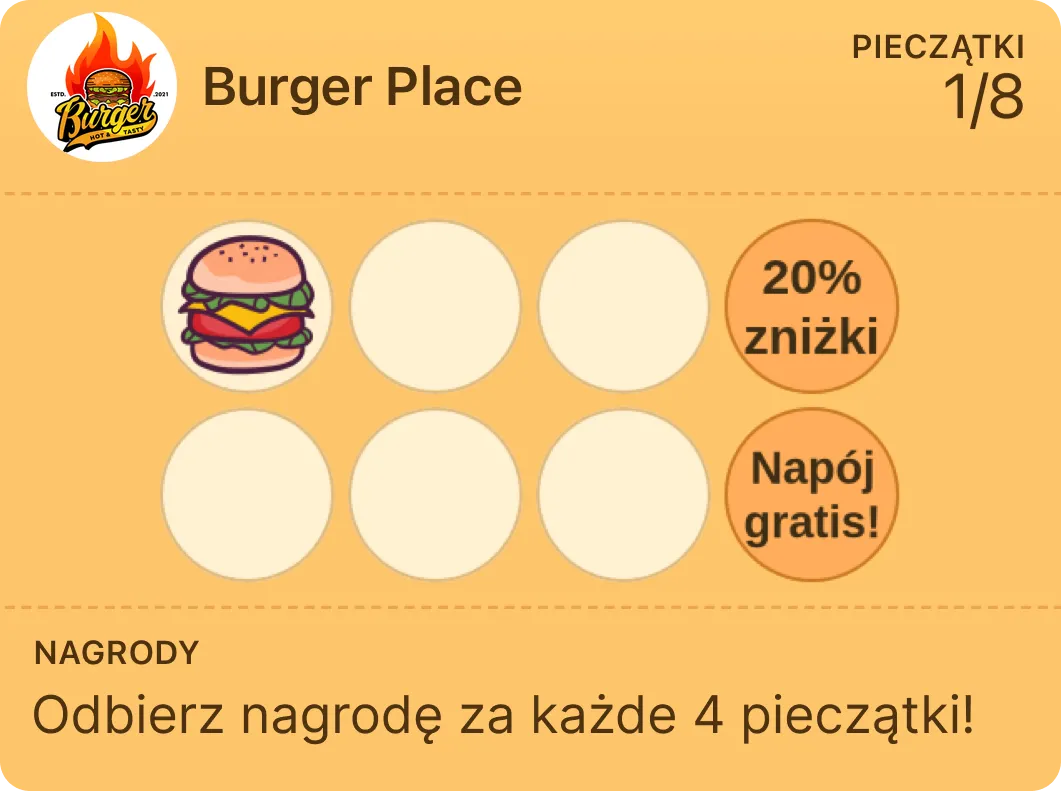
This is why simple digital stamp cards outperform complex points systems for most small businesses. “Buy 9 coffees, get the 10th free” requires zero explanation. No maths. No tiers. No expiry dates to track.
If your coffee shop asks customers to download an app, create an account, and remember a password — you’ve already lost half of them. The best small business loyalty programmes live in Apple and Google Wallet, where customers already keep their bank cards. Zero downloads. Zero friction.
Chipotle: The In-Store Gap Problem
Chipotle has 21 million active loyalty members and drives 30% of total sales through its Rewards programme. On paper, that’s impressive.
But there’s a problem hidden in the data: only 20% of in-store transactions use the rewards programme, compared to nearly 90% of mobile app orders.
That’s a massive gap. Chipotle has millions of members who use the programme when ordering on their phone — but forget about it when they walk into the restaurant. The company is responding with a full programme relaunch in spring 2026, adding AI-powered personalisation to bridge this divide.
Meanwhile, comparable sales declined 2.5% last quarter. Even a programme with 21 million members can’t save you if those members don’t engage consistently.
What this means for small businesses
The in-store experience is where small businesses actually have an advantage.
Chain restaurants struggle because the cashier doesn’t know you, the ordering system is impersonal, and nobody reminds you to scan your loyalty card. At your local restaurant or salon, the person behind the counter knows your name.
But you still need a system. A loyalty card that lives in your customer’s phone wallet means they see it every time they open their phone to pay. No app to forget. No physical card to lose. The stamp card appears alongside their bank cards — exactly where it should be.
5 Lessons Every Small Business Can Steal
1. Track frequency, not just sales
McDonald’s measures success by how often members visit, not just how much they spend per visit. A customer who comes in 26 times and spends £5 each time is worth £130 — far more than someone who visits twice and spends £30.
Your loyalty programme should do the same. Track repeat visits, not just total revenue. A customer who visits regularly is also more likely to refer friends, leave reviews, and become a vocal advocate.
2. Make joining effortless
McDonald’s has 185 million members because joining costs nothing and takes seconds. Starbucks removed point expiration to reduce one more reason people might not bother.
For a small business, this means: no app downloads, no account creation, no email required. A QR code on the counter that adds a stamp card to Apple or Google Wallet in 5 seconds. That’s it.
3. Simplicity beats sophistication
Starbucks can afford a three-tier system with variable star rates because they have a dedicated engineering team. Your nail salon doesn’t need that complexity.
A straightforward punch card — “every 8th visit gets a free treatment” — outperforms a complicated points system every time. Customers understand it instantly. Staff don’t need training. There’s nothing to explain.
4. Solve the in-store gap
Chipotle’s biggest weakness is that in-store customers forget to use the programme. Don’t let that happen to you.
Put your loyalty QR code where customers cannot miss it: on the counter, next to the card reader, on the receipt. Staff should mention it during every transaction — not as a sales pitch, but as a reminder: “Shall I add a stamp to your card?“
5. Start free, upgrade later
Starbucks and McDonald’s spend millions on their programmes. You don’t have to.
A free loyalty programme gets you 80% of the benefit at 0% of the cost. Start with a simple digital stamp card today. Once you’ve seen the impact on repeat visits — and you will — you can explore whether upgrading is worth it.
The Bottom Line
The world’s biggest brands are betting everything on loyalty. McDonald’s calls it their primary growth strategy. Starbucks just rebuilt their entire programme. Chipotle is relaunching with AI personalisation.
They’re doing this because the data is unambiguous: loyalty members visit more, spend more, and stay longer.
The good news? You don’t need a billion-dollar budget to get the same result. A simple digital stamp card — free, frictionless, living in your customer’s phone wallet — gives you the same psychological engine that drives McDonald’s 2.5x visit frequency.
The only difference is that when your regular walks in, you can actually say their name.
Ready to start? FaveCard lets you create a digital stamp card for free — unlimited customers, no app download required. Your customers add it to Apple or Google Wallet in 5 seconds.
Frequently Asked Questions
What is the best loyalty programme in 2026?
The best-performing loyalty programmes in 2026 are McDonald's MyRewards (185 million active members, 2.5x visit frequency), Starbucks Rewards (34.2 million members, 59% of revenue), and Chipotle Rewards (21 million members). For small businesses, digital stamp cards in Apple and Google Wallet offer the same repeat-visit effect without the enterprise budget.
Do loyalty programmes actually increase sales?
Yes. McDonald's reports that loyalty members visit 26 times per year compared to 10.5 for non-members — a 148% increase in frequency. Small businesses using digital loyalty cards see roughly 30-40% more repeat visits according to industry data.
How can a small business compete with Starbucks' loyalty programme?
Small businesses have a natural advantage: personal relationships. You don't need a 34-million-member programme. A simple digital stamp card that rewards every 8th or 10th visit works because you already know your regulars by name. The lesson from Starbucks isn't scale — it's removing friction.
What is the cheapest way to start a loyalty programme?
Digital stamp cards stored in Apple and Google Wallet. No app download, no hardware, no monthly fees. FaveCard offers a Free plan ($0, no time limit) with unlimited customers — plus 30 days of Pro for every new account. Setup takes under 5 minutes.
Why do some loyalty programmes fail?
Chipotle's experience shows the main reasons: only 20% of in-store customers use their programme despite 21 million members. The gap is friction. Programmes that require a separate app, complicated points calculations, or staff involvement at checkout lose most customers before they start.