Loyalty Program for Small Business (2026 Guide)
Find the right loyalty programme for your small business. Compare types, costs, and setup options. Free plan available — no app download needed.
Key Takeaway: The best loyalty programme for a small business is simple, free or cheap to run, and requires zero friction from customers. Digital stamp cards in Apple/Google Wallet tick all three boxes. 92% of consumers already belong to at least one loyalty programme — if yours isn't one of them, you're losing repeat visits to competitors who have one.
FaveCard Team
Published March 2, 2026
Last updated: March 2026
A loyalty programme for a small business is a structured way to reward repeat customers — typically through stamp cards, points, or tiered perks. The best options for small businesses are digital, cost nothing to start, and don’t require customers to download an app.
Key Takeaway: 92% of consumers are enrolled in at least one loyalty programme (EY, 2025). If your small business doesn’t have one, you’re not losing to big chains — you’re losing to the cafe down the street that does.
Why Small Businesses Need a Loyalty Programme
You already know repeat customers matter. Here’s how much:
- Acquiring a new customer costs 5-25x more than keeping an existing one (Harvard Business Review)
- A 5% increase in customer retention can boost profits by 25-95% (Bain & Company, cited by HBR)
- 79% of consumers say loyalty programmes make them more likely to keep buying from a brand (Square Future of Commerce 2025)
For a small business, this isn’t abstract. It’s the difference between a regular who comes every Tuesday and a one-time visitor who never returns.
The problem? Most loyalty programme advice is built for enterprise. Starbucks spends millions on their rewards app. You don’t have millions. You need something that works on a small business budget — ideally free — and takes minutes to set up, not months.
That’s what this guide covers.
4 Types of Loyalty Programmes (Which Fits Your Business?)
Not every loyalty programme works at small business scale. Here’s what does — and what doesn’t.
1. Digital stamp cards (best for most small businesses)
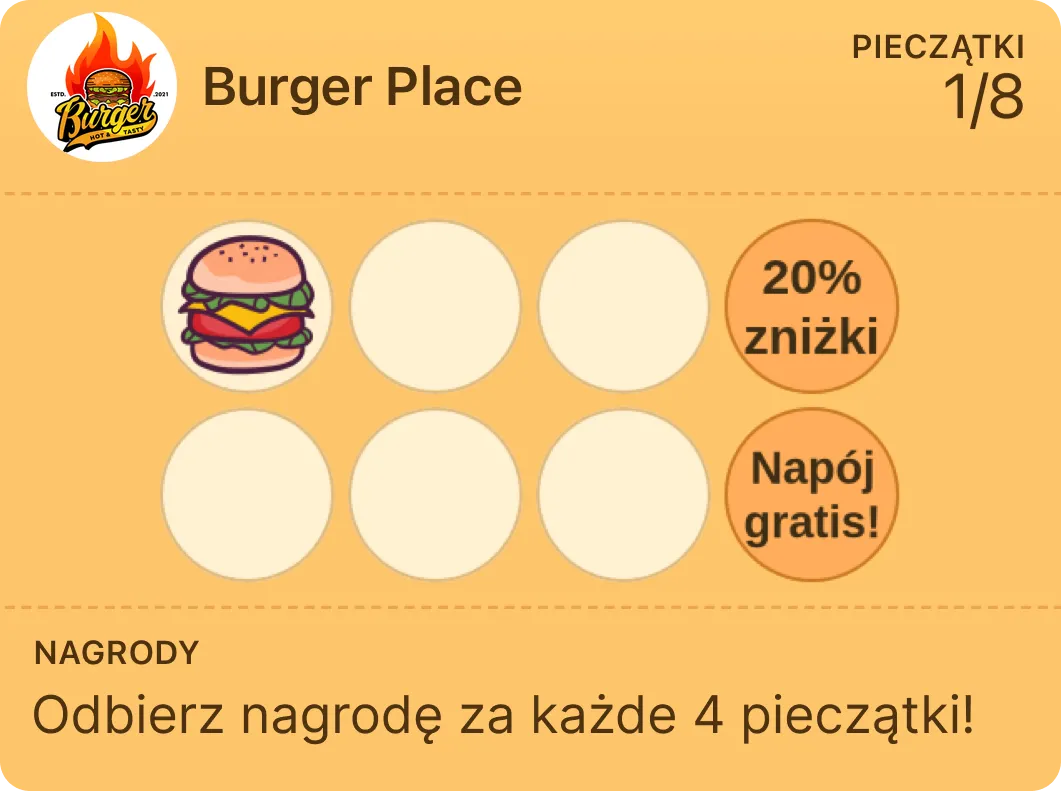
The concept your customers already know: buy X, get Y free. Instead of a paper card that gets lost in a drawer, customers scan a QR code and the stamp saves to Apple Wallet or Google Wallet.
Best for: Cafes, coffee shops, restaurants, salons, barbershops, bakeries, juice bars — any business with a consistent, repeatable purchase.
Why it works:
- Customers understand it instantly (no explanation needed)
- No app to download — cards live in the wallet app already on their phone
- Zero card loss — it’s always with them
- Setup takes 5 minutes
- Free plans available (FaveCard: $0 plan, no time limit)
Example: “Buy 8 coffees, get 1 free” or “Every 6th haircut is on us”
See our complete guide to digital loyalty cards for how the technology works.
2. Points-based programmes
Customers earn points per pound or dollar spent. Points convert to rewards at set thresholds.
Best for: Businesses with varying order sizes — restaurants, retail shops, pet stores.
Pros:
- Rewards scale with spending (big spenders earn faster)
- Flexible reward options (discounts, free items, exclusive access)
Cons:
- More complex to explain (“How many points do I need?”)
- Usually requires POS integration for automatic tracking
- Higher cost (most platforms charge $29-99/month)
3. Tiered programmes
Bronze, Silver, Gold levels with increasing perks at each tier.
Best for: Premium businesses with high average spend — spas, high-end salons, boutique retailers.
Pros:
- Creates aspirational goals (customers want the next tier)
- Top-tier customers feel exclusive
Cons:
- Needs a large customer base to be meaningful (100+ active members minimum)
- Complex to manage
- Overkill for a neighbourhood cafe or barbershop
4. Paid memberships
Customers pay a monthly or annual fee for ongoing perks.
Best for: Fitness studios, car washes, subscription-style businesses.
Pros:
- Guaranteed recurring revenue
- Members visit more often to “get their money’s worth”
Cons:
- High barrier to entry (customers must pay before seeing value)
- Requires strong brand loyalty to justify the fee
- Wrong fit for most small businesses starting out
Quick comparison
| Type | Typical cost | Customer friction | Best for |
|---|---|---|---|
| Digital stamp cards | Free–$19/mo | Very low (scan QR, done) | Most small businesses |
| Points-based | $29–99/mo | Medium (need to explain points) | Restaurants, retail |
| Tiered | $49–199/mo | Medium-high | Premium, high-spend businesses |
| Paid membership | Custom | High (requires upfront payment) | Fitness, subscriptions |
Our recommendation: Start with a digital stamp card. It’s the simplest to launch, the cheapest to run, and has the highest adoption rate because customers don’t need to download anything. You can always upgrade to points or tiers later.
How Much Does a Loyalty Programme Actually Cost?
Here’s what small business owners actually pay — not enterprise pricing hidden behind “contact sales” buttons.
| Platform | Monthly cost | Free plan? | App download required? |
|---|---|---|---|
| FaveCard | $0 (Free) / $19 (Pro) | Yes, no time limit | No (Apple/Google Wallet) |
| Square Loyalty | $45/location | No | No (Square ecosystem) |
| Stamp Me | $49/mo (with 50% promo) | No | Yes |
| Loopy Loyalty | $20/mo | No | No (wallet passes) |
| Belly/Fivestars | ~$100+/mo | No | Yes |
The honest breakdown:
- $0/month: FaveCard Free — digital stamp card, Apple & Google Wallet, unlimited customers, basic analytics. FaveCard branding on your card.
- $19/month: FaveCard Pro — everything in Free plus custom branding, customer messages straight to their phones, full customer data export.
- $45+/month: Square Loyalty — requires Square POS hardware. Good if you already use Square, expensive if you don’t.
- $49+/month: Stamp Me, Toast — mid-range with more features, but most require customers to download a separate app.
Bottom line: If you’re spending more than $19/month on a loyalty programme as a small business, you’re probably paying for features you don’t use. Start free, upgrade when you need to.
For a deeper look at free options, see our comparison of free digital loyalty card apps.
How to Set Up a Loyalty Programme in 5 Minutes
Here’s the fastest path from “no loyalty programme” to “customers scanning their cards.”
Step 1: Pick your reward (30 seconds)
Choose something your customers already buy. The best reward is a free version of your most popular item:
| Business type | Good reward | Less effective reward |
|---|---|---|
| Coffee shop | Free coffee | 10% off |
| Restaurant | Free appetiser | Points towards mystery gift |
| Hair salon | Free blowout | Discount on products |
| Barbershop | Free haircut | Half-price styling product |
| Nail salon | Free gel manicure | Free nail art add-on |
Rule of thumb: If a customer wouldn’t get excited telling a friend about it, pick a different reward. Need more ideas? See our punch card ideas guide.
Step 2: Set your stamp count (30 seconds)
How many visits before they earn the reward? Industry benchmarks:
- Coffee shops: 8–10 stamps (customers visit frequently)
- Restaurants: 6–8 stamps (moderate visit frequency)
- Salons and barbershops: 5–6 stamps (less frequent, higher spend)
For most businesses, 8 stamps is the sweet spot — achievable enough to motivate, generous enough to protect your margins.
Step 3: Create your card (2 minutes)
With FaveCard:
- Sign up (free, no credit card needed)
- Choose your colours and branding
- Set your stamp count and reward
- Done — your card is ready for both Apple Wallet and Google Wallet
No coding. No POS integration required. No hardware to buy.
Step 4: Share it (1 minute)
- Print your QR code and put it at the register (eye level, not hidden behind the till)
- Share the link on your social media
- Tell your staff to mention it to every customer
Customers scan the QR code, tap “Add to Wallet,” and they’re enrolled. Takes them 5 seconds.
Step 5: Track and adjust (ongoing)
After 30 days, check your dashboard:
- How many customers enrolled?
- Who’s close to earning a reward?
- Are people actually returning?
If enrolment is low, promote it more actively. If redemption is low, try a more compelling reward.
Want to estimate the revenue impact before you start? Use our free ROI calculator.
What to Expect: Month by Month
A loyalty programme isn’t a switch you flip. It compounds over time.
Month 1: Building the base
- 15–30% of daily customers will enrol (if staff actively promote it)
- No measurable change in repeat visits yet
- Focus: get the QR code in front of every customer
Month 2: First signs
- Early adopters start returning more frequently
- You’ll see 2–3 reward redemptions per week
- Some customers start asking about their stamp progress
Month 3+: The compounding effect
- Your enrolled base reaches critical mass
- Repeat visits increase measurably — merchants see approximately 40% more frequent visits on average, according to Square
- You can now send messages to customers through their loyalty card — reminders, double-stamp days, special offers
- Word of mouth kicks in as customers mention your programme to friends
Month 6+: Steady state
- Loyalty members make up a significant share of daily revenue
- Revenue from repeat visits has measurably increased
- You have enough data to optimise (adjust stamp count, try different rewards, identify your best customers)
The key insight: Most businesses that give up on loyalty programmes do so in month 1–2, before the compounding effect starts. Commit to at least 90 days.
Loyalty Programmes by Industry
We’ve written detailed setup guides for each business type:
| Your business | Guide | Key insight |
|---|---|---|
| Coffee shop | Coffee Shop Loyalty Programme → | 8–10 stamps, free drink reward |
| Restaurant | Restaurant Loyalty Programme → | Free appetiser beats percentage discounts |
| Hair salon | Hair Salon Loyalty Programme → | Pair with online booking for 78% higher retention |
| Nail salon | Nail Salon Loyalty Programme → | Rebooking scripts at checkout increase return rate |
| Barbershop | Barbershop Loyalty Programme → | 2–4 week cycle makes stamp cards ideal |
| Salon (general) | Salon Loyalty Programme → | CLV of a loyal client: $5,000+ over 10 years |
Don’t see your industry? The principles are the same: simple reward, low friction, consistent promotion. Digital stamp cards work for any business with repeat customers.
5 Mistakes That Kill Small Business Loyalty Programmes
1. Making it too complicated
Points systems with conversion rates, expiry dates, and tiered multipliers confuse customers. If you can’t explain your programme in one sentence, simplify it.
Fix: “Buy 8, get 1 free.” Done.
2. Choosing the wrong reward
A 10% discount doesn’t excite anyone. A free item they already love does.
Fix: Offer a free version of your best-seller.
3. Not promoting it
The best loyalty programme means nothing if customers don’t know it exists. A QR code hidden behind the register doesn’t count.
Fix: QR code at eye level. Staff mention it to every customer. Social media post when you launch.
4. Requiring an app download
43% of consumers prefer wallet cards over downloading a separate app. Every extra step you add — download app, create account, verify email — loses customers.
Fix: Use a wallet-based solution. Customers scan a QR code, tap “Add to Wallet,” done. No app, no account, no password. Read our paper vs digital loyalty cards comparison for the full breakdown.
5. Giving up too early
Month 1 won’t show dramatic results. The real payoff comes at month 3+ when your enrolled base reaches critical mass.
Fix: Commit to 90 days minimum. Track enrolment weekly, not revenue daily. Read Is a Loyalty Programme Worth It? for realistic ROI projections.
Is a Loyalty Programme Right for YOUR Business?
Quick test:
Yes, it makes sense if:
- You have repeat customers (people buy from you more than once)
- You see at least 10 customers per day
- Your average order is $5 or more
- You’re willing to promote it actively for 90 days
Probably not worth it if:
- You sell one-time products (furniture, cars, moving services)
- You have fewer than 5 customers per day
- You’re not ready to promote it consistently
For the full analysis with revenue projections, use our free ROI calculator.
Start Your Loyalty Programme Today
You can have a loyalty programme running in 5 minutes:
- Calculate your expected ROI — see what it could mean for your revenue
- Create your free loyalty card — FaveCard’s Free plan costs $0, no time limit, works with Apple & Google Wallet
- Print your QR code — put it at the register and start enrolling customers today
85% of consumers say they’re more likely to keep buying from brands with loyalty programmes (Bond Brand Loyalty / Visa, 2024). The question isn’t whether to start — it’s how soon.
Ready to set up your loyalty programme? FaveCard has a $0 plan — try all Pro features free for 30 days. Create your digital stamp card in 5 minutes. Works with Apple Wallet and Google Wallet, no app download needed.
Frequently Asked Questions
What is the best loyalty programme for a small business?
The best loyalty programme for a small business is one your customers actually use. Digital stamp cards stored in Apple or Google Wallet have the highest adoption because there's nothing to download. FaveCard offers a Free plan ($0, no time limit) with unlimited customers — plus 30 days of Pro for every new account.
How much does a loyalty programme cost for a small business?
Costs range from $0 to $300+ per month. FaveCard has a Free plan ($0, no time limit). Most paid platforms charge $19-$99/month. Enterprise solutions cost $200+/month. For most small businesses, a free or low-cost option is enough.
Do loyalty programmes actually work for small businesses?
Yes. According to Square's 2025 Future of Commerce report, over 80% of small business leaders in restaurants, retail, and beauty report positive ROI from loyalty programmes. Merchants using loyalty programmes see approximately 40% more repeat visits.
How do I start a loyalty programme with no budget?
Use a platform with a free plan like FaveCard. Sign up, design your stamp card, and share the QR code at your counter. Customers add the card to Apple or Google Wallet in 5 seconds. No app download, no hardware needed.
What type of loyalty programme works best for small businesses?
Digital stamp cards work best for most small businesses. Customers understand the 'buy X, get Y free' concept instantly. No explanation needed, no points to calculate. For businesses with varying order sizes, points-based systems can also work.