




How to Ask for Google Reviews (Without Being Pushy)
When to ask, what to say, and word-for-word scripts for getting Google reviews. Ask everyone the compliant way, at the moment goodwill peaks.
Key Takeaway: Ask every customer for a Google review at a happy moment, keep the words to one warm sentence, and make it one tap. Timing and an honest, everyone-gets-asked approach get the yes, not pressure.
FaveCard Team
Published June 1, 2026 · Updated July 6, 2026
Last updated: June 2026
The best way to ask for a Google review is to ask every customer at a happy moment, keep the words to one warm sentence, and make it one tap to leave. Timing and an honest, everyone-gets-asked approach get the yes. Pressure and cherry-picking get you ignored, or worse, get your reviews removed.
Most local owners know reviews matter. They show up in Google Maps, they sway the person deciding between you and the place down the road, and a steady flow of fresh ones keeps you looking alive and trusted. In BrightLocal’s 2026 Local Consumer Review Survey, 71% of consumers said they used Google to read reviews of local businesses, more than any other source. The same survey found people increasingly want recent reviews over old ones, so it’s not just the count that matters. It’s keeping them fresh, which means asking has to be a habit, not a one-off push.
The problem was never knowing reviews matter. It’s the awkward bit: actually asking, without feeling like a pest. This guide handles the strategy of that: when to ask, the exact words, who to ask, and the one rule that keeps you compliant. For the mechanics of finding and setting up your review link or QR code, see how to get your Google review link, which covers that half in detail.
In this guide:
- Why asking feels awkward (and why it doesn’t need to)
- The redemption-moment ask, explained
- The best moments to ask, by trade
- Exactly what to say (scripts you can steal)
- The one rule: ask everyone, never screen
- Staying compliant: pressure, premises, and incentives
- What to do when someone’s unhappy
- Getting more reviews over time
Why Asking Feels Awkward (And Why It Doesn’t Need To)
Most owners hate asking because it feels like begging, or like they’re imposing on a customer who’s just trying to leave. So they don’t ask, and then they wonder why their five-year-old shop has eleven reviews while the new place across the street has ninety.
Reframe it. People are usually glad to help a local business they like. They just need two things: to be asked when they’re feeling good, and to be shown a way that takes seconds. Get those two right and the awkwardness disappears, because you’re not pestering anyone. You’re catching a happy customer and giving them something easy to say yes to.
Good moment, easy route. Everything below is detail on those two.
The Redemption-Moment Ask
There’s one moment in a loyalty business that beats all the others for asking, and most owners walk straight past it. We call it the redemption-moment ask: inviting a Google review at the exact second a loyalty customer collects their reward, when goodwill is at its peak.
Think about what’s happening when a regular redeems a free coffee or a free cut. They came back enough times to earn it. You’ve just handed them a small thank-you they didn’t pay for. For those few seconds they’re having a genuinely good moment, and it’s because of you. That feeling is the strongest “yes” energy you’ll get all week, and it lines up with what readers want to see: a steady supply of fresh reviews rather than a stack of old ones.
Compare that to the usual ask. A QR code on the wall reaches whoever happens to glance at it. An email three days later lands in a busy inbox after the warm feeling has faded. The redemption moment is different because it’s timed to a high point and it reaches the customers most likely to say something kind and true: your regulars. It’s the angle most “get more reviews” advice misses entirely, and it’s the one we’d build a whole routine around.
We’ve seen the same pattern in our own loyalty card completion research: the reward moment is the emotional centre of the loyalty relationship. It’s worth using for more than just the reward itself.
The Best Moments to Ask, By Trade
Timing does most of the work. The same customer who’d ignore a request on a random Tuesday will happily leave a review when they’re standing at your counter grinning. Aim for the high point of the visit, and the high point looks a little different in each trade.
| Trade | The happy moment | The natural cue |
|---|---|---|
| Cafe / takeaway | A great order, or a regular redeeming a free coffee | As you hand over the reward |
| Hair salon / barber | The chair spins round and they like what they see | The pause at the mirror, before payment |
| Nail salon / beauty | A fresh set admired under the light | While they’re still looking at the work |
| Restaurant / bar | The end of a meal that went well, plates cleared | As they say it was lovely, or as they pay |
The redemption moment sits at the top of all of these. If you run a loyalty card, a reward redemption is the most reliable happy moment you have, in any trade. Anchor the ask to it.
Avoid the dead moments: a cold email a week later, a request shoved at someone clearly in a rush, or asking the same loyal regular over and over. Asking at a high point beats asking often.
Exactly What to Say (Scripts You Can Steal)
Keep it short, warm, and specific to the thing they just enjoyed. Don’t read a paragraph. One or two sentences, then point them to the easy route.
At the counter or checkout:
“So glad you liked it. If you’ve got 20 seconds, a quick Google review really helps people find us. I can show you, it’s one tap.”
When a customer redeems a loyalty reward:
“Enjoy your free one, you’ve earned it. No pressure at all, but if you fancy it, a quick Google review would mean a lot to us.”
For an appointment business, at the end:
“Really happy with how that turned out. If you’ve got a moment later, a Google review helps other people find the shop, and it genuinely makes our day.”
A few things make these work:
- They mention the specific good thing (“liked it”, “earned it”, “turned out”), so it feels personal rather than rehearsed.
- They give a tiny time estimate (“20 seconds”, “a moment”), which lowers the barrier.
- They explain why it helps (people find us), which gives a reason beyond doing you a favour.
- They never hint at a star rating. You’re asking for an honest review, not a five-star one.
Don’t over-rehearse it. Stiff, identical wording every time reads as a script and kills the warmth. Say it like you mean it, because you do.
The One Rule: Ask Everyone, Never Screen
Almost every “get more reviews” hack quietly suggests the same shortcut: ask your happy customers for a Google review, and send the grumpy ones to a private form instead. Funnel the five stars to Google, catch the one stars before they go public.
Don’t. That’s called review gating, and Google’s content policy prohibits it. The policy bans businesses that “discourage or prohibit negative reviews, or selectively solicit positive reviews from customers.” Get caught and Google can remove your reviews and flag your profile. You’d be trading a short-term star bump for long-term damage.
So you ask every customer the same way. The compliant approach is the simple one:
| Do this | Not this |
|---|---|
| Ask every customer | Only ask people you think are happy |
| Send everyone to the same public Google link | Pre-screen, then divert the unhappy ones elsewhere |
| Keep it a genuine invitation | Pressure people or set a quota |
| Let the feedback be honest | Try to control what people write |
Asking everyone feels riskier than cherry-picking, but the opposite is true. If your service is good, the honest spread of reviews you collect will be strong, recent, and trusted, which is exactly what wins over a stranger reading them. A few middling reviews you’ve replied to well often do more for the next reader than a suspiciously perfect run of fives.
Staying Compliant: Pressure, Premises, and Incentives
Asking is allowed and even encouraged by Google. Google’s own review guidance says plainly: “To leave reviews, you can ask customers to visit a Google link or scan a QR code.” Three lines you need to hold onto, though:
- The in-person ask is an invitation, never a requirement. Google’s policy states that “merchants should not require or pressure users to leave ratings or write reviews while on the premises.” So you can warmly invite a customer at the counter, but you can’t stand over them, insist, or make it feel mandatory. “No pressure either way” is a good thing to actually say out loud.
- Never tie a review to a reward. Offering “payment, discounts, free goods and/or services” in exchange for a review is banned. You reward customers for visiting (that’s your loyalty programme) and ask for a review separately. Never say “review us and get a free coffee.” The redemption-moment ask works because of the timing, not because the reward is payment for the review. The reward was already earned by coming back.
- No quotas for staff. Don’t ask your team to chase a target number of reviews or reviews that say a particular thing. Just ask everyone, genuinely, at the right moment.
None of these rules limit a good, honest habit. They only rule out the shortcuts that get businesses penalised.
What to Do When Someone’s Unhappy
Asking everyone means some customers won’t be thrilled, and that’s fine. What you must not do is intercept those customers and steer them away from Google. That’s gating again.
What you should do is give every customer a genuine private channel to raise concerns, alongside the public review ask, not instead of it. If you want to hear problems early so you can fix them, that’s what a short private survey is for. FaveCard’s separate Surveys feature lets customers leave private feedback right on their loyalty card, so you can catch a quiet complaint and put it right, while the Google review request still goes to everyone. The two do different jobs: surveys are for hearing concerns privately, Google reviews are asked of everyone publicly.
Caught early, a quiet complaint is a gift. Reach out, fix it, and tell the customer what changed. That kind of service recovery often turns an unhappy customer into a loyal one, and it’s how a small business keeps the people a big chain would have lost. For the full picture on handling honest feedback without crossing any lines, see our guide to customer feedback and reviews.
Getting More Reviews Over Time
One good ask gets you one review. A habit gets you a steady stream, which is what both customers and Google actually reward, given how much weight recency now carries. The habit has three parts:
- Make asking automatic where you can. A printed Google review QR code relies on a busy team remembering to point at it. If you run a loyalty card, the request can arrive on its own at the redemption moment, so you’re not depending on anyone to remember in the rush.
- Reply to every review, good or bad. A short, genuine reply signals you’re paying attention and quietly encourages the next person to bother. A calm, kind reply to a so-so review is some of the best free advertising you’ll ever do.
- Keep it recent. A frantic one-off push of twenty reviews helps less than a few new ones every month. Build the ask into the daily rhythm and the count takes care of itself. Wondering what number to aim for? See how many Google reviews you need.
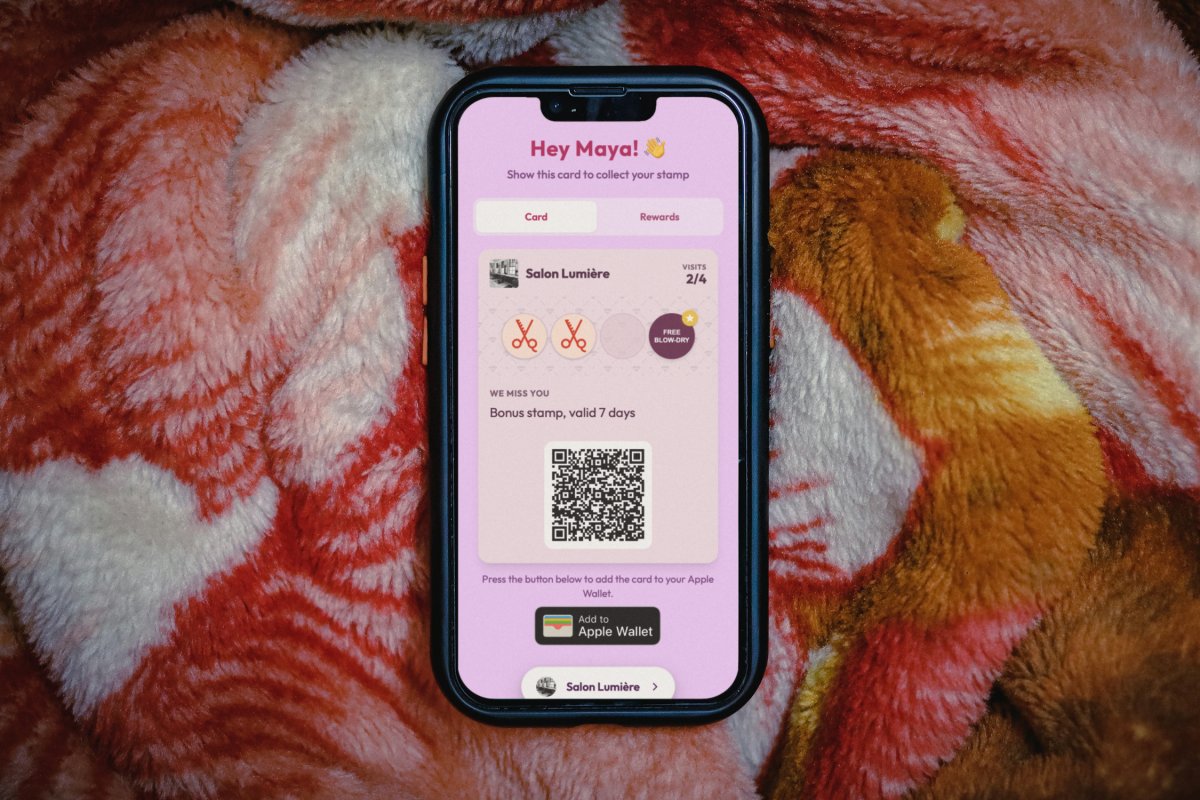
This is where a digital loyalty card earns its place. The customers who carry a digital loyalty card are exactly the ones who like you enough to come back, and the card knows when a happy moment happens. FaveCard’s Google Reviews feature uses that: it invites your customers to leave a Google review at a high point like a reward redemption, on the card they already keep on their phone, with one tap straight to your public review page. No app to download, no phone number needed, and no screening. Everyone who’s asked goes to the same public Google page. The edge is purely timing and convenience, not deciding who gets to review you.
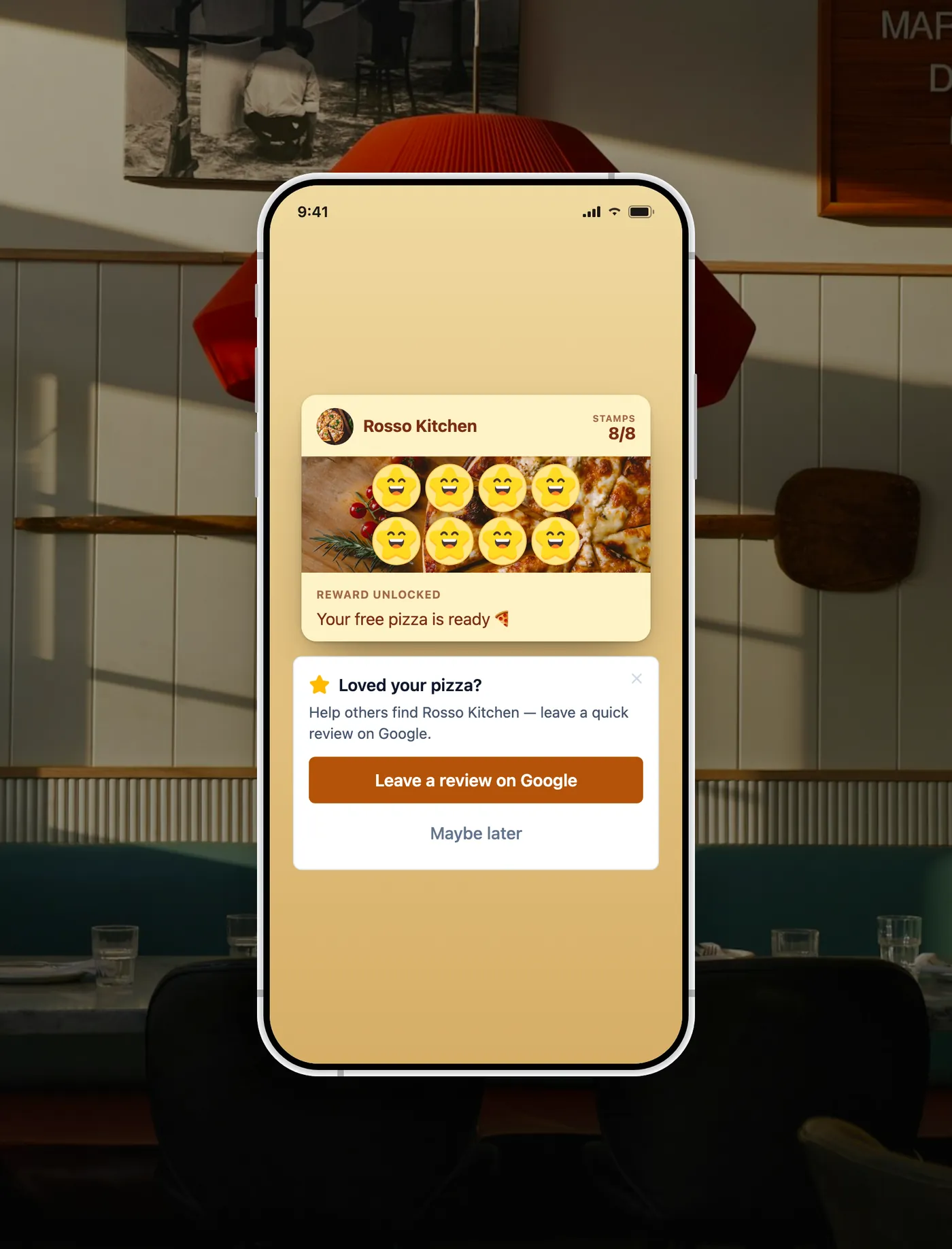
The Google Reviews prompt appears at a high point, right after a reward. Everyone who’s asked goes to the same public Google page, with no screening.
It pairs naturally with the other ways a digital card helps you reach customers between visits: one habit brings a quiet customer back, the other turns a happy one into public proof.
Frequently Asked Questions
How do I ask customers for a Google review?
Ask in person at a happy moment, then point them to your Google review page in one tap. Keep it to one warm sentence, such as “If you’ve got 20 seconds, a quick Google review really helps a small place like us.” Don’t read a script word for word, and don’t hint that you only want five stars. The more natural the ask and the easier the route, the more people follow through.
Is it against Google’s rules to ask for reviews?
No. Google’s own help page says you can ask customers to visit a Google link or scan a QR code to leave a review. Three things are banned: review gating (only asking happy customers, or steering unhappy ones away from Google), offering a discount or freebie in exchange for a review, and pressuring or requiring people to review you while they’re on your premises. Ask everyone, keep it an invitation, and never pay for it.
When is the best time to ask for a Google review?
Right after a clear high point, while goodwill is at its peak: a finished haircut they love, a meal that went well, or the moment a customer collects a loyalty reward they earned. Asking then feels natural. A cold email three days later competes with a full inbox after the good feeling has faded, and it gets far fewer replies.
What should I say when asking for a review?
Keep it short, warm, and specific to what they just enjoyed. Something like: “So glad you liked it. If you’ve got a moment, a quick Google review would mean a lot, it helps people find us.” Then make it effortless to do. Avoid stiff, identical wording every time, and never say or imply you’re after five stars.
Should I only ask my happy customers?
No. Asking only the customers you think are happy, while quietly keeping unhappy ones away from Google, is review gating, and Google prohibits it. Reviews collected that way can be removed. Ask everyone the same way, send everyone the same public link, and give a separate private channel for concerns. An honest spread of recent reviews reads as more trustworthy than a wall of perfect fives anyway.
Can I offer a discount for leaving a review?
No. Offering payment, discounts, or free goods in exchange for reviews is against Google’s policy and the reviews can be removed. You can reward customers for visiting (that’s what a loyalty programme is for) and ask for a review separately, but never tie the two together as “review us and get a free coffee”.
Where to Start
Pick your happy moment, agree one warm sentence with your team, and start asking everyone in person. If you run a loyalty card, anchor the ask to the redemption moment, where goodwill peaks, and let it happen automatically so nobody has to remember in the rush. Keep it an invitation, never tie it to a reward, and reply to whatever comes back. Do that and the honest, recent reviews build on their own, the kind that make the next person choose you.
Want review requests to reach customers at the right moment?
FaveCard’s loyalty card lives on your customers’ phones, and Google Reviews (a paid feature, see pricing) invites every customer to leave a Google review at a happy moment like a reward redemption, with a one-tap link straight to your public review page. No screening, no app to download.
Start free with premium tools until the first 30 customers are on the card and turn your happiest moments into honest reviews.
Related guides
Frequently Asked Questions
How do I ask customers for a Google review?
Ask in person at a happy moment, then point them to your Google review page in one tap. Keep it to one warm sentence, such as 'If you've got 20 seconds, a quick Google review really helps a small place like us.' Don't read a script word for word, and don't hint that you only want five stars. The more natural the ask and the easier the route, the more people follow through.
Is it against Google's rules to ask for reviews?
No. Google's own help page says you can ask customers to visit a Google link or scan a QR code to leave a review. Three things are banned: review gating (only asking happy customers, or steering unhappy ones away from Google), offering a discount or freebie in exchange for a review, and pressuring or requiring people to review you while they're on your premises. Ask everyone, keep it an invitation, and never pay for it.
When is the best time to ask for a Google review?
Right after a clear high point, while goodwill is at its peak: a finished haircut they love, a meal that went well, or the moment a customer collects a loyalty reward they earned. Asking then feels natural. A cold email three days later competes with a full inbox after the good feeling has faded, and it gets far fewer replies.
What should I say when asking for a review?
Keep it short, warm, and specific to what they just enjoyed. Something like: 'So glad you liked it. If you've got a moment, a quick Google review would mean a lot, it helps people find us.' Then make it effortless to do. Avoid stiff, identical wording every time, and never say or imply you're after five stars.
Should I only ask my happy customers?
No. Asking only the customers you think are happy, while quietly keeping unhappy ones away from Google, is review gating, and Google prohibits it. Reviews collected that way can be removed. Ask everyone the same way, send everyone the same public link, and give a separate private channel for concerns. An honest spread of recent reviews reads as more trustworthy than a wall of perfect fives anyway.
Can I offer a discount for leaving a review?
No. Offering payment, discounts, or free goods in exchange for reviews is against Google's policy and the reviews can be removed. You can reward customers for visiting (that's what a loyalty programme is for) and ask for a review separately, but never tie the two together as 'review us and get a free coffee'.