New: Free plan, $0, no time limit. No credit card needed.
For cafés, brunch rooms and bistros
A membership for your regulars. Free to join, nothing to download, and it remembers how they take their coffee.
Buy more, pay less. That logic works where people shop on price. It falls apart at a place people chose because it is good.
A discount at a venue someone already loves buys you nothing. They were coming anyway. It costs margin every time, and it quietly tells them the thing they love is worth less than they thought.
Your regulars are not looking for ten per cent off. They are looking for the feeling of walking in and being known.
A loyalty scheme says
A membership says
Underneath, the mechanic is the same one that has worked in hospitality for a hundred years. What changes is what you do with it, and what you call it.
A QR code on the table, the menu, or the counter. One scan and they are in, on their own phone. No app to download, no account to create, no form anyone dreads filling in.
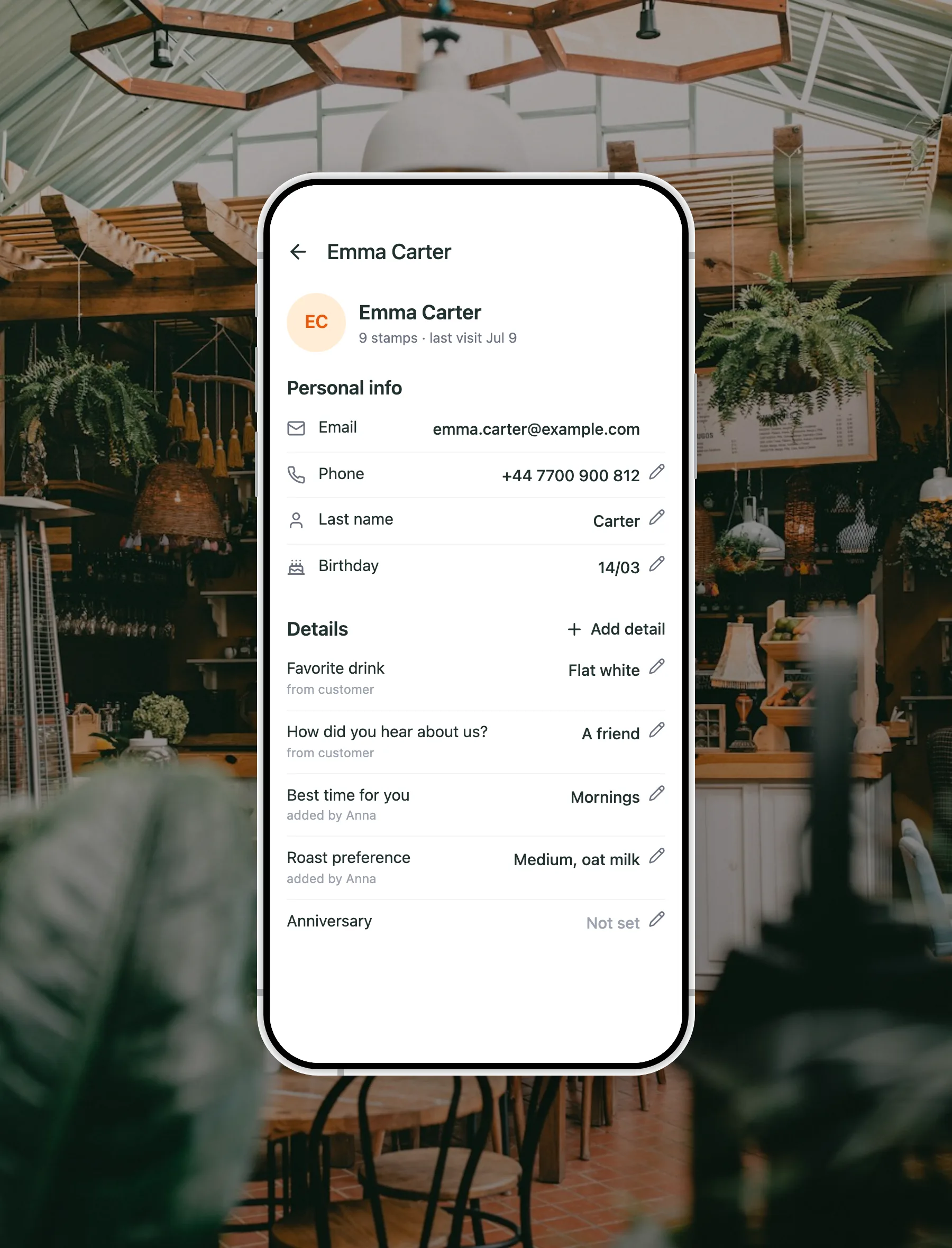
Ask the two or three things worth knowing when they join. Oat or dairy. Their usual order. The allergy. Whoever is on the floor sees it when they scan, so the guest is recognised by your team, not by the one person who happens to be in that day.
The card fills up as they visit. When it is full they get something from you. Not money off. Something you would have been glad to give them anyway.
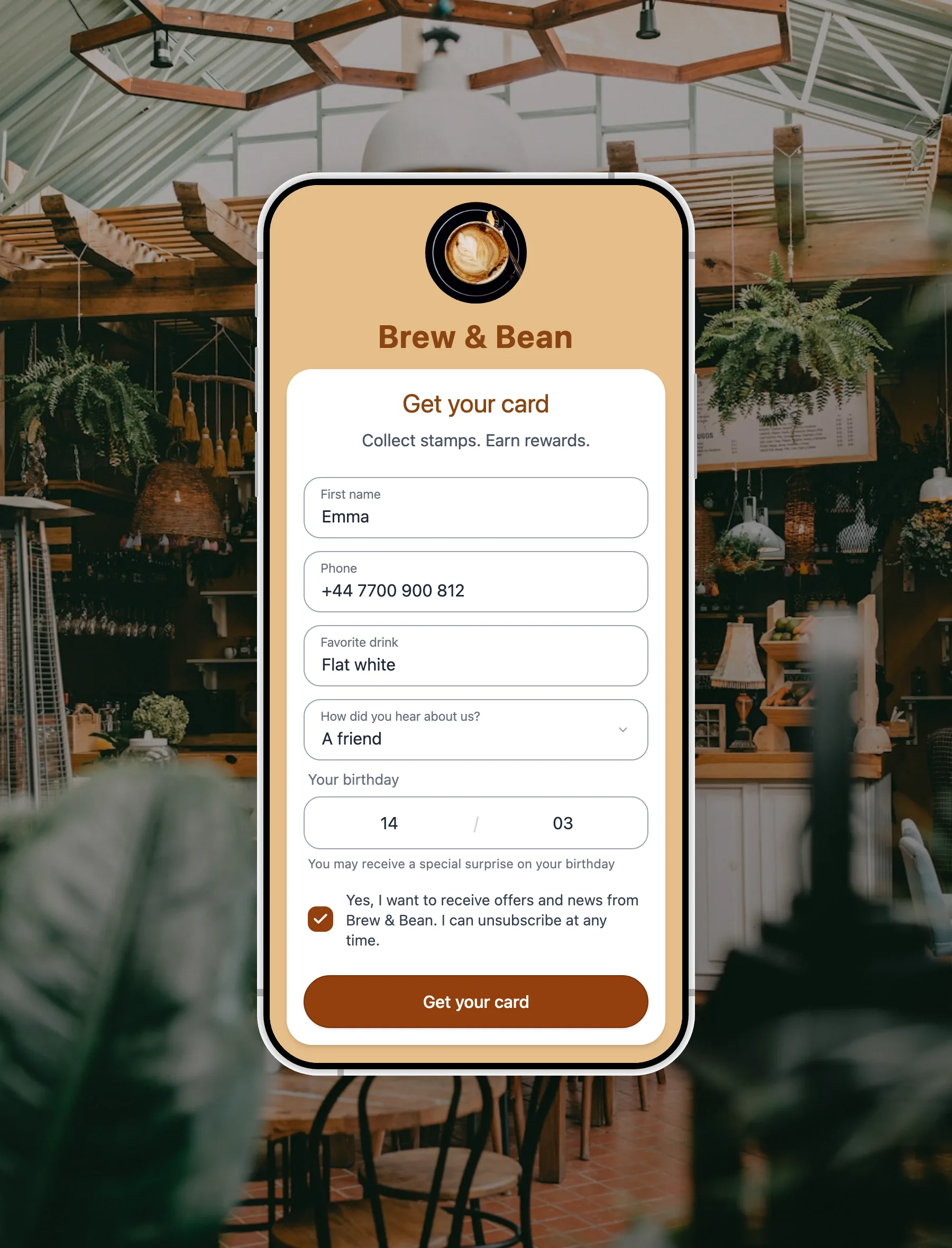
The join screen is the only moment a guest will happily tell you something about themselves, and it lasts about ten seconds. Use it for the two or three things your floor could actually act on.
How they take their coffee. The allergy. Whether mornings suit them. Nothing that feels like a form, and nothing you would not use.
This is the part most owners get stuck on, and it is the right thing to get stuck on. You do not want to train your best guests to wait for money off.
So do not give them money off. Give them the things that cost you almost nothing and read as generous:
A ten per cent discount on a £14 brunch is £1.40 of margin, gone, to someone who was already on their way. A held table costs nothing and is remembered for a year.
Your logo, your colours, your photography. On a paid plan the card carries your identity and nobody else's, including ours. It sits in Apple Wallet and Google Wallet next to their boarding pass and their bank card, which is roughly the company you want to be keeping.
See plans →K&K Tonsorial Parlour, St John's Hill, Battersea. A premium barbershop, not a chain, running a digital card for their regulars.
We also publish our own numbers rather than borrowing anyone else's. Across 23,296 stamp events from 10,690 customers at 1,013 businesses, the pattern for sit-down venues is clear: five to six visits, inside a five to six week window. Ask for more than that and the card quietly gets abandoned.
Read the benchmark →Underneath, yes, and that is the point. The mechanic is old because it works: visible progress is the reason people finish things. What changes is everything around it, from what the card looks like to what the reward is to what you call it when you tell a guest about it.
Only if it behaves like a coupon. A card that offers money off says your product is negotiable. A card that remembers a guest's usual and holds them a table says the opposite. Same card, opposite message, and you decide which one it sends.
Yes, for your guests, always. There is no fee, no tier to climb and no points to work out. Members join in one scan and stay in. On your side the free plan covers the card itself, and paid plans add wallet passes, your own branding and messages.
No. The card opens on their phone from a single scan. On a paid plan it also saves into Apple Wallet or Google Wallet, so it is there without them going looking for it.
Then do not. Set the reward to something that is not money: a glass of the new season's wine, first booking on a menu night, the seat by the window. The card tracks visits, and what you give at the end is entirely yours to choose.
Fewer than most venues assume. Across 23,296 stamp events at 1,013 businesses, sit-down venues do best at five to six visits inside a five to six week window. Ask for more than that and the card is quietly abandoned.
Yes. If you have several rooms there is a plan built for that.
Pricing for every plan is on the pricing page .
Free to set up, free for your guests to join, and running before your next service.
No card needed to begin, and premium tools are included until your first thirty members.