




Prepaid Punch Pass: How to Sell and Track 10-Visit Passes
How a car wash, studio or salon sells a 10-visit pass, tracks each visit without paper cards, and when a stamp card is the better choice.
In short
Sell a prepaid 10-visit pass to weekly regulars buying one fixed-price service, at a 10% to 25% discount that stays inside your margin. Check your local rules first, print the end date and sharing terms at purchase, and track remaining visits at your counter or on a live phone pass instead of a paper card.
Last updated: November 2026
A prepaid punch pass works best when regulars come in every week or two for the same fixed-price service, pay for 5 to 10 visits up front at a small discount, and use one visit at a time. When customers visit every few weeks or spend different amounts each trip, a loyalty stamp card builds repeat habits without upfront friction or unspent balances.
| Format and when customers pay | Who it fits | What you get, and what to watch |
|---|---|---|
| Prepaid punch pass: up front, for a set bundle of visits | Weekly regulars buying one fixed wash, class, or session | Cash on day one and committed return visits; watch lost or faked paper cards, expiry rules and unspent visits |
| Loyalty stamp card: each visit, at menu price | Visitors every 2 to 4 weeks, or tickets that vary | Steady repeat visits with no refund math; slower cash flow, and the reward comes after paid visits |
| Recurring membership: billed automatically every month or week | Twice-weekly gym members or express-tunnel commuters | Predictable recurring revenue; needs billing setup, brings cancellation requests, and risks heavy use of hands-on services |
What is a prepaid punch pass?
A prepaid punch pass is a bundle of visits paid up front, usually at a small discount, and used one visit at a time. Businesses also call the bundle a 10-visit pass, class pack, wash book, or session package. A loyalty punch card works in reverse: customers pay per visit to earn a free reward.
Different trades put different names on the menu board for the same setup:
- Car washes sell a 5- or 10-wash pass or wash book for one wash tier.
- Yoga and dance studios sell a 10-class pass or class pack for drop-in students.
- Tanning and nail salons sell a 6-session tanning package or a 5-manicure package.
- German-speaking businesses call a ten-visit pass a 10er Karte.
Customers like paying once to trim the per-visit cost and make future visits feel paid for already. Owners get upfront cash before a rainy week and keep regulars out of a competitor’s bay or chair. For the pay-per-visit kind where regulars earn a reward later, see our punch card ideas.
When does a pass beat a stamp card, and when doesn’t it?
A prepaid punch pass beats a stamp card when regulars return on a steady schedule for one fixed-price service, such as weekly classes or twice-monthly washes, while a stamp card fits occasional visitors or tickets that vary. For customers whose ticket changes each visit, even weekly ones, size a stamp card to about 8 weeks of visits: 6 stamps for weekly visits, 5 for every 2 to 3 weeks, or 4 for monthly (stamp count guide).
Two questions settle the choice: how often does a regular show up, and is the ticket price identical every time?
At a car wash, a Friday commuter happily buys a 10-wash pass covering one basic exterior wash. At a neighborhood hand wash where drivers pull in every three weeks and switch between quick washes and interior cleans, asking for ten washes up front stalls the lane; digital loyalty cards for car washes fit better.
Yoga and dance studios see plenty of weekly students who travel and dislike auto-pay, making a 10-class pack an easy yes. Tanning salons sell 6-session packages before trips or weddings alongside loyalty cards for tanning salons. By contrast, a barbershop or a nail salon doing custom gel art rarely rings up the same ticket twice. When one visit is a quick cut and the next adds a beard trim, a fixed pass creates awkward upcharge math, while a stamp card marks one paid visit.
When does a membership beat both? Two-Brain Business tells coaching gyms not to sell punch cards at all, because punch-card members “didn’t come often enough to develop a fitness habit and get results.” Everywhere else, pairing a 10-visit pass for frequent regulars with a 4- or 5-stamp card for occasional visitors covers both groups cleanly.
How much discount should a 10-visit pass give?
A 10-visit pass usually discounts single-visit prices by 10% to 15% at salons, according to Zenoti, and 15% to 25% at fitness studios, according to WellnessLiving. Price your pass inside your direct labor and supply margin so every visit still leaves a healthy profit.
Studios discount deeper than hands-on services because filling an empty mat in a scheduled class adds almost no extra cost. WellnessLiving puts studio class-pack discounts at “typically 15–25%” below drop-in rates. For salon packages, Zenoti notes that “10–15% off the sum of individual services is the standard range.” Every manicure, spray tan, or hand wash uses staff time and supplies, so a 25% cut eats straight into payroll.
Sample pass math: if your car wash charges $20 for a single wash, ten separate washes total $200. Taking 10% to 15% off prices a 10-wash pass at $170 to $180, or $17 to $18 per wash. Listing $180 as “10 washes for the price of 9” makes the saving clear in two seconds.
Plan for future price rises too. When a pass promises ten basic washes or five manicures rather than a dollar credit, holders expect remaining visits to be honored even if your single-visit board goes up before the pass ends.
How long should a pass last, and can it expire?
A prepaid punch pass should last long enough to finish at a normal pace: published terms run 90 to 120 days for a 10-class pass (WellnessLiving) to 1 year (CorePower Yoga). Whether a paid pass may expire depends on your state or country and on writing the pass in visits rather than a dollar value, so check your local rules and print the end date at purchase.
Published validity windows follow how fast a typical regular finishes the bundle:
| Pass type | Published validity | Source |
|---|---|---|
| 10-class yoga or studio pass | 90 to 120 days | WellnessLiving (“10-class in 90–120 days”) |
| Salon service bundles | 6 months | Zenoti (“Standard expiry: 6 months for service bundles, 12 months for maintenance packages.”) |
| Salon maintenance packages | 12 months | Zenoti |
| Studio 10- and 20-class packs | 1 year | CorePower Yoga (“1 year” for Studio Class Packs) |
Build buffer time into your window. A weekly student finishes ten classes in ten weeks, so 90 to 120 days covers a vacation or flu week without leaving open passes on your books for years. A driver washing twice a month needs five months for ten washes, making 6 to 12 months fairer at a car wash.
Check consumer rules before printing an expiry date. In the United States, the Consumer Financial Protection Bureau gift-card rule (12 CFR § 1005.20) requires gift cards issued “in a specified amount that may not be increased or reloaded in exchange for payment” to carry “at least five years remaining until the certificate or card expiration date”, while “A loyalty, award, or promotional gift card” is exempt.
Wording changes how that rule applies. Under the CFPB official commentary (comment 20(a)-3), passes good only for a specific service “such as a spa treatment, hotel stay, or airline flight” are generally excluded because they are not issued “in a specified amount”, whereas if the pass states a specific monetary value, such as “a $50 value,” the five-year minimum applies. State and national rules can be stricter; see how US state rules and German voucher rules work in our guide on whether gift cards expire. Write passes in visits rather than dollars, print the end date at purchase, and check your local rules in your state or country; nothing here is legal advice.
How do you stop paper passes being lost, copied or left unmarked?
You stop paper passes from being lost or copied by keeping the official visit count at your counter, not only on the customer’s card, and you stop unmarked visits by marking the pass before the service starts. On a prepaid pass, every visit nobody marks is a free visit, and The Hartford notes about paper punch cards that “it’s also easy to create counterfeit punch cards.”
Losing a free stamp card annoys a regular; losing a prepaid pass puts paid money in dispute at your till. Paper passes fail in three ways:
- Lost or soggy cards. Wash books sit in damp cup holders and salon cards vanish between purses, leaving staff guessing how many visits remain.
- Copies and missed punches. A photocopy of an unpunched pass looks new, and a visit nobody punches in a rush is a visit given away.
- Out-of-sync counter binders. Logging visits in a notebook stops home punches, until a busy Saturday crew forgets to cross off three lines.
If you stay on cardstock, print sequential card numbers, lock a custom punch at the till, have staff initial and date each box, or file cards alphabetically behind reception so they never leave your shop. See more low-tech safeguards in our guide on stamp card cheating. Moving the count to a live phone pass stops lost cards, copies and out-of-sync binders without full booking software, as long as staff still scan before the service starts.
Can customers share a pass, and what about refunds?
A car wash or salon can let one household share a prepaid pass, while a studio that needs a signed waiver should keep passes to one person. For refunds, offer a transfer or shop credit first, or deduct used visits at the full single-visit price, and print your validity, sharing and refund rules on the pass. Some owners see family sharing (MASSAGE Magazine), while unused visits remain money you owe until used (Zenoti), so refund calculations should value used visits at single-visit prices.
Buyers often treat ten prepaid visits like ten wash tokens. In MASSAGE Magazine, an owner observes that package clients “have a tendency to let their friends and family use their card as a gift.” At a car wash or nail salon, letting one household share a pass finishes the bundle faster and brings the next purchase sooner. At a yoga or dance studio where every student needs a signed waiver on file, keeping passes single-person avoids unwaivered guests in class.
Refund questions come up when a client moves away mid-pass. Letting the buyer transfer remaining visits to a neighbor or take shop credit settles most requests warmly. When you refund cash, deduct the visits already used at your regular single-visit price rather than the discounted package rate, and check your local rules first. Otherwise, someone can buy a ten-visit pass for the discount, use two visits, and ask for most of the price back.
Watch your bookkeeping too. Cash hits your drawer on day one, yet you still owe those visits; Zenoti calls the standard practice “Deferred revenue recognised at each redemption”. Ask your accountant how to book open pass balances.
Three lines on your pass sign settle almost every counter question:
- Validity: usable within the stated window from purchase (check your local rules).
- Sharing: valid for the buyer only, or shareable within one household.
- Refunds: approved refunds deduct used visits at the regular single-visit price.
How do you sell and track a prepaid pass in FaveCard?
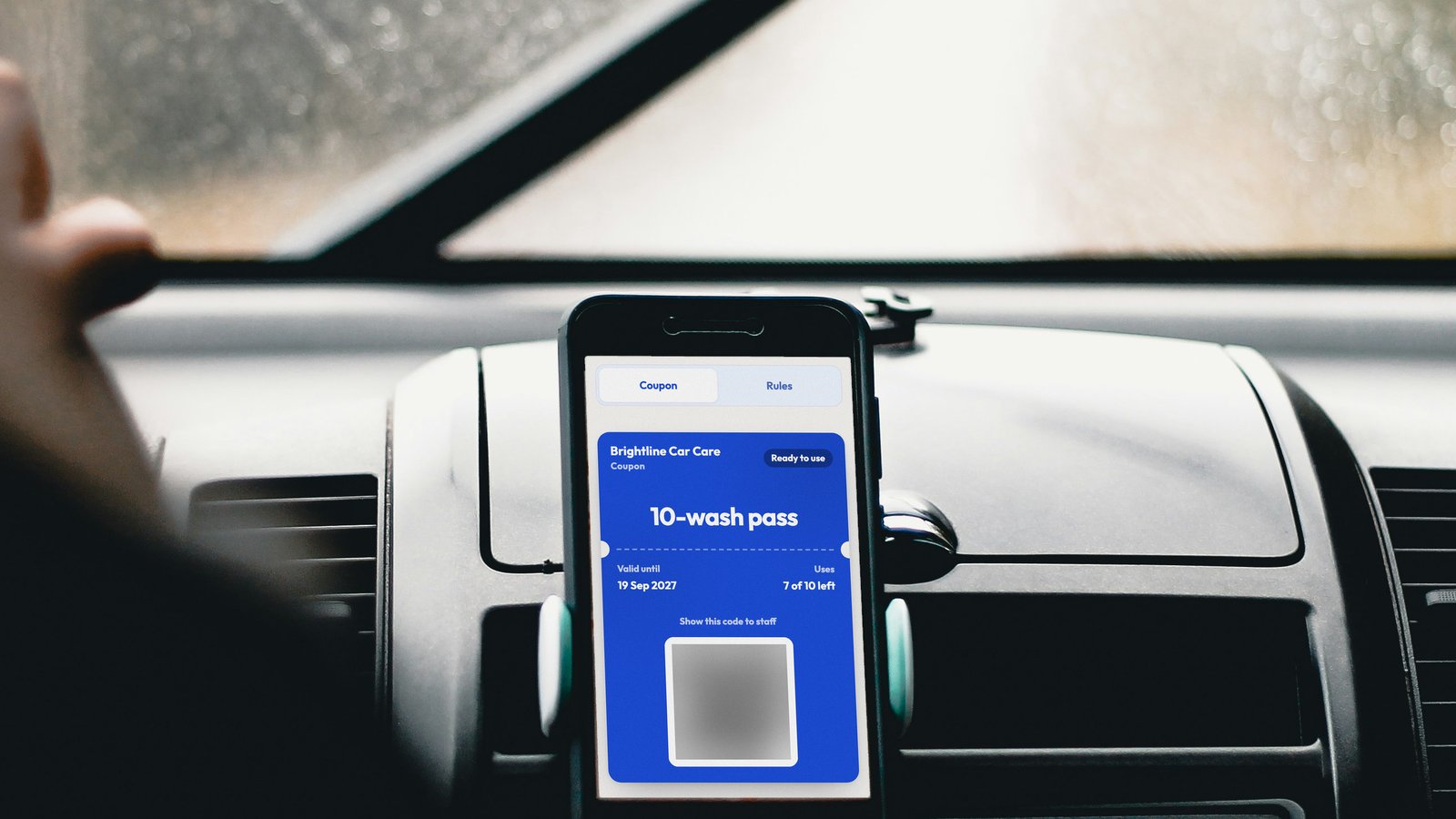
In FaveCard, you set up a multi-use coupon once, take payment at your till as usual, and hand over the pass with a single-person QR code. Each time staff scan it and tap “Mark as used”, the uses left drop and the count updates everywhere, with no booking software and no app for the customer.
FaveCard example, as of November 2026: a prepaid pass is a multi-use coupon.
For a car wash, create a coupon titled 10-wash pass:
- Offer: pick “Other”, write what one scan covers (such as One car wash from your prepaid pass) and leave “This lowers the price” off. The customer then reads “Staff scan it, and you get what the coupon offers.” instead of being told the wash is free.
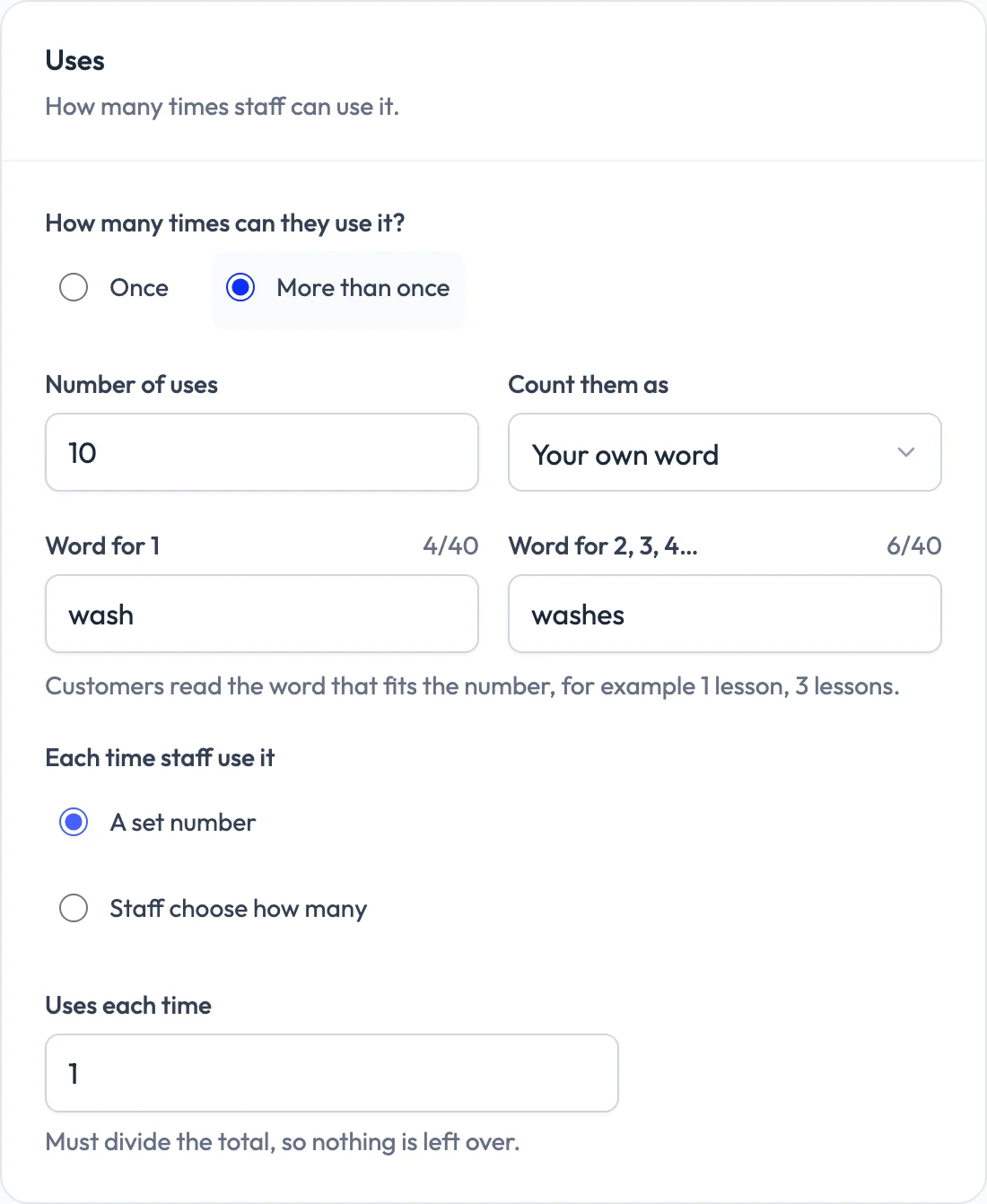
- Uses: “More than once”, 10 uses, counted in “Your own word” (wash and washes), with “A set number” of 1 per scan. For a family pass, pick “Staff choose how many” so one scan can cover two people.
- Who can get it: “Everyone”, so a regular can buy a second pass later.
- How long it’s valid: at least what you promised at the till, such as 365 days after they get it, or between two dates.
- Who can give it: “Only you and admins”. Your staff can still accept it at the counter, but can’t give it away.
A studio can sell 10 “Classes” valid for 120 days, a tanning salon 6 “Sessions” for 90 days, and a nail salon 5 “Appointments” for 120 days.
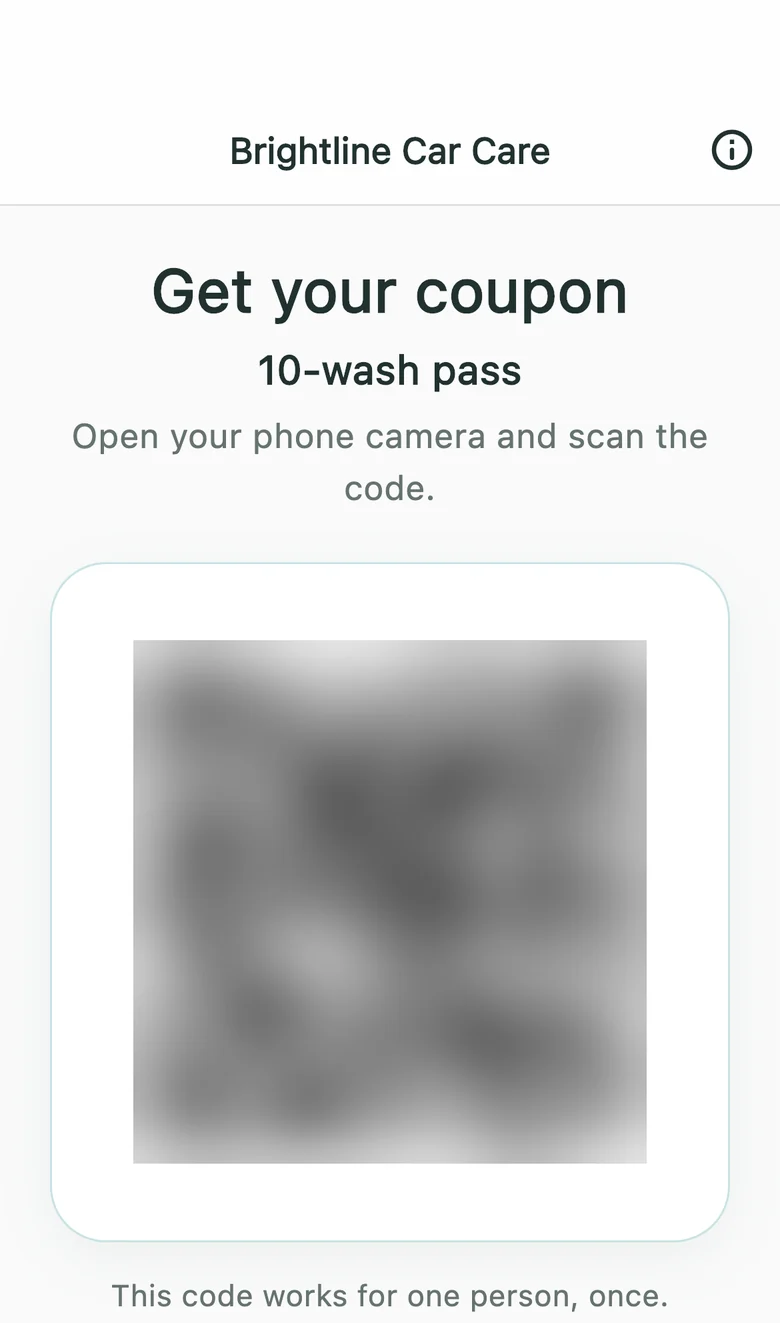
FaveCard takes no payment: the customer pays at your till as usual. Then tap “Give a coupon” in the FaveCard app to show a QR code that “works for one person, once”, or make a personal link in the Dashboard with “Only this person” and their email, and copy it or show its QR code. Never put a paid pass on a public link or a counter poster, or anyone could get one without paying. The customer scans the code with their phone camera, confirms their email and sees how many uses are left right in the browser, with no app to download, and can add the pass to Apple Wallet or Google Wallet. Customers see the pass as a coupon there and in its email, so say “your pass is in the coupon” at the till.
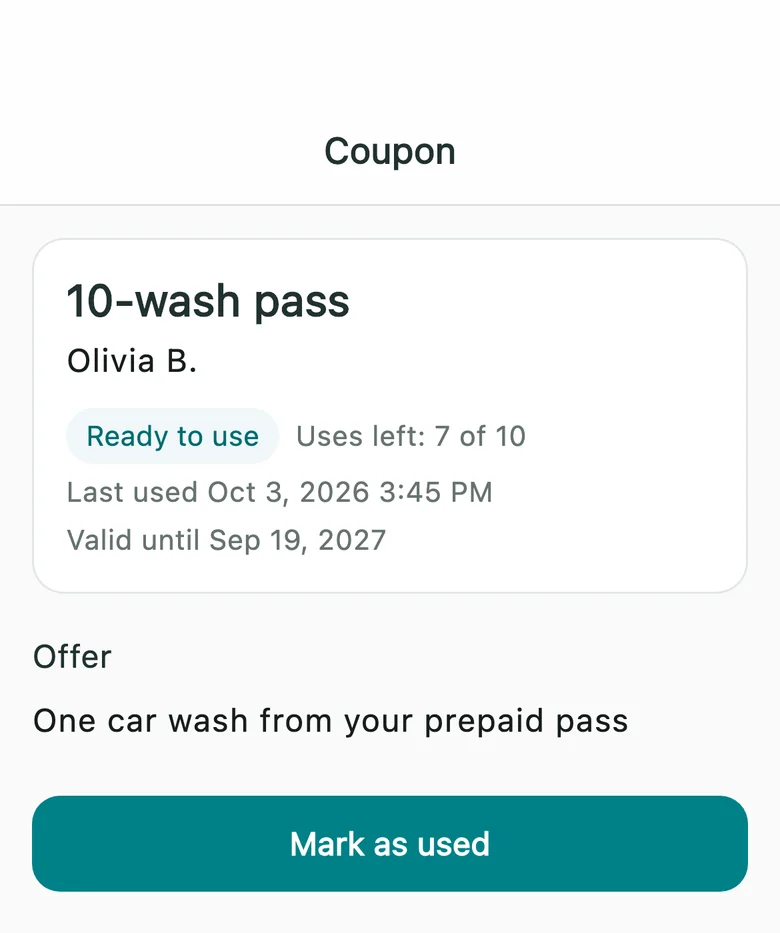
At each visit, staff scan with the stamp-card scanner, see the holder’s first name and how many uses are left, and tap “Mark as used”, so the count updates everywhere at once. Immediate double-scans from two phones are blocked, and a screenshot gives no extra visits because every scan draws from the same pass.
In the Dashboard, owners and admins see each pass’s uses left and its history with staff names, and can “Confirm a use” when a cracked screen won’t scan, “Undo last use” after a mistake, or “Cancel coupon” after a refund agreed at the till.
Coupons are on the Business plan, and new accounts try it free for their first 30 days; see pricing for plans.
Frequently Asked Questions
Is a prepaid punch pass considered a gift card?
In the US, Consumer Financial Protection Bureau commentary on 12 CFR 1005.20 generally excludes passes good only for a specific service, unless the pass states a dollar figure such as 'a $50 value.' Laws vary by state and country, so write passes in visits and check your local rules; nothing here is legal advice.
Can I run a prepaid pass and a loyalty stamp card at the same time?
Yes, many car washes, studios, and salons run both side by side. Weekly regulars who want an upfront discount buy a 10-visit pass, while customers visiting every few weeks use a loyalty stamp card. Post one clear counter rule: visits paid through a discounted pass do not also earn loyalty stamps.
What if a pass customer does not carry a smartphone?
On paper, file numbered cards alphabetically behind reception so staff mark visits at the desk. In FaveCard, give them a personal link made with "Only this person" so the pass opens in any browser on a home computer or tablet, and at the counter an owner or admin can tap "Confirm a use" in the Dashboard.
Can one scan take two visits when a customer brings a guest?
On a paper pass, punch and initial two boxes when a holder brings a family member or books a double session. In FaveCard, you can set a multi-use coupon so staff choose how many uses to take at the counter within minimum and maximum limits you pick.
What happens when a prepaid punch pass runs out of visits?
Mark the last box, keep the card at the counter and offer a fresh pass at the till while the regular is still in front of you. In FaveCard, the pass then shows "Coupon used" and can't be used again, and the same customer can get a second pass with the same email.
Can I change my pass price or terms after selling passes?
Passes you have already sold should keep the visit count and end date agreed at purchase, even if you later raise single-visit prices or shorten validity for future buyers. Print the visit count and end date on every pass you sell, so a later change never touches passes already sold.