



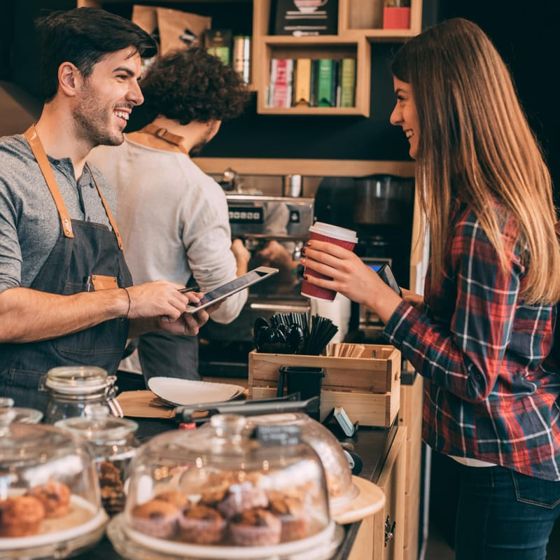
Coupon Marketing for Small Local Businesses
Coupon marketing for a café, salon, barber or car wash: offer size, expiry dates, stopping reuse at the counter, and checking results.
In short
Give one small free add-on tied to a full-price purchase rather than a percentage off the bill, set a last day within 30 days, issue one coupon per customer that staff take back or scan as used at the counter, and keep the promotion only if extra profit in your till at 28 days covers every reward given.
Last updated: December 2026
A quiet Tuesday morning at a café or an empty chair at a barbershop costs you rent and wages whether anyone walks in or not. A good counter coupon fills that gap by trading one low-cost extra—a pastry with a first coffee, a beard trim with a haircut, a tyre shine with a wash—for a full-price customer at the till. Here is how to size the offer, set a last day, stop second uses, and check your sales.
Do coupons work for a small business?
Coupons work for a small business when an offer fills quiet hours or brings in a first visit. Even with deep daily-deal discounts, in a 2010 Rice University working-paper survey of 150 US businesses that ran Groupon deals (Dholakia, 2010), 66% of owners reported the promotion was profitable and 32% reported it was unprofitable.
Those promotions were steep daily deals sold through a third-party site, yet two-thirds of owners still reported coming out ahead. When you run a coupon at your own counter, you control how many offers go out, which days they apply, and what the customer buys first.
Is couponing still a thing in 2026? In vendor research from coupon processor Inmar’s 1 May 2026 promotion analysis, total-industry grocery coupon redemptions eased slightly from 0.87B in 2024 to 0.81B in 2025. For a local shop, success depends on how you structure the offer at the till.
A coupon is the right tool when you have paid-for capacity sitting idle: empty café tables after the morning rush, an open barber chair on Wednesday, or a quiet mid-week car wash bay. It is the wrong tool when your diary is already full, your margin on the main item is razor-thin, or walk-ins are slow because of unclear window signage.
Do coupons bring the wrong customers?
Coupons bring bargain hunters only when a shop slashes its main price for anyone on the street. Keep your core service or meal at full price and give one free extra with the purchase instead, so every new visitor pays your normal rate at the counter.
Ask any salon, barbershop or café owner why they avoid discounts and you hear two fair worries: half-price vouchers attract deal-chasers who drift to the next offer down the street, and cutting your main price makes a skilled shop look desperate. Both problems start when you discount your core work.
Even in deep daily-deal promotions, profitable and unprofitable offers differed in how often visitors bought more than the deal and came back again. In that 2010 Rice University survey of 150 US Groupon businesses (Dholakia, 2010), owners estimated that in profitable promotions, 50% of redeemers bought beyond the voucher’s value versus 25% in unprofitable ones, and 31% of redeemers came back for a second purchase versus 13%.
You filter out pure bargain hunters by charging full price for the main item and giving one named extra free: a conditioning mask with a full-price haircut, a pastry with a morning coffee, or an interior vacuum with a standard wash. Someone paying your regular haircut or coffee price is already your kind of customer. For trade examples, see which promotion ideas for small business don’t cheapen your brand.
How big should the offer be?
A small business coupon offer should cost only the ingredients or supplies of one free add-on tied to a full-price purchase, rather than 20% off the whole bill. Giving a free extra keeps your main price intact and caps what each redeemed coupon costs you at the till.
When an owner weighs 20% off the bill against a free bonus item, the till arithmetic settles the choice. A percentage cut comes straight out of your register on the whole order, whereas an in-house add-on costs only raw supplies while the main purchase rings up at full price.
Here is how a free add-on compares with 20% off on the same visit, using example numbers:
| Full-price buy (example) | Free extra (your cost) | 20% off (cash lost) | You keep |
|---|---|---|---|
| Café: $10.00 roll | $3.50 coffee: $0.45 supplies | $2.00 | $1.55 |
| Barber: $35.00 cut | $10.00 beard trim: $0.50 supplies | $7.00 | $6.50 |
| Car wash: $25.00 wash | $5.00 tyre shine: $0.60 supplies | $5.00 | $4.40 |
Figures above are sample prices and supply costs to show the arithmetic at the till.
To the customer, a free $3.50 coffee feels bigger than $2.00 off, yet costs the café under a quarter of the cash discount. At a barbershop or car wash, a quick add-on saves $4.40 to $6.50 per visit. Cap how many coupons you issue and you know your maximum supply cost up front—see our worked bakery coupon cost example.
How long should a coupon last?
A coupon for a local business should have a clear last day within 30 days of when the customer gets it. Setting an end date within a month gives people enough time to pass your shop or book an appointment while creating a real reason to visit soon.
An open-ended coupon hurts a shop twice: a customer who feels no hurry forgets your offer, and the slips that finally return often show up months later on a busy Saturday when those customers were coming in at full price anyway. As a suggestion, match the window to how often people buy—try a week or two for a café or bakery, and a few weeks (up to 30 days) for a salon, barbershop, restaurant or car wash.
An end date only works if staff check it before ringing up the sale. In a vendor poll of 1,000 US adults from coupon processor Inmar Intelligence, reported for grocery retail by Supermarket News on 29 March 2021, 52% of respondents said they had tried to use an expired coupon when shopping. Put the last day in clear type on the front.
As a product rule, FaveCard caps a coupon’s last day at 30 days from today so every offer goes out with a clear end date. Once you pick an end date, you can make a coupon to print, or a poster or table card, in FaveCard’s coupon maker (free, no account).
How do you stop a coupon being used twice?
You stop a coupon being used twice by taking the paper slip back at the till or by issuing one single-use digital coupon per customer that staff scan and mark as used. Checking the coupon before applying the reward blocks screenshots and repeat redemptions.
Reuse happens whenever a customer walks out still holding the same proof of discount. If you post a static coupon image or shared promo code on Instagram, one person can show the screenshot on Tuesday, show the same phone screen on Friday, and text the image to friends. Stop second uses with a four-step counter routine:
- Give one pass per person: hand out physical cards or share a digital link capped at one per customer, never a reusable code in a caption.
- Check the date and purchase first: inspect the coupon before ringing the reward to confirm the qualifying purchase and the last day.
- Cancel the coupon at the till: drop the paper slip into a till box, tick the client’s booking record, or scan the digital pass on the counter phone before handing over the extra.
- Decline already-used passes: once a slip is in the box or a pass shows as used, do not give the offer again.
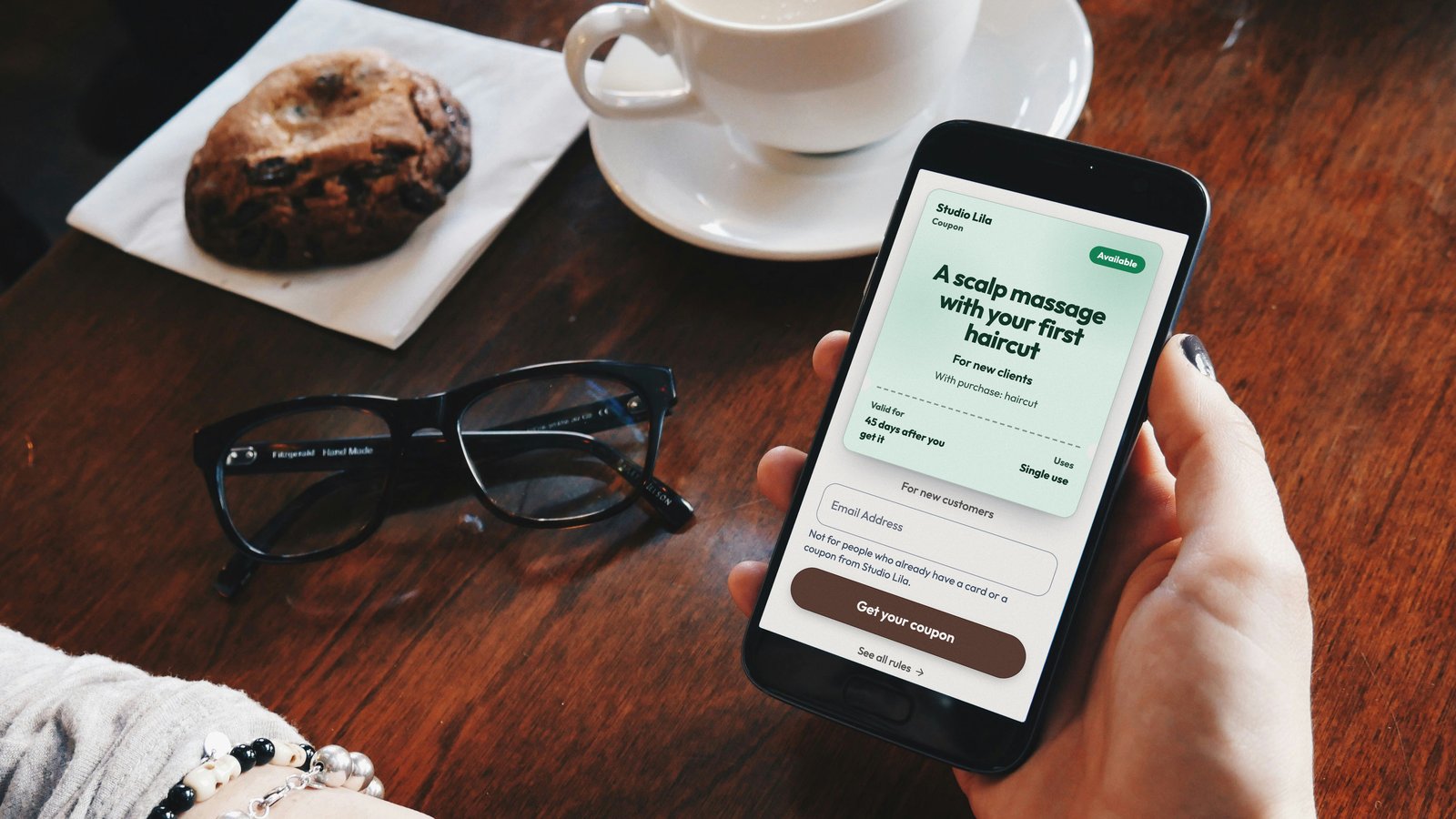
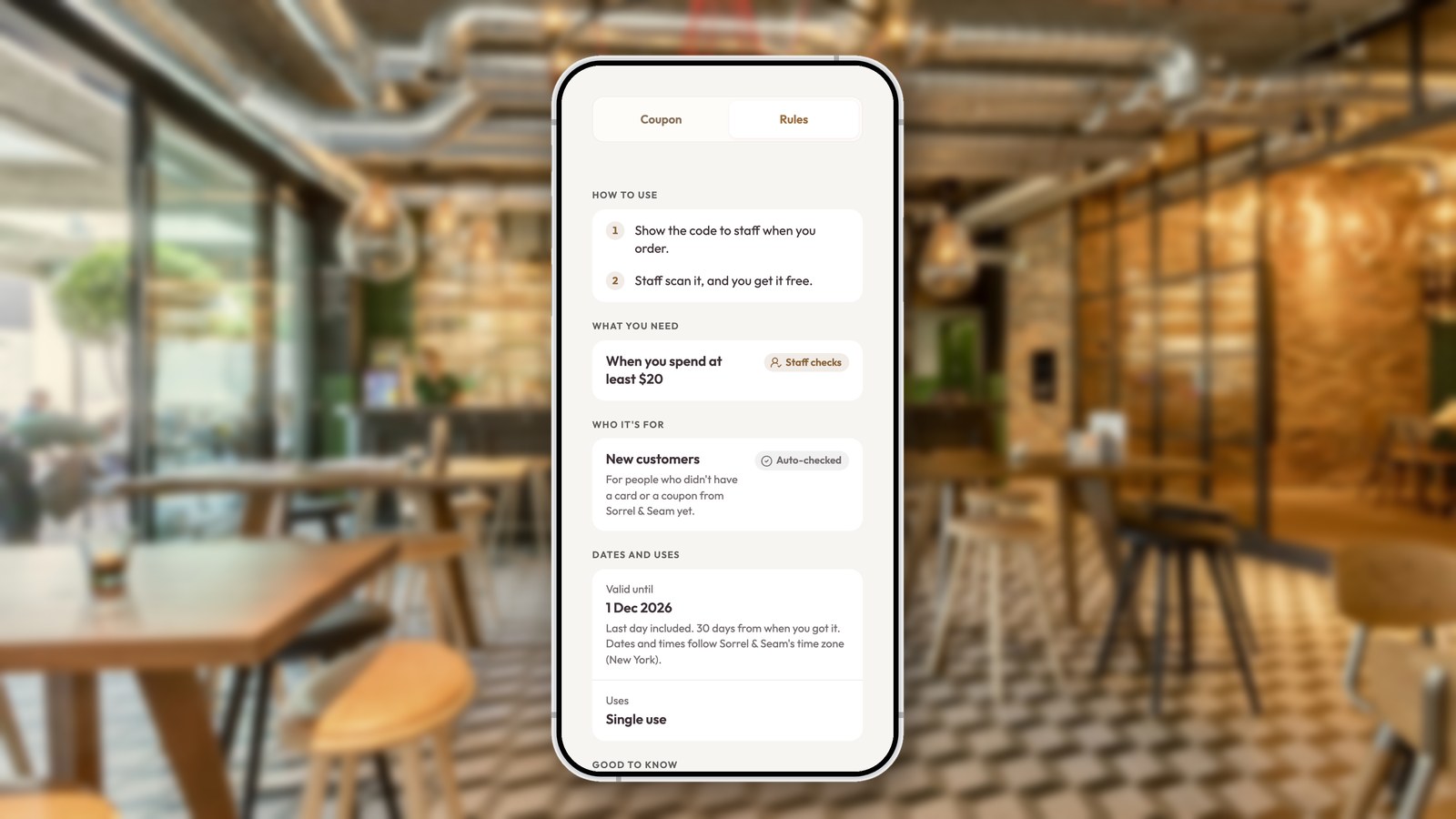
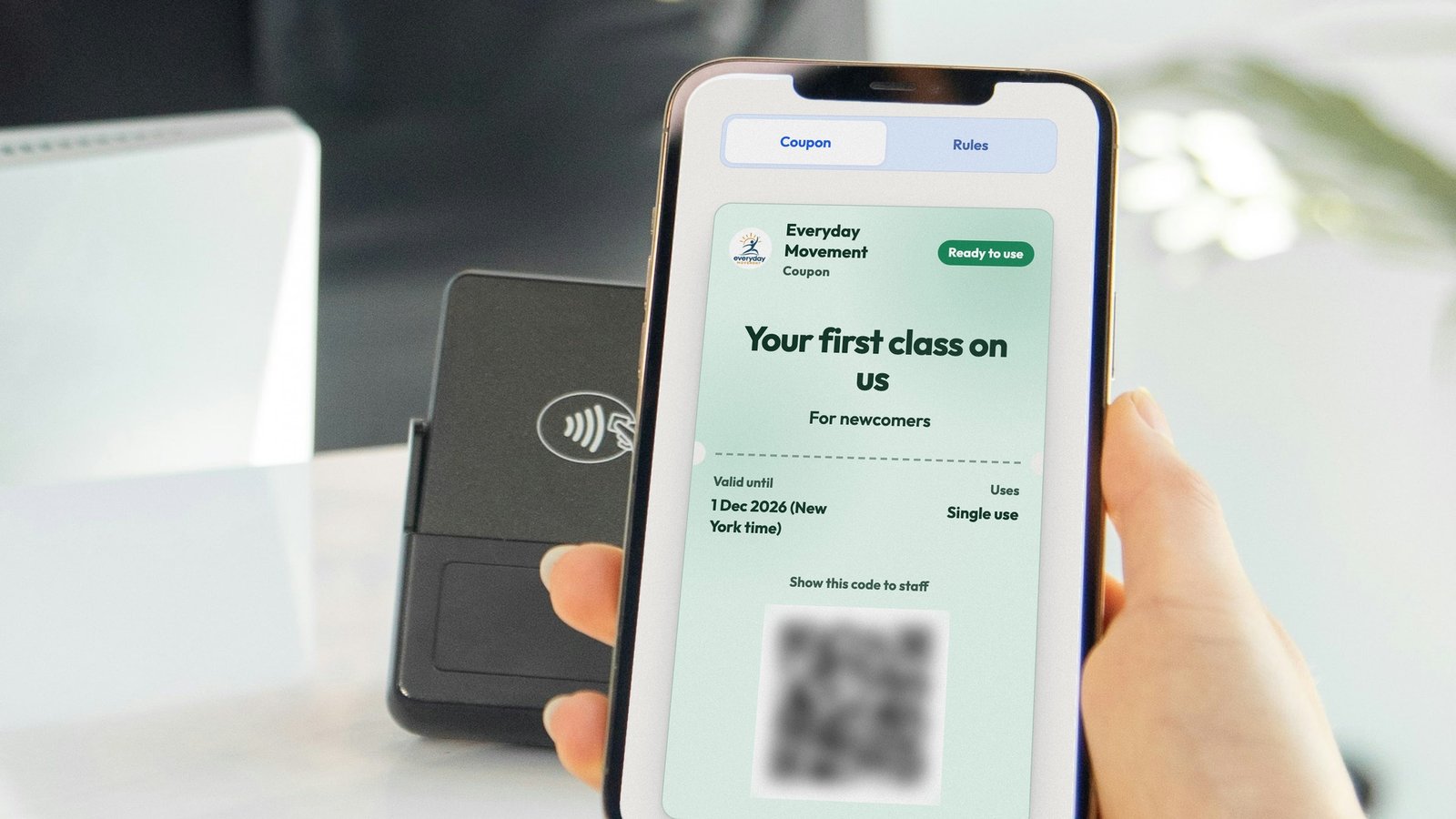
In FaveCard, offers are limited to one coupon per customer (a second claim is refused). At the counter, staff tap “Scan” in the FaveCard app, scan the QR code from the customer’s phone wallet or coupon page, tap “Mark as used”, and hand over the extra. If anyone shows a pass that was already redeemed or has passed its last day, the screen tells staff it is used or expired.
Printed, text message or phone wallet?
Printed coupons fit partner counters and takeaway bags, text message coupons fit shops that already keep a customer phone list, and phone wallet coupons fit counters that want one-per-customer scanning without per-message fees. Pick your format by how customers get the offer, what you pay, and how staff stop a second use.
Customers are already used to digital coupons in retail: in vendor research for the grocery sector from coupon processor Inmar’s 2023 Mid-Year Promotions & Incentives Trends recap, digital coupon usage ranked highest at 62%, and 82% of shoppers said digital coupon availability influenced their choice of retailer.
| What to compare | Printed | Text message (SMS) | Phone wallet |
|---|---|---|---|
| How customers get it | Handed out in-store or at partner shops | Join your text list; show SMS at till | Scan QR or tap link; save to Apple or Google Wallet |
| What you pay | Paper and printing | Monthly fee plus a fee per text | Plan after trial; no per-coupon send fee |
| Stopping a second use | Staff take and keep the paper slip | Easy to forward without unique codes | One per customer; staff scan and mark used |
| Counting how many came in | Count paper slips in the till box | Tally redeemed codes at the till | Tally scanned passes at the till |
Pick a printed coupon when leaving a stack at a neighbour’s counter, slipping cards into takeaway bags, or serving a neighbourhood where fewer customers use phone wallets—see our printable coupon templates. Pick a text message coupon when your booking tool already holds opted-in phone numbers. Pick a phone wallet coupon for window posters, table cards and social links. In FaveCard, customers save passes to Apple Wallet or Google Wallet with no app, or you can print the coupon.
How do you know a coupon worked?
You know a coupon worked when the profit on extra sales during the coupon weeks beats the supply cost of every reward given, compared with the same weekdays before the offer started. Check your promotion at 7 days for placement problems and at 28 days for profit in the till.
Counting redemptions alone never proves profit. For example, if 25 customers redeem a “Free cookie with any coffee” coupon over two weeks, check your till to see whether you actually sold more coffees on those weekdays than on the same weekdays before. If coffee sales stayed flat, those 25 cookies went to regulars who would have bought coffee anyway.
Run two checks using your till receipts and the coupons that came back:
- At 7 days (the placement check): compare how many coupons were handed out or claimed against how many came back. If uptake is low, fix one thing for week two—move the poster or table card to eye level, ask your partner shop to place the cards by their till, or remind staff to mention it.
- At 28 days (the profit check): once the last coupons pass their end date, compare your profit on the qualifying sales against comparable earlier weekdays and subtract the supply cost of every free extra given.
Watch for outside shifts like rain at a car wash or school holidays at a café. Keep the offer only if the extra money left in your till at 28 days clearly covers every reward.
Coupon or loyalty card?
A coupon brings a customer through the door for a single visit, while a loyalty stamp card builds the habit of coming back again and again. Use a coupon once to start the relationship, then offer a stamp card at the counter for every visit after that.
Many owners hesitate to run coupons because giving a stranger a perk while loyal regulars pay full price feels backwards. That problem disappears when each tool has one clear job. A coupon is a one-off invitation with a short end date to earn a first visit, fill a slow Wednesday, or apologise when an order ran late. Once redeemed, its job is done.
A loyalty stamp card is your ongoing thank-you to regulars—for example, collect 8 coffee stamps for a free coffee (about eight weeks for a regular who visits every few days), or collect stamps on every haircut toward a free conditioning treatment. Because regulars earn rewards on every full-price visit, loyal customers receive far more over the year than a newcomer gets from a single welcome coupon.
Pair both tools at the counter. When a new customer redeems a welcome coupon, staff mark the coupon used, serve the free extra, and immediately offer your stamp card before the customer leaves the till. That habit turns one coupon into a regular customer—see our guide on how to get repeat customers.
How do you make a coupon in a minute?
You make a small business coupon in a minute by picking one clear offer for your trade, naming what the customer buys to get the reward, and setting a last day within 30 days. Keep the wording on the front short enough that customers and staff can read the rule at a glance.
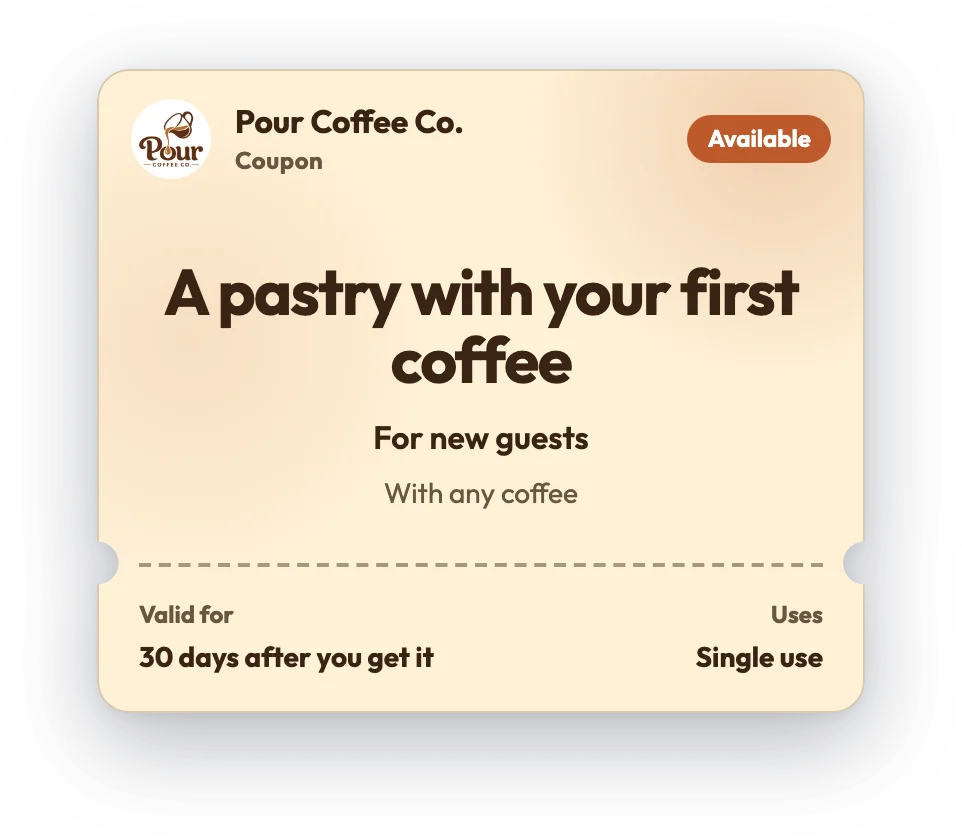
Whether you print cards in the back office or put a QR code by the door, every counter coupon needs four clear lines on the front:
- The reward and the purchase: “Free pastry with your first coffee”, “Free beard trim with any haircut”, or “Free tyre shine with a full wash”.
- Who it is for: “For new customers” or your quiet weekday hours.
- The single-use rule: “One coupon per customer, single use, cannot be combined with other offers” (how to word the fine print).
- The last day: a clear end date within 30 days.
Read those four lines out loud to the person working your till so staff know what the customer buys, when the offer ends, and how to mark the coupon used.
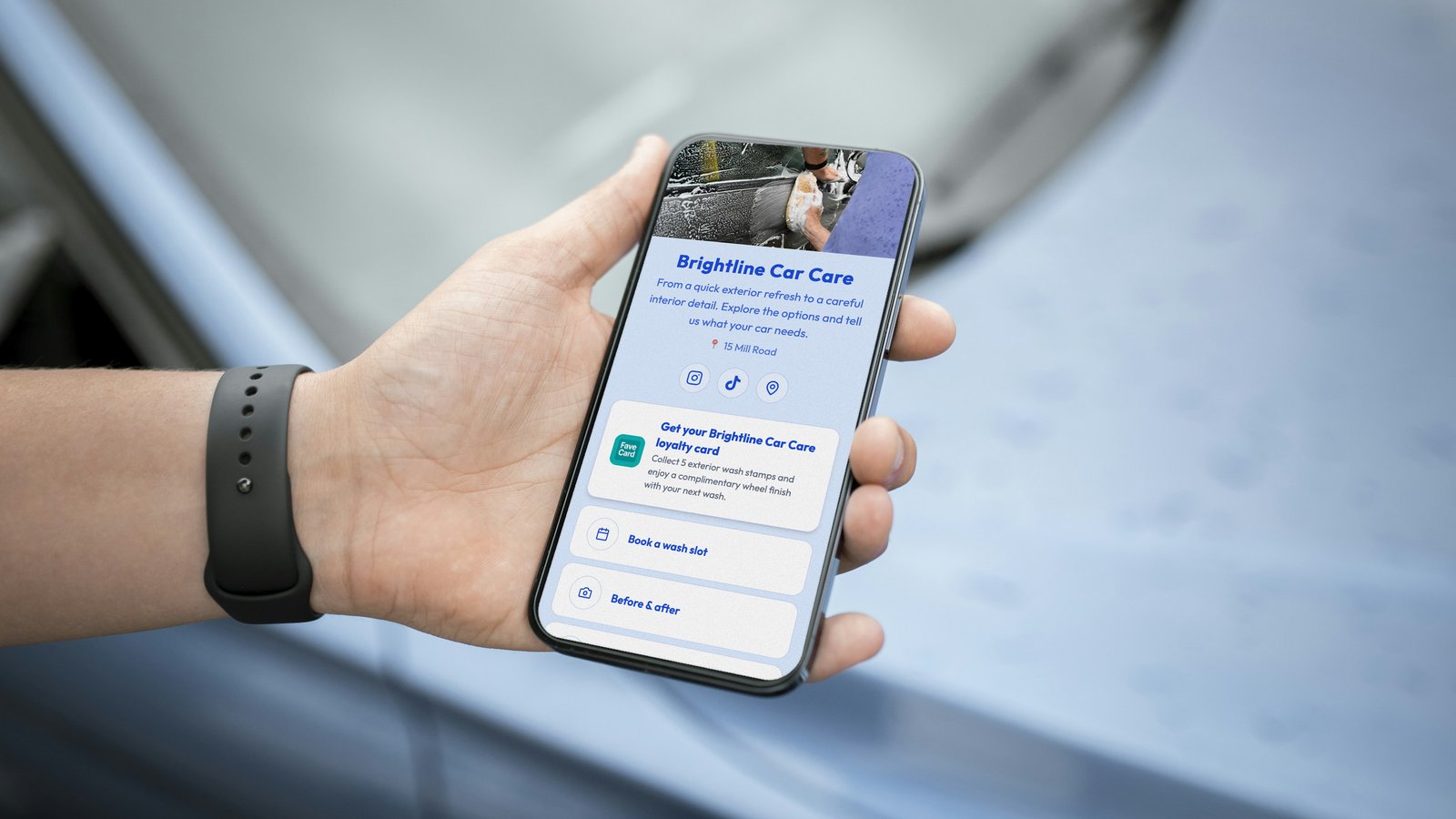
In FaveCard’s coupon maker (free, no account), you pick your trade, choose an offer wording, set a last day up to 30 days ahead, and print a coupon, poster or table card. Giving digital coupons to customers’ Apple Wallet or Google Wallet, with one coupon per customer and counter scanning in the FaveCard app, is included in the first 30 days of a new account, and after that in the Business plan.
Frequently Asked Questions
Can customers combine a coupon with other discounts?
Not if you print "One offer per visit, not valid with other discounts" on the coupon and check it before ringing up the sale. In a vendor poll of 1,000 US adults by coupon processor Inmar Intelligence, reported for grocery retail by Supermarket News on 29 March 2021, 63% of respondents said they try to apply multiple offers when buying an item. Train staff to apply either the coupon or an existing deal on the same bill, never both.
Why give a new customer a coupon when regular customers pay full price?
A welcome coupon pays once for a first introduction, while a loyalty stamp card rewards regulars every time they buy. If you only ever tape public discounts to your front window, loyal customers feel penalised for paying full price. Keep your welcome coupon to one small extra on a first visit, and give regulars a stamp card or a private thank-you offer.
How do I limit a coupon to first-time customers only?
Put "For new customers on your first visit" on the front of the coupon and share it where newcomers find you, such as a partner shop counter next door. At an appointment salon or barbershop, staff can check the booking diary by name or phone number before applying the offer. With a digital coupon, share the claim link through partner shops or local ads rather than at your own counter, and use a one-coupon-per-customer limit so the welcome offer can only be claimed and scanned once.
How do I stop customers from claiming the same coupon multiple times with different accounts?
Tie the offer to an in-person check at your counter rather than posting a reusable code on social media. With paper coupons, staff take and keep the physical card at the till; with a phone wallet coupon, staff scan the pass and mark it used while the customer stands in front of them. Even if someone tries to claim a second pass online, they still have to buy a full-price item in person to get the one free extra.
How much is too much for a holiday or seasonal coupon offer?
Any seasonal offer that cuts your main service price on busy days—such as 20% off December hair appointments or Friday night dinners—gives away margin you would have earned at full price. Instead, tie a seasonal coupon to a small free add-on that costs you only supplies, or restrict redemption to slower early-week hours and January bookings. That way you treat customers without discounting peak sessions.