




Cross-Promotion Ideas for Local Businesses (With Examples)
Cross-promotion ideas and examples for local businesses: who to team up with next door, what to offer, and how to tell which partner sent you customers.
In short
Pair up with a non-competing shop a short walk away and offer its customers a low-cost add-on on their first visit, with a small cap and a 4- to 8-week end date. Give each partner its own card or link, so you can count real walk-ins at your counter.
Last updated: November 2026
Cross-promotion pairs two non-competing local shops that share neighborhood customers, so each sends the other walk-ins through counter cards, bag inserts or shared events instead of paid ads. Pick one shop a short walk away, offer newcomers a low-cost add-on with an end date, and give each partner its own card or QR link to count real visits after 4 weeks.
| Cross-promotion idea | Example local pair | What it costs you |
|---|---|---|
| Counter card swap | Hairdresser + café next door | Printed postcard-size cards and a brief add-on |
| First-visit gift for partner regulars | Gym + juice bar | Extra fruit and ice for a size-up |
| Wait-next-door offer | Car wash + café next door | Cookie dough from an oven batch |
| Service bundle | Tire shop + car wash | Soap, water, and bay time |
| Seasonal duo | Bakery + florist | Ribbon, boxes, and counter signs |
| Bag or receipt insert | Barber + men’s clothing shop | Printed cards and brief chair time |
| Staff perk swap | Nail studio + café | Quiet-hour chair time and coffees |
| Joint open evening or Saturday | Yoga studio + health food shop | Tea, samples, and an evening hour |
| Joint Instagram giveaway | Barber + men’s clothing shop | One haircut and one shirt |
| Newsletter or WhatsApp mention | Pet groomer + dog-friendly café | Three message lines and a small treat |
| Service referral at handover | Car repair + car wash | Cards and tire dressing supplies |
What is cross-promotion for a local business?
Cross-promotion for a local business means two non-competing shops that serve the same neighborhood customers recommend each other instead of paying for cold ads. Most neighborhood partnerships take one of three forms: an offer at each other’s counter, a shared local event or bundle, or a swap in customer messages.
Think about the stops your regulars make right before or after visiting you: coffee before a haircut, a wash after buying tires, or flowers alongside a birthday cake. According to a September 2021 Nielsen survey of more than 40,000 consumers, 88% of global respondents trust recommendations from people they know more than any other channel, which is why a warm word at a trusted neighbor’s counter beats a cold flyer on a windshield.
Which businesses make good cross-promotion partners?
Good cross-promotion partners serve the same local customers at a different moment in their week, sit within a short walk, match your price feel, and run a shop you would gladly recommend to a regular. Meeting all four checks matters far more than having a big social media following.
Start on your own street: people with wet nail polish or a bag of warm bread will walk two doors down, but rarely drive across town for a small perk. Cafés and barbershops anchor many street pairs (see our coffee shop marketing ideas and barber marketing ideas). A shop off the main street, without walk-by traffic, does better with invoice inserts or message mentions than with counter cards.
| Local business pair | Why the pair fits |
|---|---|
| Hairdresser + café next door | Clients arrive early with spare time or grab coffee after a cut |
| Car wash + tire shop | Drivers buying tires already care how their car looks |
| Gym + juice bar | Members leave workouts thirsty or hungry right next door |
| Yoga studio + health food shop | Regulars share everyday habits around whole foods and herbal tea |
| Bakery + florist | Hosts and gift shoppers buy pastries and flowers on one trip |
| Florist + wedding photographer | Couples book one vendor early and ask who else they trust |
| Pet groomer + dog-friendly café | Dog owners need forty minutes nearby while their dog is groomed |
| Laundromat + café | Wash and dry cycles leave idle waiting time on the same block |
What are the best cross-promotion ideas for local businesses?
The best cross-promotion ideas for local businesses, such as a counter card swap, a wait-next-door perk, a bag insert or a service bundle, put a small welcome extra right where a neighbor’s customers pay, wait, or unpack. Starting with 1 of the 11 low-cost ideas below lets two shops start a partnership within a week and judge it after 4 weeks, without cutting regular prices.
-
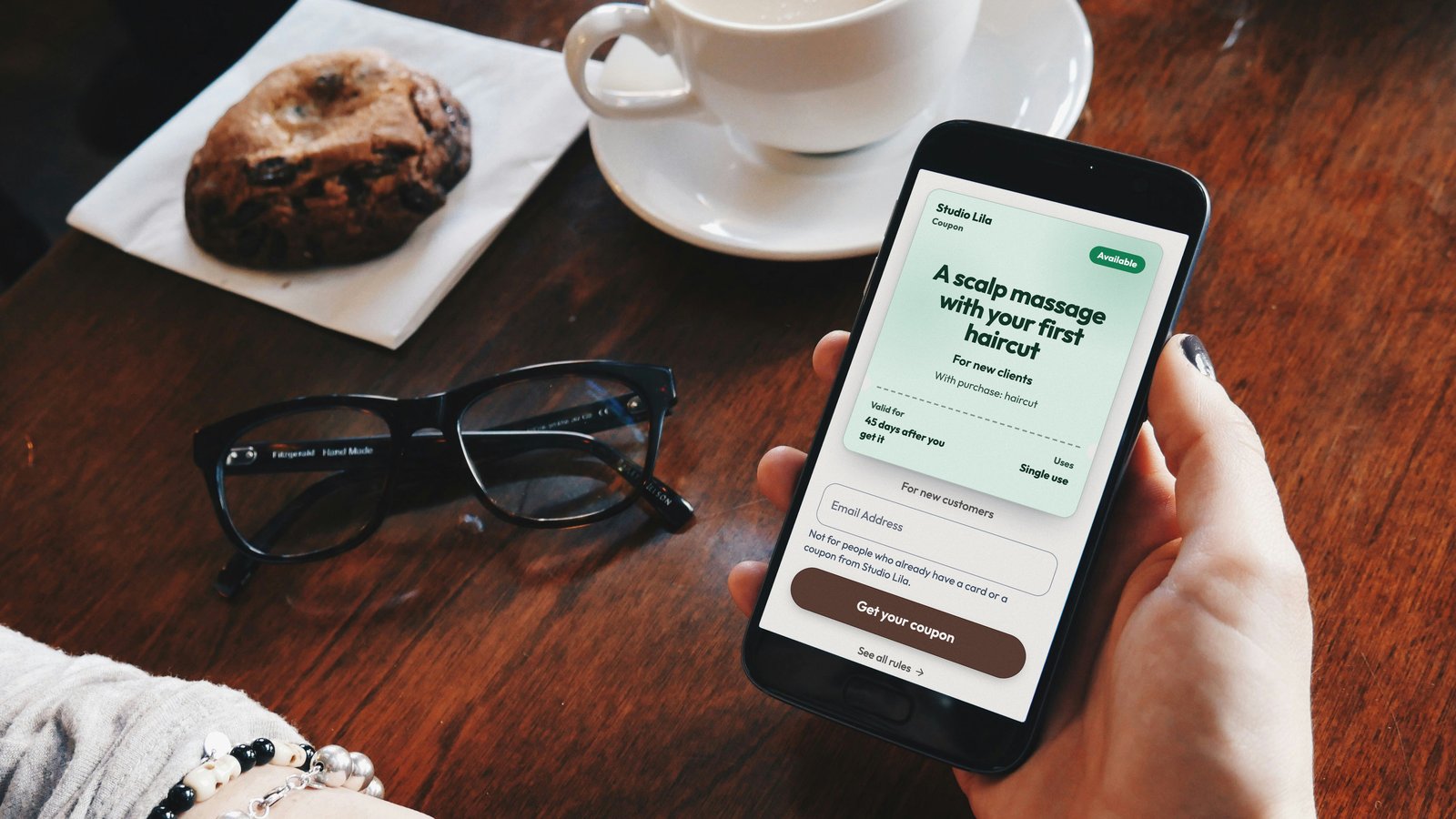
Counter card swap (hairdresser + café next door). Place one neat postcard-size (A6) card beside each payment terminal rather than in a cluttered doorway pile. The salon’s card on the café counter can read: New to Maple Hair next door? Enjoy a free scalp massage with your first haircut. You spend one sheet of card stock and five minutes at the basin.
-
First-visit gift for partner regulars (gym + juice bar). Welcome members from next door without discounting your menu, then bring them back with loyalty cards for juice bars. Put a small sign at the gym desk: Gym members get a free size-up on their first smoothie next door. Your only cost is extra fruit and ice in the larger cup.
-
Wait-next-door offer (hair color salon or car wash queue + café). Turn idle waiting into seats next door. While color sets or Saturday cars line up, staff say: Grab a coffee next door while you wait and mention us for a free warm cookie with your drink. Each cookie uses dough from a batch already baking.
-
Service bundle (tire shop + car wash). A tire shop can thank buyers with a neighbor’s perk (more car wash loyalty ideas). Clip onto four-tire invoices: New tires deserve clean wheels: enjoy a free basic wash around the corner this month. It costs soap, water, and normal bay time.
-
Seasonal duo (bakery + florist). Team up for Mother’s Day or Valentine’s weekend so shoppers finish two errands in one stop: Pre-order our Sunday pastry box with a fresh bouquet from next door for one-stop pickup. Both shops keep full item prices and split only ribbon and counter signs.
-
Bag or receipt insert (barber + men’s clothing shop). Shopping bags travel home onto kitchen tables. Ask the clothing shop to drop a card into each bag reading: Fresh shirt, sharp cut: first-time clients get a hot towel neck cleanup with a haircut down the street. Printing cards and ten minutes in the chair is your whole cost. Neighbors can share bigger print costs too: in an example reported by Shopify, 10 Almonte merchants share a monthly page in a regional food magazine and each pay $80 a month instead of a thousand dollars alone.
-
Staff perk swap (nail studio + café). Staff recommend places warmly once they have tried them firsthand. Invite neighboring baristas in on a quiet Tuesday afternoon for an express manicure while your nail techs grab morning coffees that week, trading only quiet-hour chair time and espresso beans.
-
Joint open evening or Small Business Saturday (yoga studio + health food shop). Put up a window poster for Thursday evening or Small Business Saturday: Stay after evening flow for herbal tea, snack samples, and a neighbor goodie bag next door.
-
Joint Instagram giveaway (barber + men’s clothing shop). Online giveaways flop for walk-in shops when strangers enter from hours away. Keep entries hyperlocal: Win a tailored overshirt and a full haircut on Market Street, picked up in store by Friday. One shirt and one appointment attract locals who walk your block.
-
Newsletter or WhatsApp mention (pet groomer + dog-friendly café). Swap a three-line P.S. in a message you already send regulars: Picking up your dog this week? Corner Bark Café next door adds a free pup cup and pastry bite to your first coffee. Sending the note is free, and the café covers only the treat when someone visits.
-
Service referral at handover (car repair + car wash). Mechanics hold real trust when returning keys. Clip a card to the paid invoice saying: Mechanical work sorted: get free tire shine on your first wash two blocks east. Your cost is tire dressing on a paid wash.
What should a cross-promotion offer look like?
A strong local cross-promotion offer gives new customers a low-cost add-on with a paid visit, limits the perk to one per person, sets an end date, and caps the first batch at a small number, such as 20 or 30. Your main price stays whole even if a busy neighbor sends a rush.
Taking a percentage off your main service cuts straight into cash in the drawer. A quick add-on that uses supplies or five minutes already on hand feels personal while keeping your price whole: a scalp massage with a first cut, tire shine on a first wash, or a cookie with a first pastry. Compare more margin-safe perks in our customer incentive ideas and first-visit offers by trade in how to attract new customers.
Put five guardrails on the offer before printing anything:
- New customers only: if half the bakery’s regulars already buy flowers at your shop, an open freebie discounts visits you already had.
- One per person: state clearly that each newcomer gets the welcome extra once.
- A set starting number: cap the first batch, such as 20 or 30 offers, especially on a free item.
- An end date: four to eight weeks keeps displays fresh.
- What the partner gets back: give their regulars an exclusive perk that reflects well on them, and match their counter space.
A percentage discount fits better mainly for high-margin retail goods without natural add-ons, or for a one-off street shopping evening.
How do you ask another business to cross-promote?
To ask another local business to cross-promote, stop by as a paying customer during a quiet hour, pitch one specific idea for a 4- to 8-week trial, and offer to display their cards first. Going first removes the awkward sales feel and makes it easy for a busy owner to say yes.
Skip Saturday rushes: drop in on a quiet Tuesday morning, buy something, and bring one concrete idea instead of Want to collaborate sometime?
From a hair salon owner to the café next door:
I run the salon two doors down, and plenty of our clients grab coffee here before their cut. I’d love to put your card at our desk and offer your regulars a free scalp massage on their first haircut for the next four weeks, starting on our counter first.
From a car wash owner to a tire shop down the road:
Drivers buying tires from you take pride in their cars. If we print 50 cards giving your tire buyers free tire shine on their first wash this month, would you slip one in with the invoice? We’ll put your seasonal tire-check cards at our wash window first.
Confirm in a short text or email who gives what, how many offers are included, who prints cards, and your check-in date.
How do you know which partner sent you customers?
To see which partner sent you customers, give every partner business a separate code word, numbered card stack, or dedicated QR link and review the count at your counter after 4 weeks. Then you know which counter brings paying walk-ins.
Most marketing guides suggest website UTM tags or call-tracking numbers, neither of which helps when someone walks in after spotting a card beside an espresso machine. Walk-in tracking has to happen at your register without slowing down the line. If you put QR code signs on a neighbor’s counter, check our QR code size guide so people can scan comfortably from arm’s length.
| Tracking setup | Cost | Weak spot |
|---|---|---|
| Partner code word at checkout | Free | Customers forget the word, or busy staff forget to tally it |
| Separate QR code or link per partner | A small print run, plus a coupon or card tool | Needs a coupon or card page that counts each link |
| Asking “How did you hear about us?” | Free | Staff skip asking in a rush, and preset sign-up menus rarely list partners |
| Returned cards stamped with partner name | Small print run | Paper gets left at home and cannot block existing regulars |
Example: how do you set up a neighbor coupon in FaveCard?
In FaveCard, a local business sets up a neighbor offer as one coupon per partner, for new customers only, with its own link and QR code and a small starting number. The partner needs no account and sees none of your numbers, and you see how many coupons each link gave.
Say your hair salon teams up with the café next door:
- Pick a ready idea. In FaveCard coupons, the “New customers” goal offers ready first-visit ideas such as “A scalp massage with your first haircut”, “A free cookie with your first pastry” or “Your first class on us”. It sets “New customers only” and “One per person”. Make one coupon for each partner: the links table counts coupons given per link, but “Used” is counted per coupon, so a separate coupon shows how many of each partner’s customers really came in.
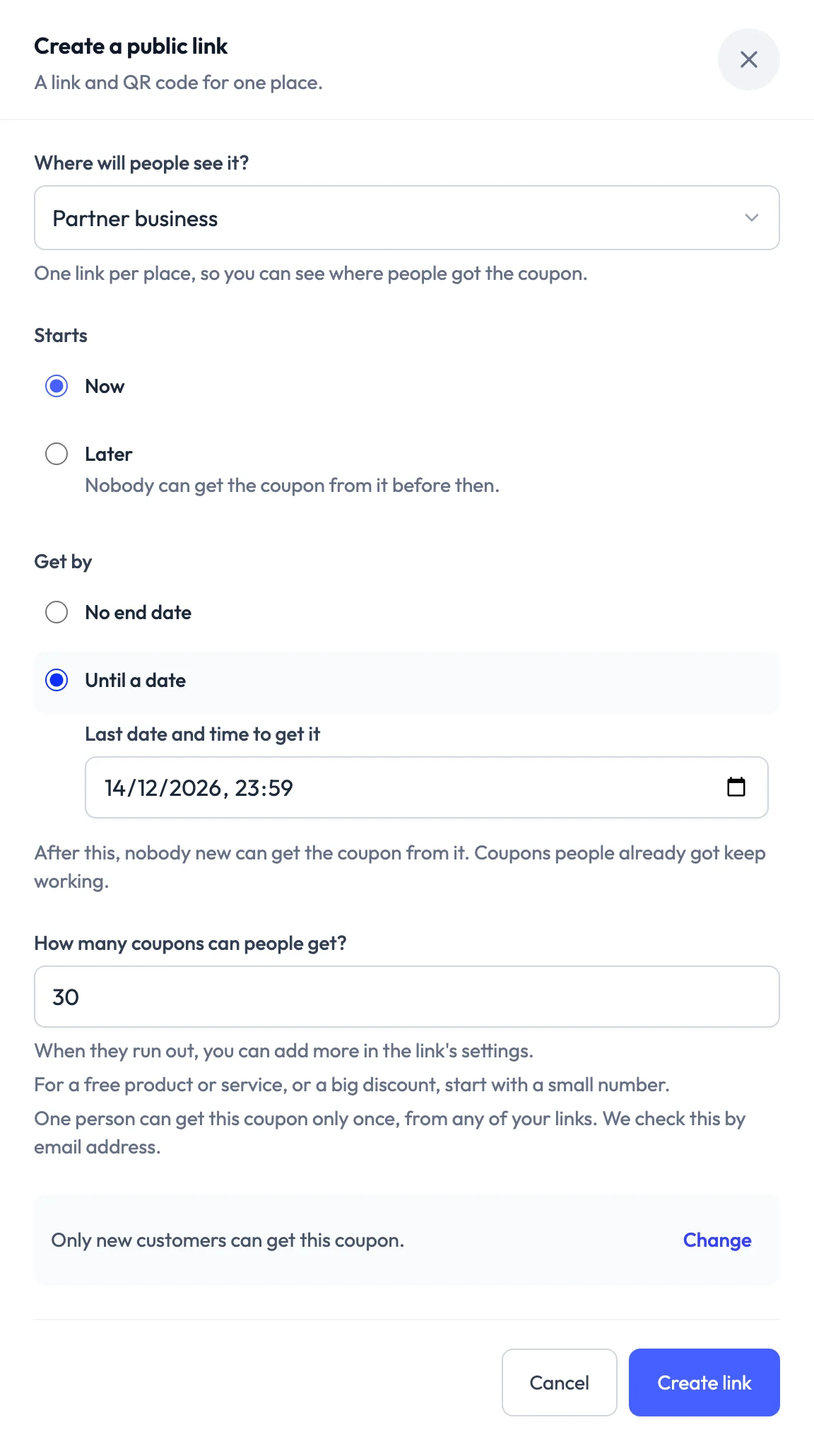
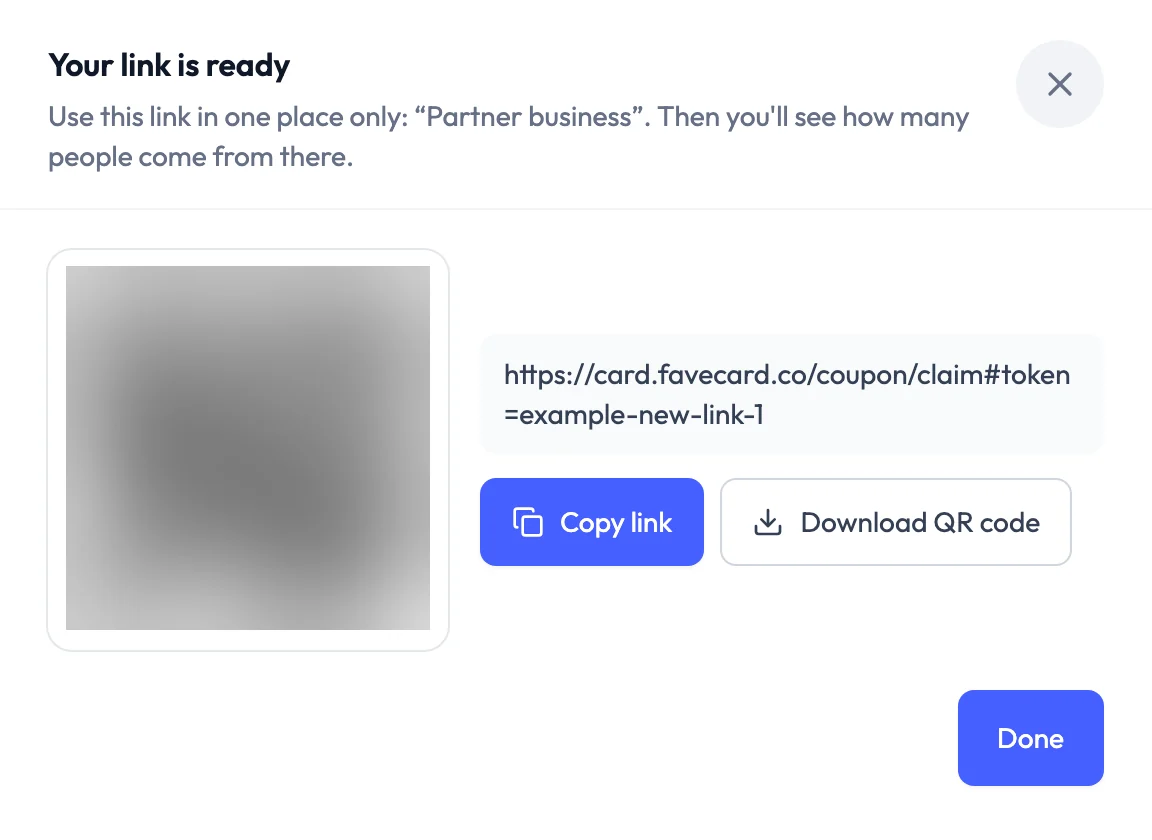
- Make a link for the café’s posts and chats. Under “Where will people see it?”, pick “Partner business”. Set “Get by” to “Until a date” about four weeks out, and “How many coupons can people get?” to 20 or 30 for a free extra (a link offers 50 unless you change it). Copy the link or download its QR code and send them to the café. The link preview names your business and the day to get it by.
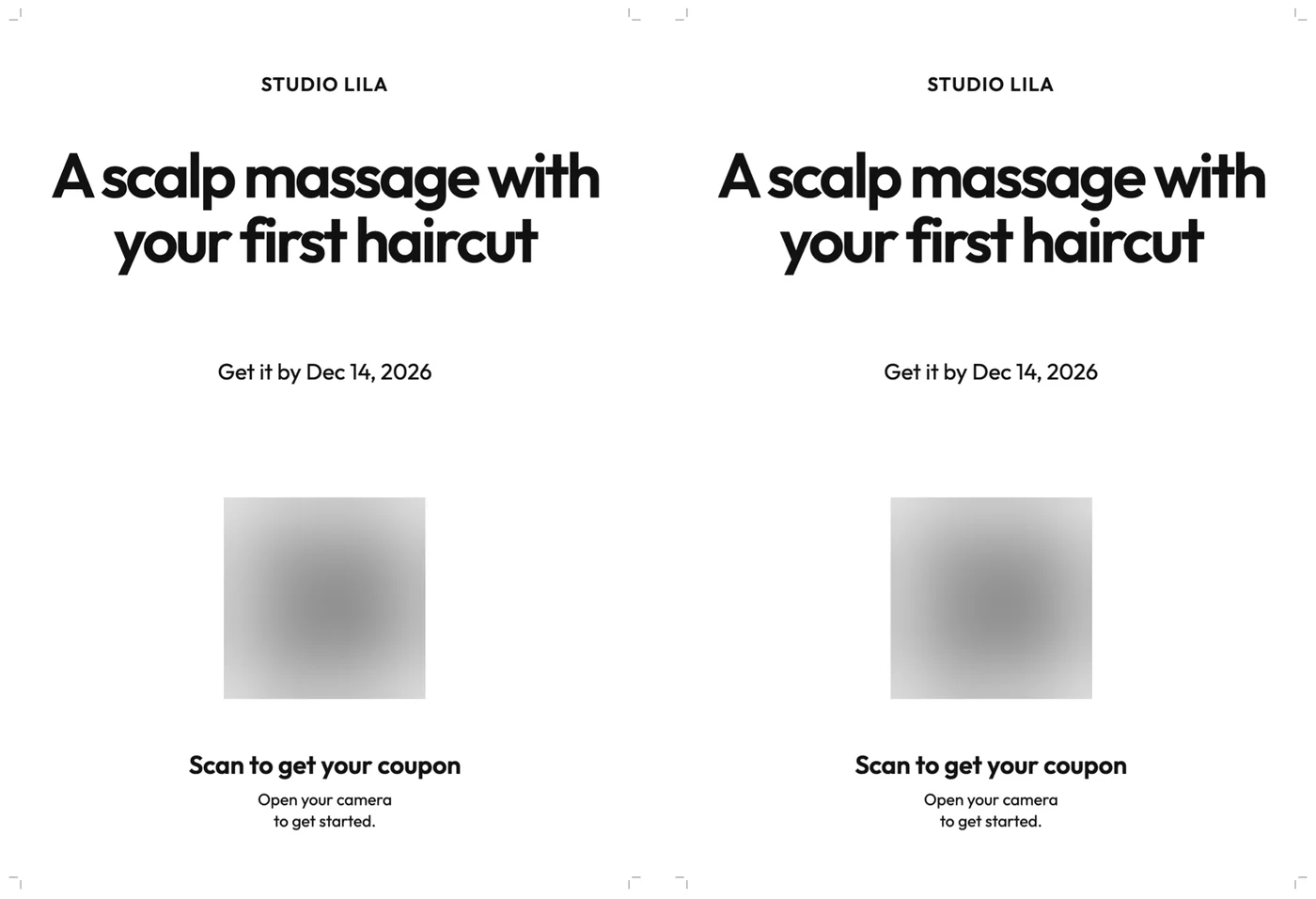
- Print cards for the café’s counter. Make a second link for the same coupon: open “Give to customers”, choose “Print it”, keep “Poster or flyer” with its own date and number, and choose “Create and print”. You get 2 A6 table cards on one A4 sheet with cutting marks, your business name, the offer, the day to get it by and that link’s QR code.
- Add more on the same link. If the café sends more people than you expected, tap “Add coupons” on that link instead of making a new one, so the same link and the printed QR code keep working.
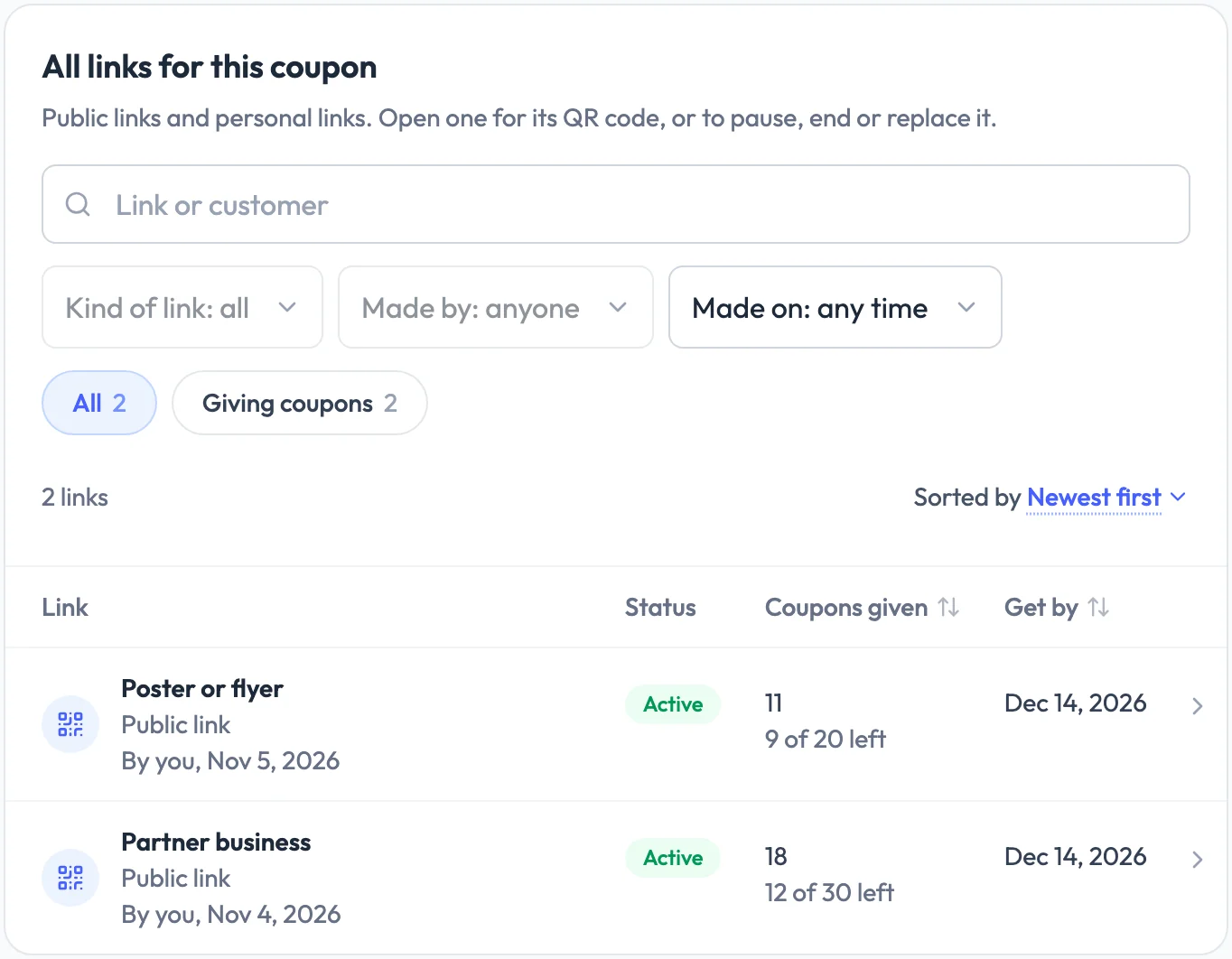
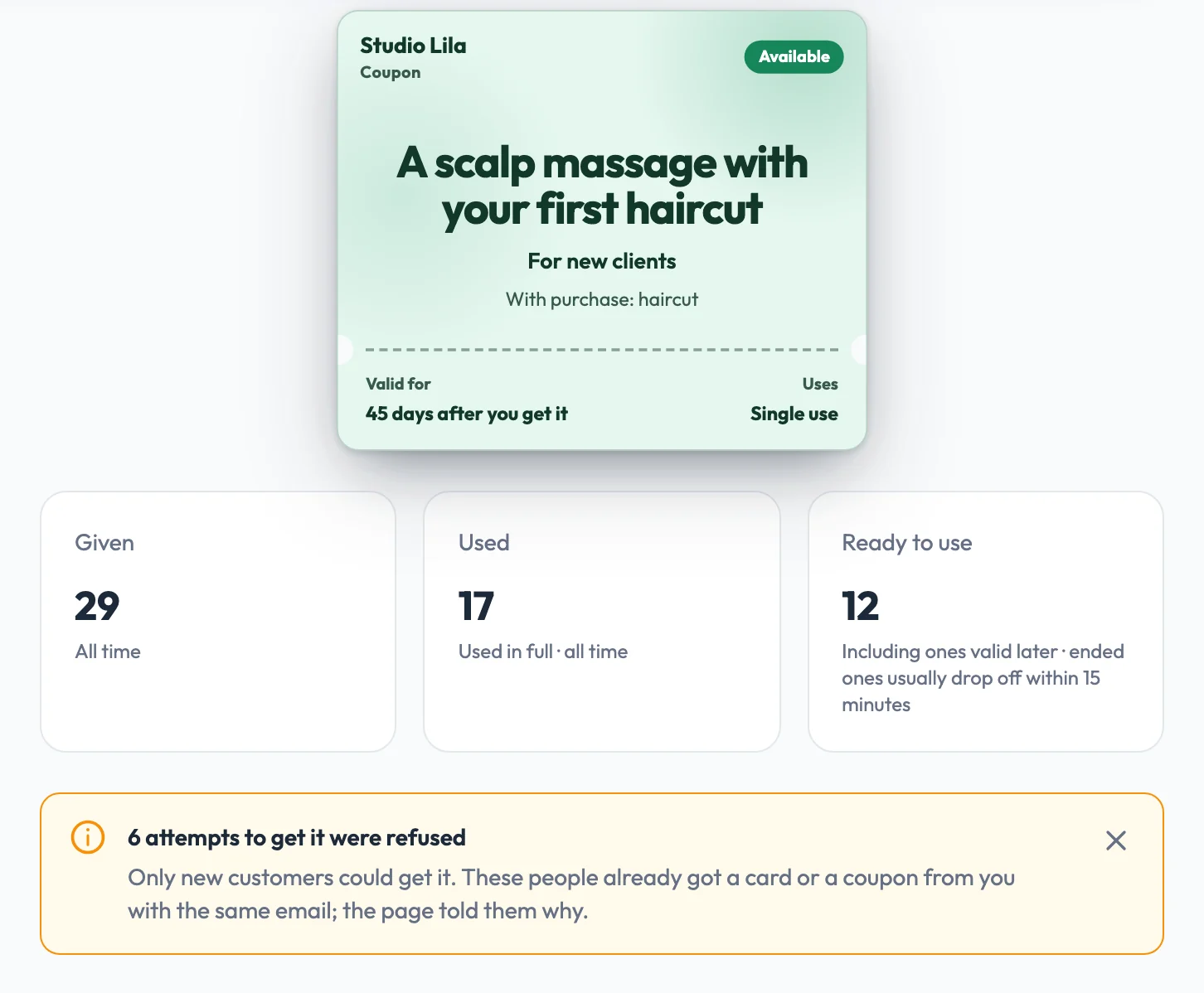
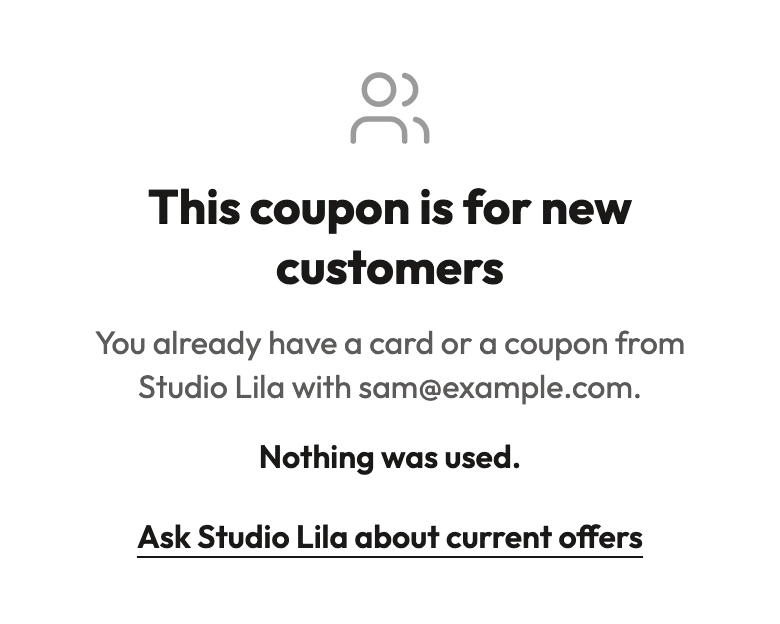
- Read the counts after 4 weeks. The links table shows “Coupons given” for each link. The overview shows “Given”, “Used”, “Ready to use” and refused attempts: people turned away because they already had your card or a coupon with that email. Many refused attempts mean you and the café already share a lot of customers.
Customers get the coupon in their phone’s browser with their email, confirmed with a code, and their first name. No app is needed, and they can add it to Apple Wallet or Google Wallet. Coupons are on the Business plan, and new accounts try it free for their first 30 days. See plans and prices.
Why do cross-promotions fail, and how do you fix them?
Local cross-promotions usually fail for five reasons: uneven foot traffic, overlapping regulars, offers passed to non-customers, busy staff forgetting at checkout, or having no end date. Keeping the perk to new customers and one per person, capping each link, putting a card by the terminal, and setting a 4- to 8-week end date with a check-in fixes most of them early.
- Uneven foot traffic: a morning café sees far more daily walk-ins than a hair salon or repair shop. Agree on a 4-week check-in date and compare what a new regular is worth rather than expecting identical headcounts.
- Overlapping regulars: neighbors often share half their crowd already, so keep the welcome offer for new customers only.
- Offers passed around in group chats: limit the perk to one per person and cap each link, so a shared link can’t give away more than you planned.
- Staff forgetting during rushes: put a card right beside the payment terminal where customers already look while paying.
- No end date: run every swap for 4 to 8 weeks so counter cards never turn faded and stale.
Frequently Asked Questions
Do small businesses need a written agreement to cross-promote?
Most neighborhood swaps run on a short email or text confirming what each business offers, how many customers can get it, who prints the cards, and when the trial ends. Putting those four details in writing prevents awkward misunderstandings once busy weeks blur memories.
What if my partner sends fewer customers than I send them?
Daily-habit shops like cafés naturally pass along more people than monthly appointments like hair salons or car repair shops. Compare what a new regular is worth over time rather than raw headcount, agree on a 4-week check-in before you start, and adjust by giving the busier shop a perk for its regulars.
Should a cross-promotion offer a percentage discount or a free extra?
Offer a low-cost free extra with a paid visit whenever you can, such as tire shine at a car wash, a cookie at a bakery, or a size-up at a juice bar. An add-on uses supplies already on hand and keeps your main price intact. Save percentage discounts for retail goods without natural add-ons.
Can two competing local businesses cross-promote?
Direct competitors rarely swap counter cards, because nobody sends regulars to another barber or bakery for the same item. Neighbors in the same category can still team up when they serve distinct needs, such as a wedding florist and a houseplant shop, or join nearby shops for a street-wide Saturday event.
How long should a local cross-promotion run?
Run your first cross-promotion with a new partner for 4 to 8 weeks, with a clear end date printed on the offer. Four weeks gives walk-in customers enough time to notice a counter card and visit next door, while an 8-week cutoff keeps displays fresh and sets an easy review point.
Does cross-promotion work with paper cards instead of QR codes?
Yes. Stamped or numbered paper cards handed out next door and left at your register let you count every walk-in a partner sends without software. Paper falls short only when existing regulars take an offer meant for newcomers or pass cards around, since paper cannot check who has visited you before.