




Coupon vs Voucher: What Should a Local Business Call It?
Coupon vs voucher for cafés, salons and shops: what dictionaries and gift-voucher laws say, which word works by country, and how staff check each at the till.
In short
For a free discount, both 'coupon' and 'voucher' are understood everywhere: 'coupon' is the familiar word in the US, 'voucher' is common in the UK and Ireland, and both are understood in Australia. Keep 'gift voucher', 'gift card', or 'gift certificate' for paid credit, put the deal in the headline, and have staff check whether a pass was bought with money or given away free.
Last updated: November 2026
Before you print counter cards or share a mid-week offer for your café, salon, or barbershop, you have to pick a word for the top: coupon or voucher. Both work for a free discount, while a paid gift voucher follows different rules when a customer brings it to the till. Here is what dictionaries and gift-voucher laws say, how the words are used by country, and how staff can tell a free offer from paid credit in seconds.
What is the difference between a coupon and a voucher?
For a promotion, a coupon and a discount voucher do the same job: both give a customer a price cut or free item. However, “coupon” usually means a free deal, while “voucher” can mean either a free money-off slip or a paid gift voucher.
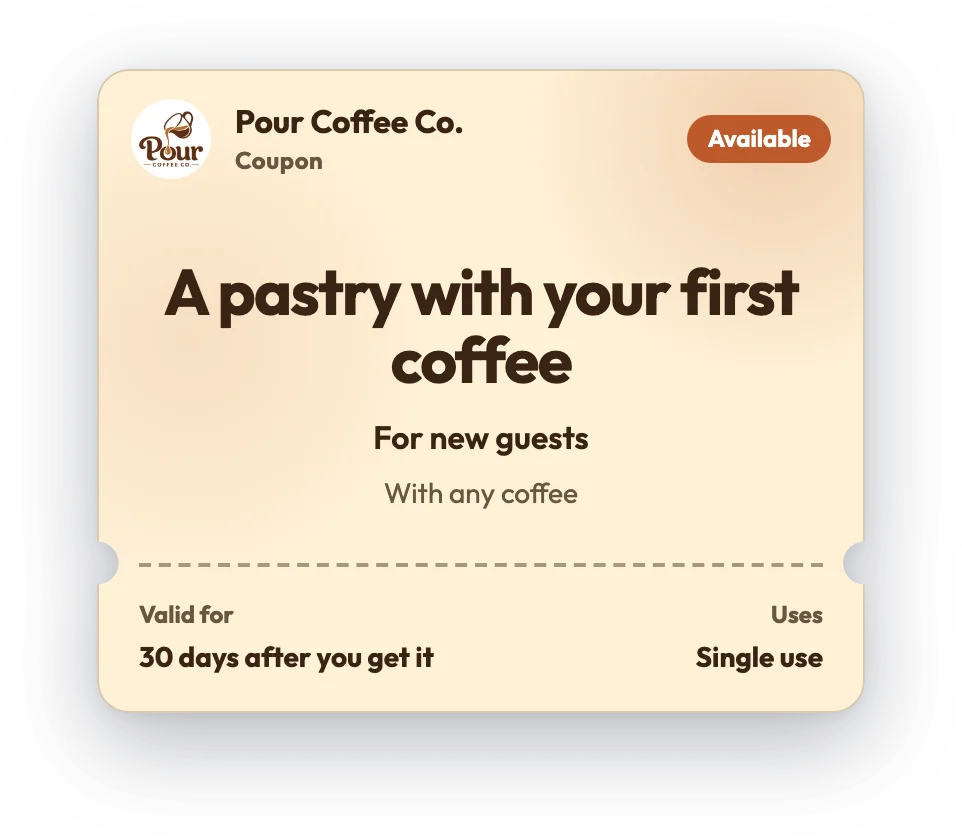
At a bakery or car wash, either label works on a promo card. When a bakery hands out a card for a free pastry with a hot drink, or a car wash gives a slip for free hot wax with a standard wash, printing “Coupon” or “Voucher” at the top changes nothing at the till. The customer brings the card back, buys the hot drink or standard wash, and gets the deal once.
Trouble starts only when a shop sells gift vouchers alongside free promotions. In a salon or barbershop, a customer holding a “voucher” might have a free £5-off flyer from a leaflet drop, or a paid gift voucher that a friend bought for their birthday. The free flyer lowers a single bill when the customer meets the offer rules, whereas the paid gift voucher spends down prepaid credit that someone already bought.
Even booking and checkout software disagrees on the labels. Many checkouts treat a coupon code or voucher code as a promotional discount, yet Planyo’s booking software uses the words the other way round—vouchers for one-time discounts on a booking and coupons for prepaid credit bought in advance. Because even software vendors flip the words, stating the exact offer in the headline always beats relying on the single label at the top.
Is “voucher” the British word for “coupon”?
No—neither Oxford Learner’s nor Cambridge labels the discount sense of “voucher” or “coupon” by region. The regional labels they give for shop use are on the gift words: “gift voucher” in British English and “gift certificate” in North American English.
Look up the plain discount entries in both dictionaries and the definitions overlap. Both define each word as a piece of paper (Oxford adds “or an electronic code”) that gets you something free or cheaper.
Their regional labels appear only on the phrases for prepaid gifts. Oxford Learner’s lists “gift voucher (also gift token) (both British English) (also gift certificate especially in North American English)”, while Cambridge labels “gift certificate” as US and gives “(UK gift token, gift voucher)” as the British equivalent.
In everyday online and counter language, several discount terms sit side by side. As PayPal UK notes, an online coupon is “commonly known in the UK as a promo code, digital coupon, discount code, or online voucher”. Whether a shopper calls your promotion a coupon, a voucher, or a discount code, the dictionary meaning is the same.
Is a discount voucher the same as a gift voucher?
No—a discount voucher is a free promotional offer from your shop, whereas a gift voucher is prepaid credit bought with money. Multi-year gift-voucher expiry laws cover gift vouchers sold to customers, not free promotions.
Here is how minimum validity laws separate gift vouchers sold to customers from short promotional offers:
- Ireland: Under Ireland’s Consumer Protection (Gift Vouchers) Act and Competition and Consumer Protection Commission guidance, gift vouchers sold as gifts must last at least 5 years, or have no expiry, while loyalty and promotional vouchers are excluded. Under the Act, a “coupon” can count as a gift voucher if it stands in for money and is sold as a gift.
- United States: Under the US federal rule for gift certificates and store gift cards, funds must stay valid for at least 5 years, while loyalty, award, and promotional cards are excluded and state laws can add more protection.
- Australia: Under the Australian Consumer Law as explained by Consumer Affairs Victoria, gift vouchers and gift cards must last at least 3 years, excluding vouchers sold at a genuine discount or given out in a short promotion (for example ‘valid in-store today’).
- United Kingdom: The UK sets no statutory minimum expiry period for gift vouchers or gift cards, though consumer-fairness rules apply to how expiry terms are stated (see whether gift cards expire for details).
Because consumer rules vary by country or state and by how an offer is set up, check your local rules before setting expiry dates.
Coupon, voucher, gift card, promo code, loyalty reward: what is each?
Coupons, discount vouchers, promo codes, loyalty rewards, and gift vouchers all lower a bill at the till, but only a gift voucher, gift card, or gift certificate is bought with money. The other four are free promotions or earned rewards whose offer rules and end dates you set.
Compare the five formats side by side:
| Format | What it is | Paid or free? | Typical life & who sets it | What staff check |
|---|---|---|---|---|
| Coupon | Paper or phone pass for a deal | Free offer | Days or weeks (set by your shop) | What they must buy, one-use rule, last day |
| Discount voucher | Another name for a promo coupon | Free offer | Days or weeks (set by your shop) | Same as coupon: what they must buy, one-use rule, last day |
| Gift voucher / card / certificate | Prepaid credit, often bought as a gift | Bought with money | Legal minimums apply to gift vouchers sold as gifts, where the law sets them | Remaining balance and expiry; deduct bill, keep balance |
| Promo code | Short code for booking or checkout | Free code | Campaign dates (set by your shop) | Code spelling, booking rule, last day |
| Loyalty reward | Free item or discount after repeat visits | Earned on paid visits | Ongoing card rules (set by your shop) | Full stamp card or reward screen before marking used |
To pick an offer size that brings customers back without hurting your margin, see our guide to coupon marketing.
Which word should you print on yours?
Both words are understood everywhere: in the US “coupon” is the familiar word, in the UK and Ireland “voucher” is common, and in Australia both are understood. Whichever you choose, keep “gift voucher”, “gift card”, or “gift certificate” for paid credit and put the offer in the headline.
Compare these headline examples for free deals and paid gifts:
- Café (free promotion): “Free pastry with any hot drink, until Friday”
- Salon (free promotion): “£5 off any cut, until 14 March”
- Car wash (free promotion): “Free hot wax with any standard wash, until Sunday”
- Paid gift credit: “Gift voucher worth £20”
Those headlines do the real work at the counter. Even where consumer gift laws group paid credit under “gift cards and vouchers” (as in Australia), a headline that names the free deal or the gift value makes the pass clear before anyone reads the fine print.
Below the headline, add the short conditions staff check at the till, such as valid days and what they must buy—see our ready-to-copy coupon terms and conditions.
As FaveCard’s coupon maker page puts it: “Whether your customers call it a coupon or voucher, they just tap or scan to save it to their phone for their next visit.”
How do staff tell them apart at the counter?
Give staff one question at the till: “Did someone pay for it?” A paid gift voucher works like cash with a remaining balance, while a free promotional coupon or discount voucher gives a one-time discount when the customer meets the offer rules.
Follow a simple routine for each pass when a queue builds:
- Paid gift voucher: Deduct the purchase from the voucher value, write any leftover balance on the card or record it in your till, and hand the voucher back if credit remains.
- Free promotional coupon or voucher: Check what they must buy and the last valid date, apply the discount once, and keep the paper slip in the till drawer or scan the digital pass so the same card is never redeemed twice.
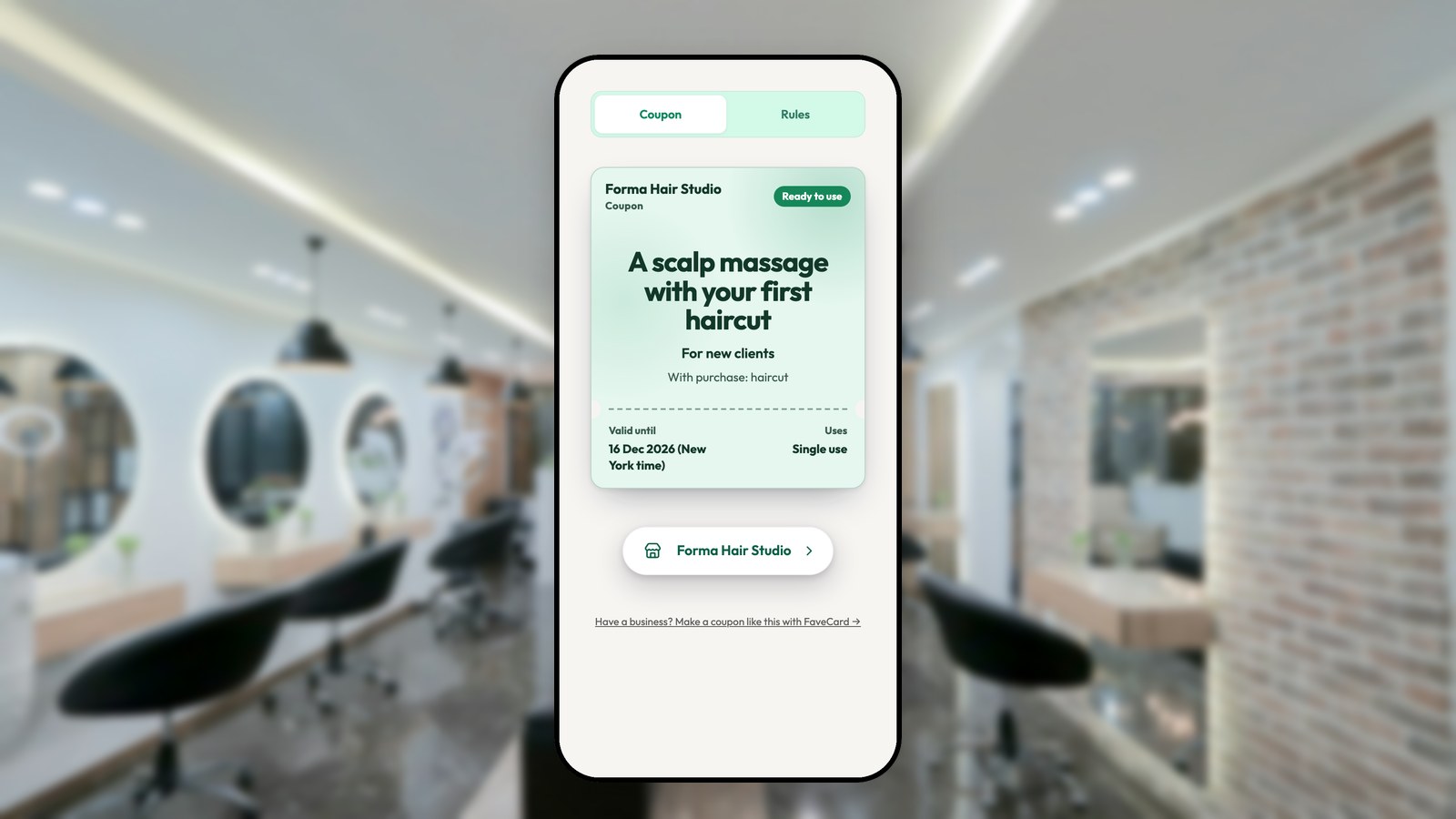
When a shop uses digital coupons in FaveCard, staff scan the customer’s coupon QR code in the FaveCard app. A valid coupon shows “Ready to use” so staff can tap “Mark as used” after applying the deal. If a customer shows a coupon that was already redeemed, the screen shows the time it was used and warns: “This coupon was just used at 10:42. Do not give it again.”
How do you make a coupon in a few minutes?
To make a coupon in a few minutes, put five lines on the pass: your shop name, the offer headline, what they must buy, a one-use limit, and the last valid day. Short wording lets customers read the deal at a glance.
If you want to compare paper layouts first, browse our printable coupon templates.
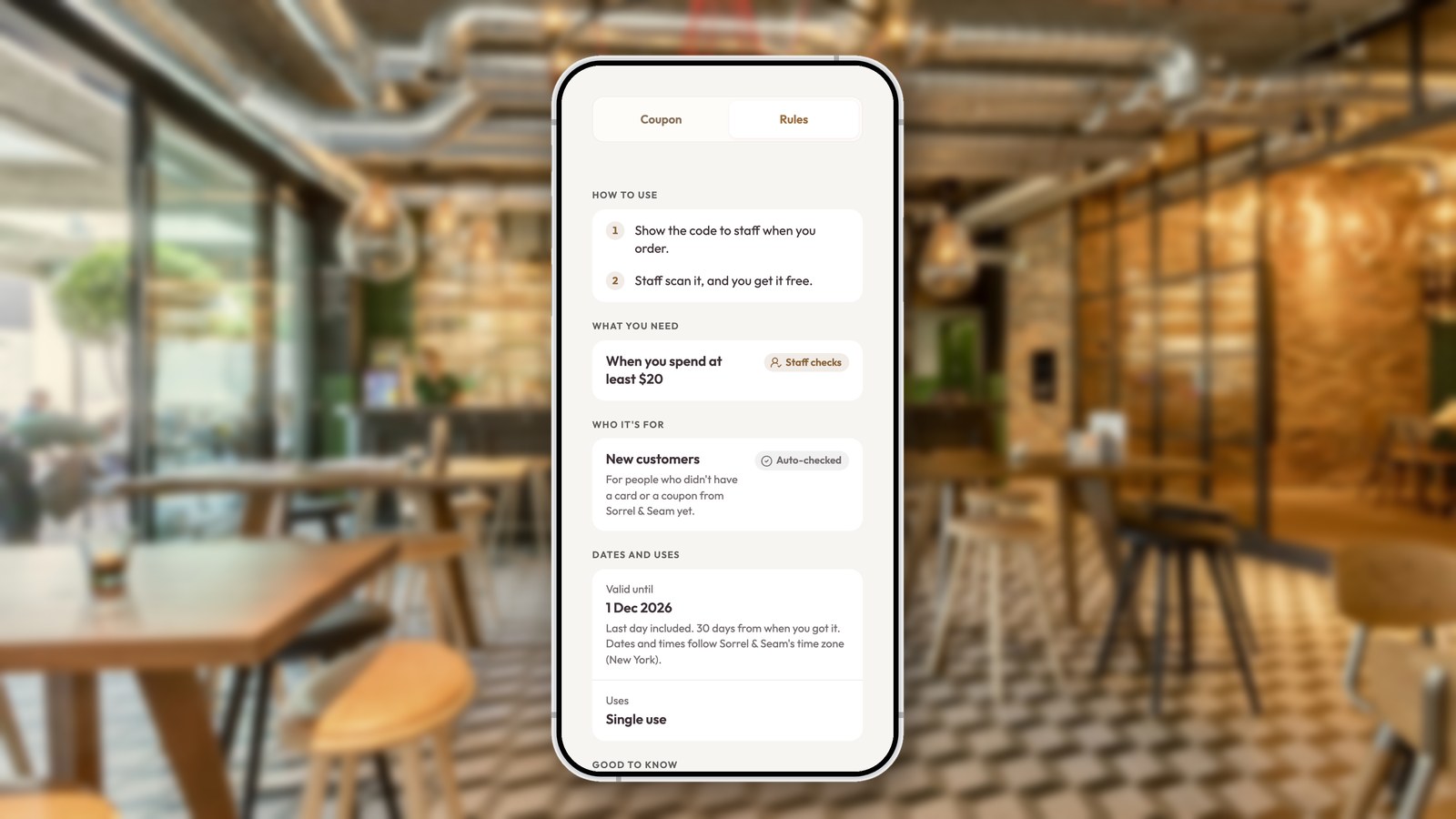
FaveCard’s coupon maker fills in those rules for a promotional coupon automatically. Because nobody can check single use on paper, the maker prints “One per customer” on a paper coupon and “Single use” on a digital coupon (where the customer’s coupon page has “Coupon” and “Rules” tabs). It also prints “Valid until” on the pass and sets the last day at most 30 days ahead, counting today—“Up to 30 days: long enough to come in, soon enough not to forget.”
Designing and printing a paper coupon with the coupon maker is free and needs no account. Giving coupons to customers’ Apple Wallet or Google Wallet needs a FaveCard account: a 30-day trial, then the Business plan.
Frequently Asked Questions
What is the main difference between a coupon and a voucher?
For a promotional offer, a coupon and a discount voucher do the same job: both give a customer a discount or a free item on a purchase. However, 'coupon' usually means a free deal, while 'voucher' can mean either a free money-off slip or a paid gift voucher.
Is 'voucher' the British English word for 'coupon'?
Neither Oxford Learner's nor Cambridge labels the discount sense of 'voucher' or 'coupon' by region; the regional labels they give for shop use are on the gift words ('gift voucher' in British English and 'gift certificate' in North American English). PayPal UK notes that an online coupon is commonly known in the UK as a promo code, digital coupon, discount code, or online voucher.
Do gift-voucher expiry laws apply to a free discount voucher or coupon?
No—minimum expiry laws cover gift vouchers sold to customers, not free promotions. The minimum is at least 5 years (or no expiry) in Ireland for gift vouchers sold as gifts, at least 5 years in the US under the federal rule for gift certificates and store gift cards (where state laws can add more protection), and at least 3 years in Australia under the Australian Consumer Law. Ireland and the US expressly exclude loyalty and promotional vouchers, while Australia excludes vouchers sold at a genuine discount or given out in a short promotion. Check your local rules before setting expiry dates.
Should I print 'One per customer' or 'Single use' on my voucher or coupon?
'One per customer' fits a printed paper coupon or voucher because staff cannot tell how many paper copies a customer picked up. 'Single use' fits a digital coupon scanned at the till, where the pass is marked used right away.
How do counter staff tell a free voucher from a paid gift voucher?
Give staff one question at the till: 'Did someone pay for it?' If someone bought the gift voucher with money, staff deduct the bill like cash and keep any remaining balance; if the shop gave it away free, staff check what they must buy and the last valid date and apply the deal once.
Does it cost anything to make a coupon with FaveCard's coupon maker?
Designing and printing a paper coupon with FaveCard's coupon maker is free and needs no account. Giving coupons to customers' Apple Wallet or Google Wallet needs a FaveCard account: a 30-day trial, then the Business plan.