



How to Get Customers to Come Back to Your Café
Turn first-time café visitors into regulars. Learn how to count regulars, price a stamp card, win back quiet regulars, and keep the counter moving.
In short
Independent cafés earn regulars by making the first visit memorable at the counter, tracking who returns, costing rewards against drink margins, and reaching out warmly before quiet regulars form a habit elsewhere.
Last updated: November 2026
Of 873 café owners who signed up for FaveCard between August 15 and November 18, 2026, 61% chose “getting regulars to come back more often” as their main goal. Each picked one answer, “not sure” is in the base, and test accounts FaveCard flags are left out. This guide gives you practical counter habits and simple numbers so you can turn occasional coffee buyers into regulars who stick with your shop.
How loyal are café customers, and what keeps them with yours?
Most café customers keep a usual spot yet still try other cafés. Consistent core drinks, personal recognition behind the bar, and something fresh to order at your counter help keep them choosing yours.
Just 17% of café customers always buy from the same café, and 57% usually go to one place but sometimes try others, according to a nationally representative survey of 527 Australian adults who had bought coffee out of home in the last three months (Seven Miles Coffee Roasters with Lightspeed Research Australia, March 2026). Even among daily regulars, the most loyal group, only 31% always go to the same café.
Regulars want variety in their cup, too: 65% of customers will deviate from their usual coffee order at some point (Seven Miles survey of 527 Australian coffee buyers, March 2026). When they change their usual order, 49% want to treat themselves, 34% are bored with their usual, 30% saw something promoted in-store, and only 13% cited social media. As the report puts it, “the most underused tool in a cafe’s growth strategy might be the chalkboard.”
Keep core drinks consistent from Tuesday afternoon to Saturday morning, and use your menu board so regulars can treat themselves at your counter. For weekly rituals or quiet-afternoon specials, see our coffee shop promotion ideas.
If you compete with a chain across the street, lean on personal service rather than trying to match its ad spend or app budget. Learning regulars’ names and remembering their usual order, backed by steady faces behind the counter, helps turn a coffee stop into a familiar routine.
Who counts as a regular, and how do you know yours?
A regular is a customer who returns to the same business at least four times a year, under Square’s definition. You can find your café’s regulars using your card terminal, POS order history, a two-week name tally, or active stamp cards.
Regulars bring at least 5× the annual revenue of one-off customers and typically return 11 times a year, according to the Square UK Local Economy Report (March 18, 2026; UK-wide plus six cities, January 2019–December 2025 transactions, all sectors, not cafés alone). In Canada, regulars generate nearly 6× the annual revenue of one-time visitors and return at least 9–10 times a year, with 84% spending the same or more per visit once a relationship is established (Square Canada Local Economy Report, March 18, 2026; all sectors, not cafés alone). Neither gives a café-only figure, so your own count is the benchmark.
Start with what is already on your counter:
- Your card machine or POS: Check if it groups repeat cardholders or saves names on orders.
- A two-week tally: Keep a sheet by the register for 14 days and mark repeat faces or cup names.
- Existing cards: Count cards with more than one stamp in a month, not blank cards handed out.
Here is an example 14-day tally using invented round numbers:
| Customer group | People counted | Visits in 14 days | Share of visits |
|---|---|---|---|
| One-time visitors | 120 | 120 | 40% |
| Returned once (2 visits each) | 30 | 60 | 20% |
| Steady regulars (4 visits each) | 30 | 120 | 40% |
| Total tracked | 180 | 300 | 100% |
Here, 60 returning guests are a third of people counted yet 60% of visits. Repeat the tally a quarter later: if more one-timers reach the two-visit row, your counter habits are working. For a cross-trade view, see how to get repeat customers.
How do you get a first-time customer to come back a second time?
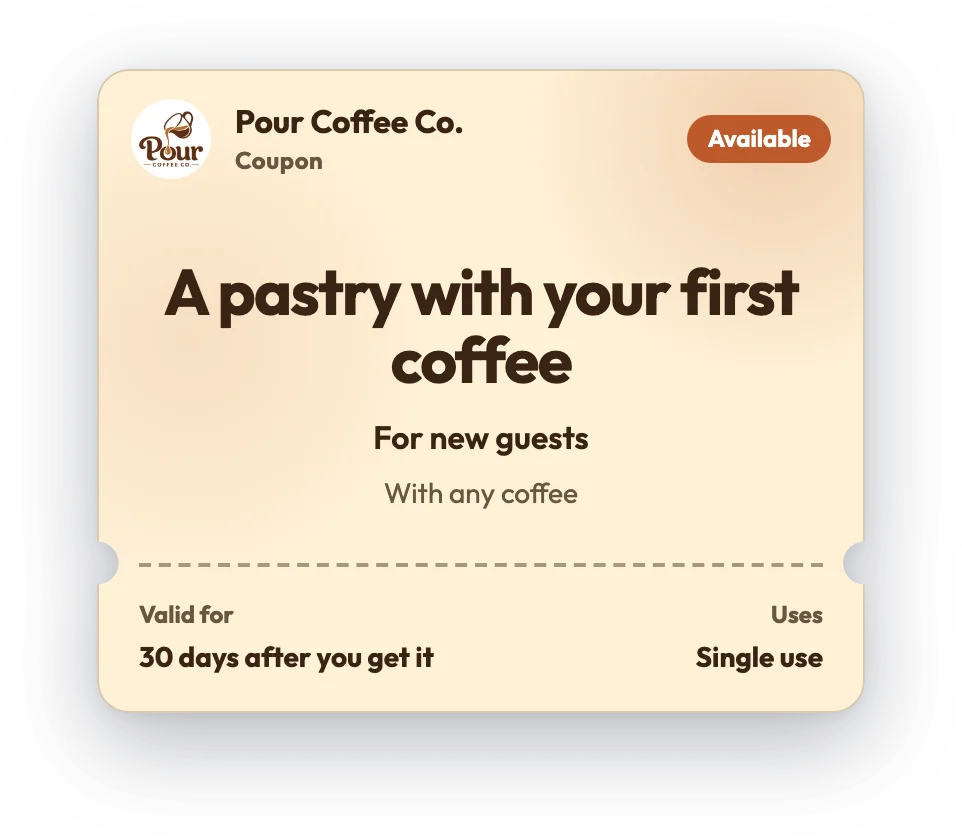
To bring a first-time café visitor back, act during that first visit: greet new faces warmly without a stiff script and give them a clear reason to return. Mention next week’s menu or start a stamp card at the till, optionally with a welcome stamp.
Novelty gets people in the door once, then wears off fast. On UK Business Forums in 2022, a dessert restaurant owner whose opening months were packed watched trade drop sharply soon afterward. Asked how many opening visitors came back, the owner said they had some returning customers and only a handful of regulars, adding, “I have read article after article and cannot see our problem or what to fix.” Experienced owners replied that curiosity drives a first visit, not a routine.
Make ordering easy for newcomers, and plant a next-visit hook as you hand over the cup: mention a rotating single-origin espresso or a weekend pastry, or start a stamp card on the spot.
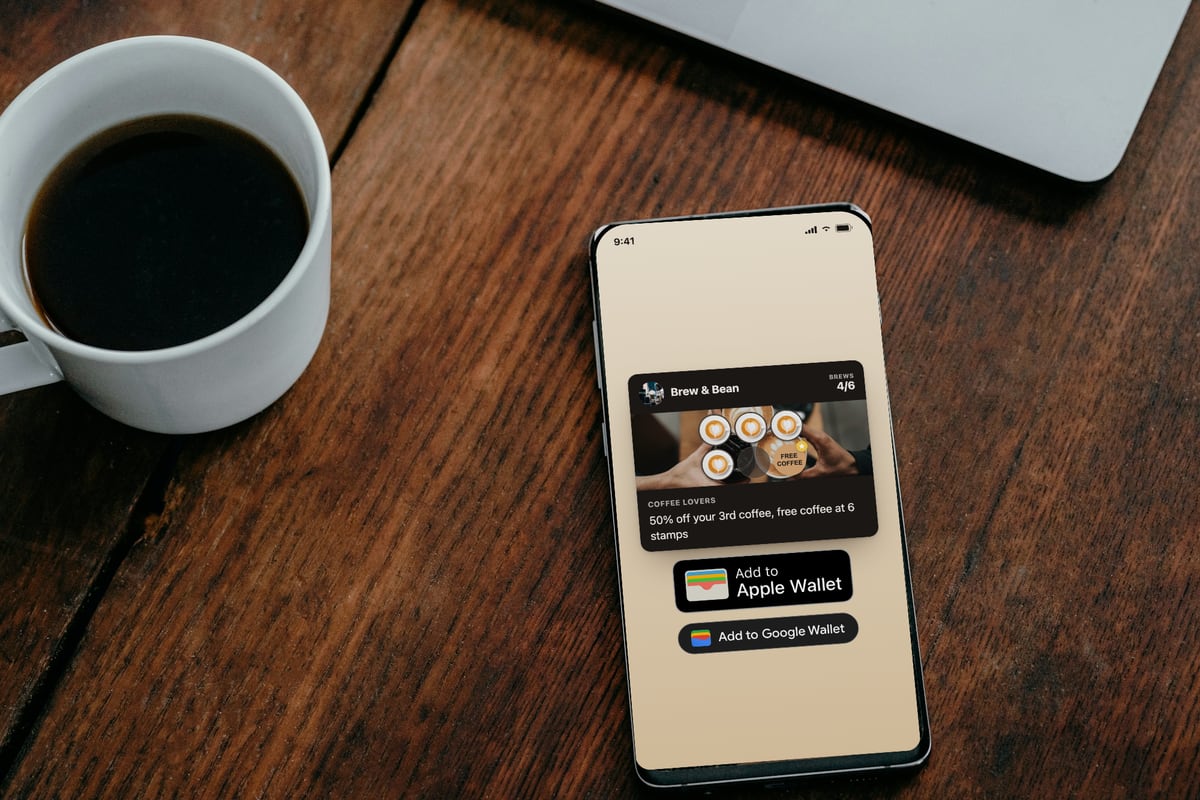
If you run a digital card with FaveCard, you can set a number of welcome stamps that customers receive immediately after downloading the card.
What reward brings people back, and what does it cost you?
A free drink is the simplest café reward to explain at the counter and cost against your margin. Buy 10, get the 11th free gives away 1 drink in 11 (about 9% of drinks served to cardholders), while a 10th-free card gives away 1 in 10 (10%).
Writing on the Boss Barista Substack in November 2023, a coffee-industry writer argued loyalty programs “work—kind of,” comparing a 10% free-drink giveaway with roughly 1.75% on airline cards. Check that against your ingredient costs, not just your menu price.
When a regular redeems a free coffee during normal trade, the direct cost is mainly the beans, milk, cup and lid, not the menu price. Here is an example on a latte using invented round numbers ($5.00 menu price, $1.50 direct cost):
| Card structure | Free-drink share | Cycle revenue / direct cost | Gross margin kept |
|---|---|---|---|
| Buy 10, 11th free (11 served) | 1 in 11 (~9%) | $50.00 / $16.50 | $33.50 ($3.05/cup) |
| Buy 9, 10th free (10 served) | 1 in 10 (10%) | $45.00 / $15.00 | $30.00 ($3.00/cup) |
In this example, the 11th drink brings in nothing and adds $1.50 in direct ingredients, so direct cost is $16.50 on $50.00 collected and gross margin falls from $3.50 to $3.05 a cup.
On Barista Hustle in 2016, one owner said cards just give discounts to people who are already loyal for other reasons, and on UK Business Forums in 2012, a forum member warned that a weak offer only rewards customers who would have come back anyway. The rule is simple: the card earns its cost only when it brings extra visits, not just a discount on drinks people would have bought anyway. Keep fine print short so baristas never debate sizes mid-rush; see our coffee shop loyalty card rules.
On the Barista Hustle forum in 2016, one commenter described a multi-site café’s swipe-card scheme dropping from about 2,500 cardholders to under 400 active users, adding they would rather spend that money on better-paid baristas.
With FaveCard, for example, you choose the stamp count and reward when you create the card, and those terms cannot change afterward, so everyone who joins gets the same promise.
What do you do when a regular stops coming?
When a café regular goes quiet, notice early—before a new routine forms elsewhere—and send a short, friendly message if you have permission. When they drop in again, welcome them back warmly. After a takeover or price rise, say what stayed the same and keep familiar faces, owners included, behind the counter.
A regular may go quiet because their own routine shifted (a new office or school run) or because something inside your café changed.
On OzBargain in March 2023, a group of partners who bought an established café (with about three cafés within 50 meters) said they kept the same barista and most of the staff, yet watched sales fall 30–40%, admitting, “we feel that we are trying to win a lost battle!” Replies suggested several causes: regulars missing the hands-on previous owner, a price rise two months after the takeover, and, in one reply’s guess, partners rotating in and out.
If you take over a shop or raise prices, get ahead of the silence:
- Spell out what stayed the same. Tell regulars the beans, milk, or baker has not changed.
- Keep familiar faces, owners included, behind the counter. Stay visible on busy shifts even if the same baristas stay on, since regulars may miss a steady owner presence.
- Hold off on a price rise. Wait until regular customers know the new team before changing prices.
- Make a return feel easy. A warm “Good to see you. Still the oat flat white?” welcomes a lapsed regular back without awkwardness.
For comeback offers that do not cheapen your menu, see the “Bring regulars back” section of our coffee shop promotion ideas.
On the Business plan, FaveCard campaigns reach customers who haven’t visited lately through the cards already in their wallets.
Paper card, app, or Wallet card: what keeps the queue moving?
A paper stamp card keeps a café queue moving when the rules fit on one line, and a Wallet card stays fast with a QR scan and no app download. Clunky apps, sign-up forms, and vague drink rules are what stall the line.
Owners across forums hit the same snags regardless of the till:
- Checkout drag and sign-up friction: Threads on Barista Hustle (2016) and UK Business Forums (2012) flagged customers digging for cards and clunky terminal apps. On Shopify Community in 2022, a café running “1 free drink after the purchase of 10” wanted a fast counter-iPad option without collecting email addresses.
- Rule confusion and card abuse: Threads on Barista Hustle (2016) and coffeeforums.com (2006) noted disputes over bottled drinks, small coffees redeemed for large ones, and baristas stamping cards for friends. See our guide to stamp card cheating.
A paper stamp card works when you want zero software cost, provided your team keeps it fast and the rules fit on one line. When forgotten cards or loose stamps on bar become a problem, or when you want to see which regulars have gone quiet, a Wallet card goes digital without an app download.
For instance, FaveCard’s paid plans and trial add the card to Apple Wallet or Google Wallet with no app for customers to download, while staff stamp it with a QR scan in the FaveCard app. Still deciding? See our guide to a coffee shop loyalty program.
See how FaveCard works for coffee shops.
Frequently Asked Questions
How many stamps should a café card require?
A regular should reach the first free drink in about 8 weeks or less (weeks to the reward = days between visits × stamps ÷ 7). Check that stamp count against your drink margin (1 in 10 or 1 in 11 drinks), and decide your rules on sizes and exclusions.
Does a stamp card make sense for a specialty café?
Specialty café owners are split. A 2016 Barista Hustle thread asked if cards are solid practice, a wasted marketing stunt, or the only way to keep customers in crowded coffee cities. One shop on Barista Hustle in 2016 skipped cards for open pricing and surprise rewards instead. A 2023 Boss Barista essay said loyalty programs "work—kind of."
How do I stop baristas from stamping cards for their friends?
Give staff a modest comp allowance so they can treat a friend openly rather than stamping cards. With paper cards, use a custom ink stamp or initials instead of a generic punch. QR-stamped digital cards also keep loose stacks off the bar.
Do café customers mind sharing their email address at the counter?
Some owners skip emails at the till. On Shopify Community in 2022, a café owner replacing paper cards wanted no email collection. On UK Business Forums in 2012, a member speaking as a customer said he only accepts a no-sign-up card and doesn't want companies building a detailed picture of everything he buys. For zero details, plain paper still works.
What if I took over a café and lost the previous owner's regulars?
Keep familiar faces, owners included, behind the counter at busy times and tell guests what stayed the same. Hold off on price rises or other big changes until regulars know the new team. In a 2023 OzBargain takeover discussion, replies suggested regulars missed the hands-on previous owner.
Should I start a stamp card if foot traffic is still slow?
Not yet if very few passersby are stepping in. Focus on first-time visits first, then use a simple card once visits pick up to turn trials into habits. On mobile-cuisine in 2024, one reply gave a slow food truck the same advice: get people to try it first.